 admin
adminThe midsize sedan class can feel a little predictable. Then the Kia K5 shows up with a low roofline, a wide stance, and a trim lineup that ranges from sensible to surprisingly quick.
This kia k5 review looks at where the 2026 model fits right now, and whether it deserves a spot over the Accord, Camry, or Sonata. The short answer is yes, for the right buyer. It stands out on style, features, and price, while the GT trim adds real punch. Still, ride comfort and long-term data on the newest model year keep it from being a no-brainer.
The 2026 Kia K5 at a glance, trims, pricing, and what changed
For 2026, Kia keeps the K5 formula simple. The lineup still centers on four main trims, LXS, GT-Line, EX, and GT, with AWD available on GT-Line. Pricing starts at about $27,500 and runs to roughly $36,000 before destination, which keeps it competitive with most midsize rivals. For a wider market snapshot, Car and Driver’s 2026 K5 review tracks the same general range.
Here’s the quick trim picture:
| Trim | Approx. MSRP | Best for |
|---|---|---|
| LXS | $27,500 to $28,700 | Budget-minded buyers |
| GT-Line | $28,500 to $31,200 | Sporty looks, optional AWD |
| GT | $33,600 to $34,700 | Performance shoppers |
| EX | $35,000 to $36,200 | Comfort and upscale features |
The takeaway is simple. The K5 gives you a clear ladder, from value pick to comfort pick to fast trim, without forcing you into a luxury-car price.
Which Kia K5 trim fits your budget and driving style best
The LXS is the smart buy if you want a roomy sedan with modern safety tech and a clean price. It doesn’t try to be flashy, but it covers the basics well.
The GT-Line is where the K5 starts to make emotional sense. It adds the sporty look most shoppers want, and it’s also the only trim with available AWD. If you live where winters matter, that alone gives it a strong case.
Then there’s the EX, which leans toward comfort. It’s the trim for drivers who want the K5’s style but care more about daily ease than about aggressive looks.
Finally, the GT is the outlier. It’s the one for people who still want a sedan, but don’t want it to feel sleepy.
What stayed the same for 2026, and why that matters
Kia didn’t overhaul the K5 for 2026. That may sound boring, but it can be a plus. A carryover model usually means fewer surprises, more stable production, and a setup buyers already understand.
That said, feature availability can still shift by trim or package. So, if you want a certain wheel design, seat material, or driver aid, double-check the exact build before signing.
How the Kia K5 drives, engine choices, fuel economy, and real personality
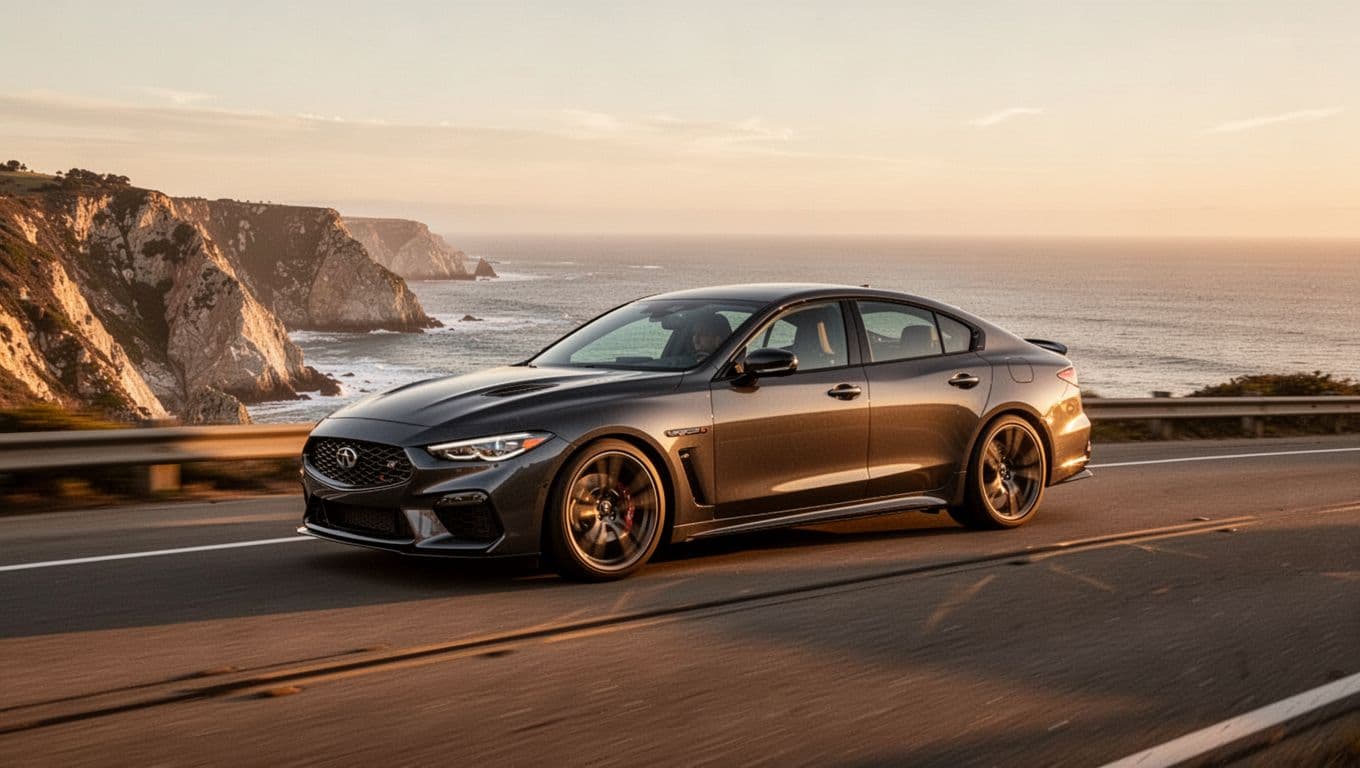
The regular K5 uses a 2.5-liter four-cylinder with 191 horsepower and 181 lb-ft of torque, paired with an 8-speed automatic. On paper, that sounds ordinary. On the road, it feels about right for daily life. It pulls cleanly from a stop, settles down at highway speed, and doesn’t ask much from the driver.
The GT changes the mood. It swaps in a turbocharged 2.5-liter four-cylinder with 290 horsepower and 311 lb-ft, plus an 8-speed dual-clutch automatic. That’s a big jump, and you feel it. The GT doesn’t creep into traffic, it surges.
Is the standard 2.5-liter engine good enough for most drivers
For most people, yes. The non-GT K5 isn’t trying to be a sport sedan. It’s trying to be easy. In that role, it works well.
Around town, the power delivery is smooth enough for commuting. On the highway, it has enough reserve for passing without drama. That makes it a better fit for daily use than some turbo engines that feel punchy one moment and flat the next.
Fuel economy is another plus. LXS models land around 26 mpg city and 37 mpg highway, while GT-Line FWD and EX trims sit close to that range. If you choose AWD on the GT-Line, expect a small hit in mileage because extra traction always costs a little efficiency.
For more trim and road-test context, MotorTrend’s K5 trim breakdown lines up with the idea that the non-GT cars are strongest as well-equipped daily drivers.
Why the K5 GT is the trim enthusiasts will notice
The GT is the K5’s headline act. With 311 lb-ft of torque, it feels much stronger than the average family sedan. Push the throttle, and the car moves with the kind of urgency you don’t expect in this class.
That doesn’t mean it turns into a full sports sedan. The dual-clutch transmission helps the GT feel sharper, but rough pavement can expose the firmer setup. Bigger wheels and a sporty tune add style and grip, yet they can also make broken roads feel busier than you might like.
The GT is quick enough to feel special, but it still makes the most sense as a fast daily driver, not a track toy.
Inside the Kia K5, comfort, cabin space, and everyday tech
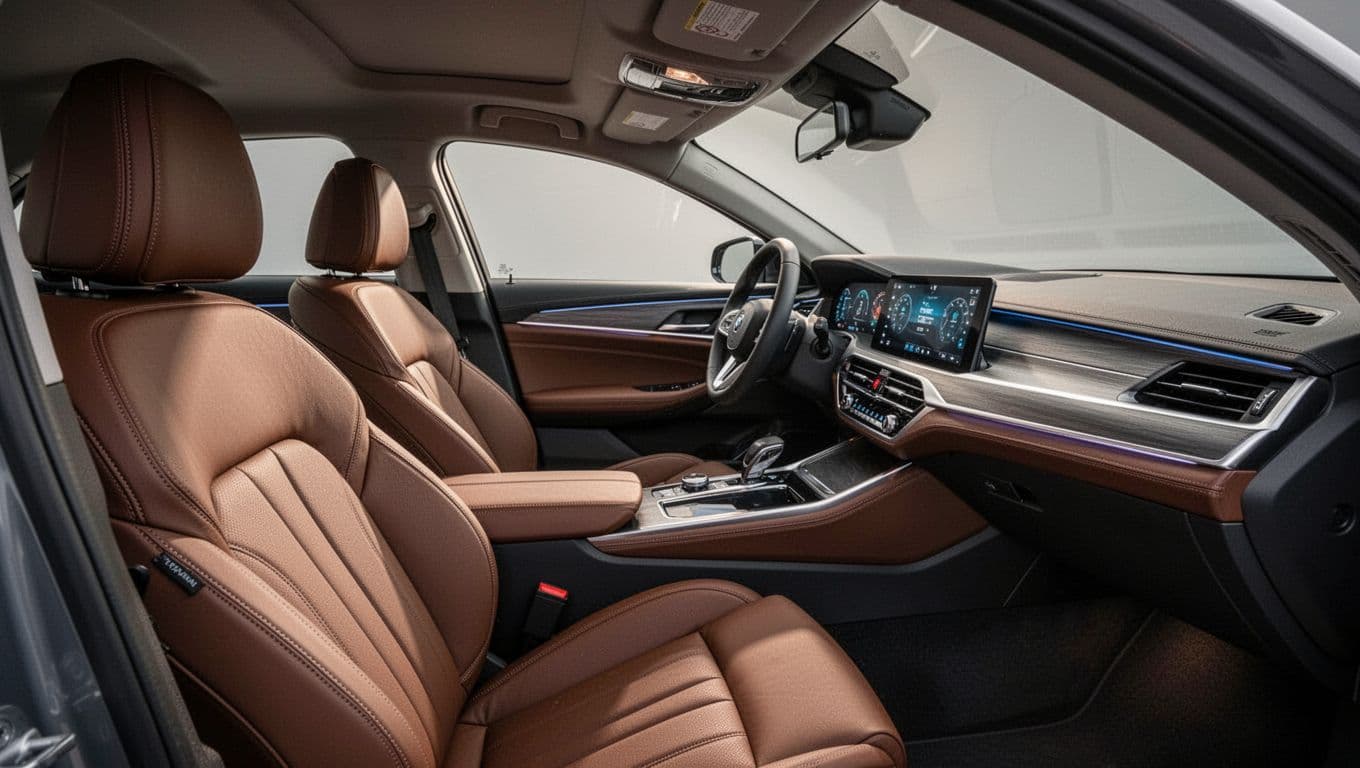
The cabin is one of the K5’s strongest selling points. You get a modern layout, useful storage, and enough room for four adults to ride without feeling pinched. Trunk space is also competitive, at about 16 cubic feet, which keeps it right where a midsize sedan should be.
The look is cleaner than many rivals, and the controls are easy to learn. That matters more than flashy design after a month of ownership.
How comfortable is the K5 for daily commuting and family use
The K5 does a solid job here. Front seats are supportive enough for long drives, and the rear seat has enough legroom for adults or growing kids. For school runs, errands, and weekend trips, it feels like a proper midsize car, not a compact stretched too far.
Some reviewers have pointed out a slightly higher seating position than expected in a sedan. That can go either way. Some drivers like the better outward view. Others may prefer a lower, more tucked-in feel.
Ride comfort depends a lot on trim. The regular models are the safer bet if comfort ranks high. The GT-Line and GT look better and feel tighter, but they also pass more of the road back to you.
The best tech features, from wireless phone connection to upscale extras
Kia does well when it comes to value tech. Wireless Apple CarPlay and Android Auto are the features many buyers care about most, and the K5 makes them easy to use. That alone helps the car feel current every day.
As you climb the lineup, the extras get more appealing. Available upgrades include wireless charging, upgraded audio, heated and ventilated seats, and a richer interior feel in the EX. That trim, in particular, makes a strong case for buyers who want near-entry-luxury comfort without crossing into luxury-brand pricing.
Safety, reliability, and the pros and cons buyers should know
The 2026 K5 comes with a solid list of standard driver-assistance features, which helps its value case right away. Automatic emergency braking, lane-keeping support, blind-spot monitoring, and rear cross-traffic alerts are the kinds of tools buyers now expect, and Kia doesn’t make you climb deep into the trim ladder to get them.
Full 2026 crash-test results from NHTSA and IIHS may still be pending, so shoppers should check for updates close to purchase time. For ownership trends and reliability signals, Consumer Reports’ K5 overview is worth watching as more real-world data arrives.
Standard safety features that add peace of mind
This is one area where the K5 punches above its price. Even the lower trims feel well covered for everyday driving.
That matters because safety gear shouldn’t be treated like a luxury extra. In the K5, it isn’t.
Biggest strengths and weaknesses from expert reviews
The strengths are easy to spot. The K5 looks more expensive than it is. It packs in features for the money. The GT trim adds real speed, and the GT-Line offers AWD, which some key rivals still don’t match in the same way.
The weak spots are more subtle. Ride quality can get firm on larger wheels. The GT is fast, but it’s not the last word in steering feel or chassis polish. Also, because 2026 is still new, long-term reliability data is limited, even though past K5 models have built a decent reputation and Kia’s warranty remains a major plus.
Kia K5 review verdict, is it better than the Accord, Camry, and Sonata
The K5 stands out most on style, value, and trim variety. If you want a sedan that looks sharper than the usual commuter car, it’s hard to ignore. If you want speed without moving into a premium badge, the GT makes an even stronger point.
The Accord and Camry still appeal to buyers who want the most familiar names in the segment, and both are attractive if hybrid efficiency is high on your list. The Sonata is a close cousin to the K5, but it has a different design flavor and doesn’t hit quite the same visual sweet spot for every shopper.
Where the K5 beats its rivals, and where it still trails
Against the Accord and Camry, the K5 often feels like the more expressive choice. Its styling is bolder, the pricing stays competitive, and the GT-Line’s available AWD gives it an edge for buyers in cold-weather states.
The GT trim also gives Kia a real bragging point. In straight-line pace, it grabs your attention faster than most mainstream midsize sedans.
Still, the K5 trails in a few areas. It doesn’t have the same long history of buyer trust as some rivals. It also lacks the hybrid angle that draws many shoppers to the Accord and Camry right now. If you want the safest possible pick, the conservative choice may still be elsewhere.
Final buying advice, best trim for value, comfort, or speed
If price matters most, get the LXS. It covers the basics without feeling stripped.
If you want the best all-around mix, choose the GT-Line. It looks the part, adds useful features, and offers AWD.
If comfort is the goal, the EX makes the most sense. If speed matters most, skip the rest and buy the GT.
The 2026 K5 works because it doesn’t feel like one-size-fits-all transportation. It gives buyers real personality at a price that still feels grounded.
If you want one of the most stylish and feature-rich midsize sedans for the money, this kia k5 review ends in a clear place: the K5 is easy to recommend, as long as you pick the trim that matches how you actually drive.

 admin
admin