 admin
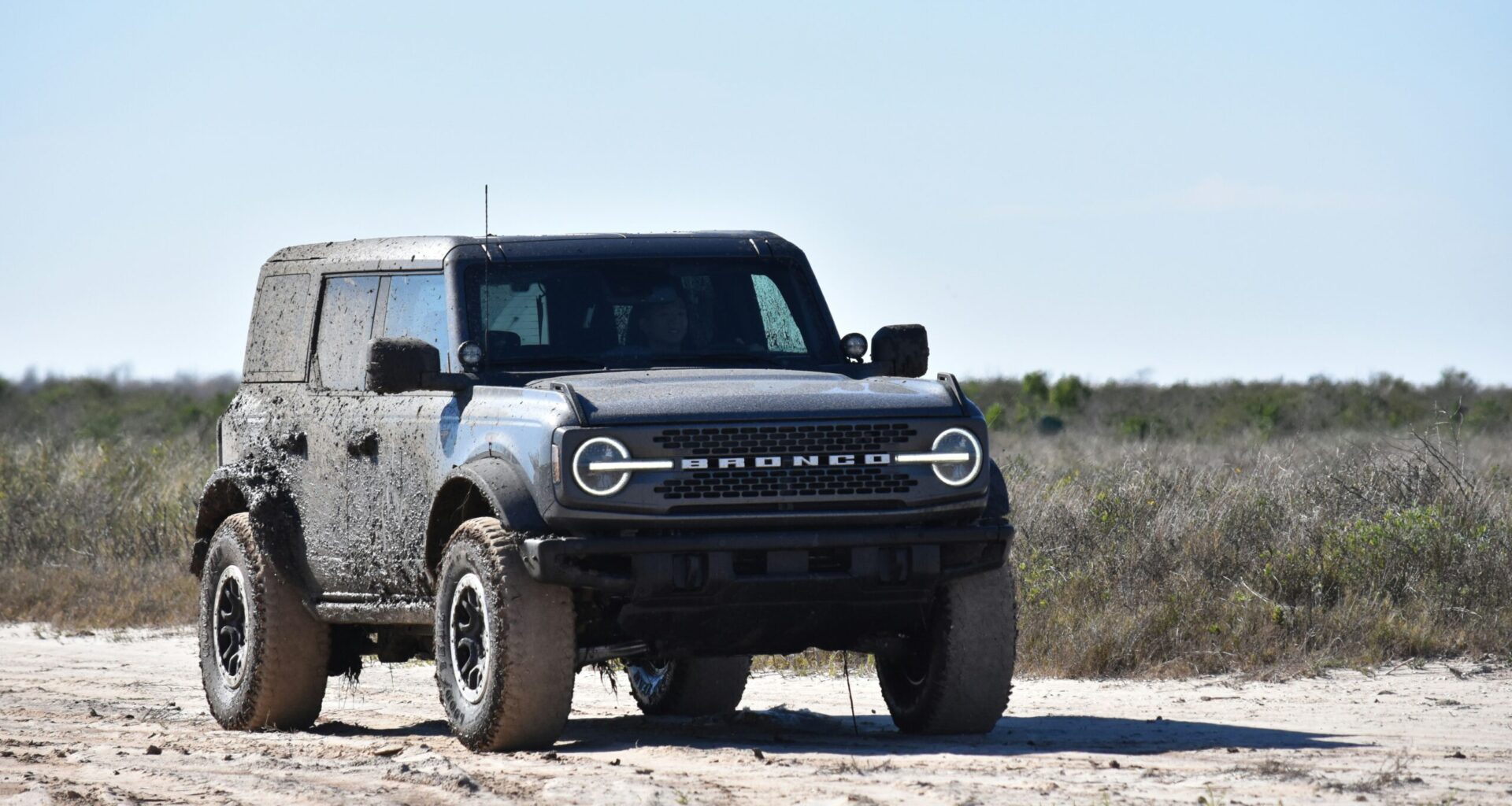
adminFew SUVs still turn heads like the Ford Bronco in 2026. Its retro shape, removable roof panels, and go-anywhere stance give it a kind of magnetism that most family SUVs never touch.
That appeal is easy to understand. The Bronco looks ready for dirt the moment you see it, and unlike many rugged-looking crossovers, it backs that up with real off-road hardware. Still, the bigger question in any honest ford bronco review is simple: is it great to live with every day, or only great once the pavement ends?
Owner enthusiasm remains strong, even if expert opinions stay more mixed. The usual complaints, road noise, fuel economy, and a rougher on-road feel, still matter. So let’s get into where the Bronco shines, and where it asks you to compromise.
The Ford Bronco feels built for adventure first, and that is its biggest strength
The Bronco’s biggest win is that it feels purpose-built. It doesn’t pretend to be a soft commuter with a few fake skid plates. It feels like a machine designed around mud, rocks, sand, and open-air driving.
That starts with the layout. Even though earlier Broncos offered both 2-door and 4-door choices, the 2026 US lineup centers on the 4-door model. You still get the same core identity, standard 4WD, removable roof sections, and doors that come off when you want a more open experience.
Ford also kept the Bronco simple in the right ways. The body is upright, the fenders are easy to judge from the driver’s seat, and the whole thing feels like outdoor gear on wheels. According to Ford’s Bronco Base specs, even the entry model comes with real off-road hardware, not just styling cues.
Why the Bronco stands out from most SUVs on the road
Most midsize SUVs feel polished first and adventurous second. The Bronco flips that order. It looks bold, boxy, and honest about what it is.
Open-air driving is a big part of the charm. Take off the roof, remove the doors, and the Bronco stops feeling like a normal SUV. It becomes something closer to a street-legal trail toy. That experience alone gives it an edge over many rivals.
Even lower trims feel trail-ready. The seating position is upright, visibility out front is strong, and the Bronco’s proportions tell you right away that this SUV was made for places where roads get rough.
What the Bronco does so well off-road
This is where the Bronco earns its reputation. Ground clearance is strong, approach and departure angles are useful, and available gear like locking differentials, bash plates, Bilstein shocks, and beadlock-capable wheels make a real difference once terrain gets ugly.
The Sasquatch package is still the star option for many buyers. It adds bigger all-terrain tires, more capability, and the kind of factory setup that would cost a lot to copy later. That matters because many owners want a trail-ready SUV without turning weekends into wrench time.
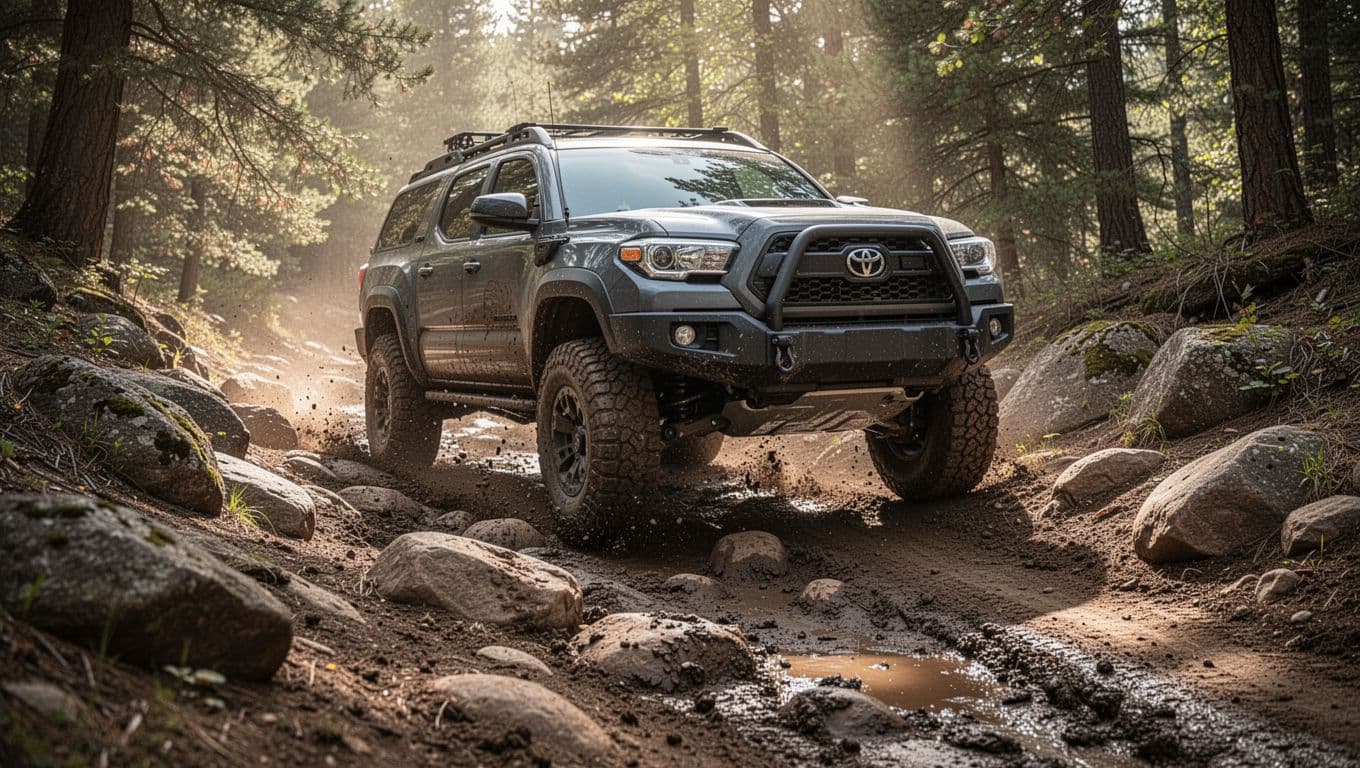
Recent reviews still place the Bronco among the best factory off-road SUVs you can buy. Car and Driver’s 2026 Bronco review keeps it near the top of the class, and that feels right. On a trail, the Bronco feels like it’s finally in its natural habitat.
What it is like to drive the Bronco every day
The Bronco is easier to live with than some hardcore rivals, but that doesn’t make it a soft daily driver. On pavement, it still reminds you that adventure came first.
The good news, it is more livable than some hardcore rivals
Compared with a Jeep Wrangler, the Bronco often feels more settled and more precise. Steering is usually better judged, and that gives the driver more confidence at normal speeds. You don’t feel like you’re constantly correcting it down the lane.
Ride quality is also decent for this type of SUV. It’s not plush, but it usually avoids the worst bounce and head toss that body-on-frame off-roaders can bring. Around town, it feels sturdy rather than clumsy.
Inside, the four-door layout helps with family use. Rear-seat space is usable, and child seat fitment is less of a headache than some buyers expect. In other words, the Bronco can handle school runs and grocery stops without feeling like a total novelty act.
The bad news, noise, braking, and fuel economy can wear on you
The tradeoffs show up fast on the highway. Wind noise is a regular complaint, especially with removable roof pieces and off-road-focused tires. Some owners also mention rattles over time, which isn’t shocking in a vehicle designed to come apart for open-air use.
Rear visibility isn’t great either. The full-size spare on the back blocks part of your view, and the Bronco’s tall, square shape can feel bulky in tight parking lots.
Fuel economy is another weak spot. Current 2026 estimates point to roughly the high teens in mixed driving, with bigger tires and the available V6 often doing worse. That’s the price of a tall body, chunky rubber, and real 4WD hardware.
Some earlier expert tests also criticized the Bronco’s braking performance, though newer coverage suggests it has improved. Still, this isn’t the kind of SUV that fades into the background on a long highway trip. As Driving’s 2026 Bronco coverage shows, the Bronco remains easier to like when the route gets rough.
The Bronco feels best when your day includes dirt, weather, and bad roads. If your week is all freeway, its compromises stand out more.
Inside the cabin, the Bronco mixes useful tech with a rugged feel
The Bronco’s interior works best when you judge it by function, not luxury. It feels practical first, and that suits the vehicle’s whole personality.
The features most drivers will like right away
Ford gives the Bronco enough modern tech to keep it current. A 12-inch touchscreen and 12-inch digital gauge cluster help the cabin feel newer than the old-school shape outside might suggest.
Better yet, the useful stuff makes sense for how people actually use a Bronco. Available rubberized flooring, easy-clean surfaces, and marine-grade style upholstery are great for mud, sand, wet gear, and dogs that never stay clean.
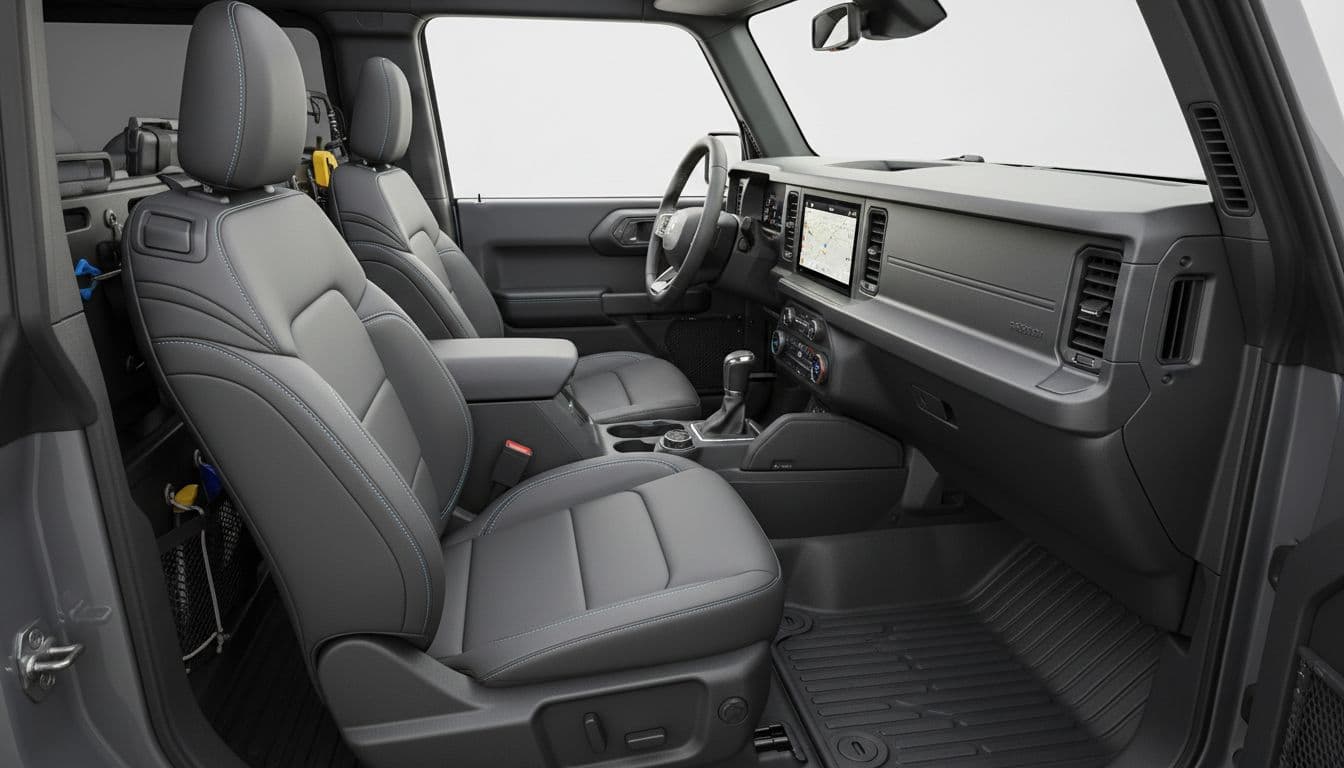
Storage is also smarter than you might expect. There’s room for phones, trail gear, small bags, and the daily clutter that piles up in any family vehicle. That practical layout is part of why the Bronco works better as a daily driver than its tough image suggests.
Where the cabin falls short for the money
Still, price matters. Once a Bronco climbs into the $50,000 range, hard plastics stand out more. The design looks cool, but some surfaces don’t feel as rich as buyers may want at that price.
A few comfort features can also be oddly missing depending on trim. That may include things some buyers now expect, like memory settings or a more upscale finish. As Edmunds’ 2026 Bronco overview suggests, the Bronco wins more on personality and capability than on cabin polish.
So yes, the interior is useful. No, it doesn’t always feel premium. That balance will either feel honest or disappointing, depending on what you want.
Is the Ford Bronco worth it, and who should buy one
In plain terms, the Bronco is worth it if you’ll use what makes it special. If not, its flaws become harder to excuse.
Pricing spans a wide range in 2026. The lineup starts a little above $42,000 in the US, and loaded versions rise fast. The Raptor starts around $81,990, and option-heavy builds can push much higher. For a quick snapshot, here’s where the range sits.
| Trim | Starting price | What it means |
|---|---|---|
| Base | $42,490 | Real Bronco experience, fewer extras |
| Badlands | about $51,625 | Strong off-road value for serious trail use |
| Raptor | $81,990 | Extreme performance, extreme price |
The key takeaway is simple: the middle of the lineup usually makes the most sense.
The Bronco makes the most sense for drivers who will use its talent
If your ideal weekend includes trails, beach runs, camping, snow, or doors-off cruising, the Bronco makes a lot of sense. It gives you factory capability that many SUVs can’t touch, and it delivers a stronger sense of occasion every time you get in.
That matters more than spec-sheet bragging. A Bronco isn’t at its best when it’s parked next to crossovers in a commuter lot all year. It comes alive when you use its clearance, its 4WD system, and its open-air setup.
For many shoppers, trims like Big Bend or Badlands hit the sweet spot. CarGurus pricing and trim details show how quickly the price climbs, so picking the Bronco you’ll actually use matters more than chasing the flashiest badge.
Skip it if comfort, quiet, and fuel savings matter most
If you mostly drive on pavement, a road-focused SUV will probably make you happier. Crossovers offer better mpg, less noise, smoother rides, and easier parking. The Toyota 4Runner is also worth a look if you want rugged appeal with a different flavor, though it still leans truck-like.
The closer direct rival remains the Jeep Wrangler. Even there, though, the Bronco often feels easier to steer and easier to live with day to day. That gives it an edge, but not enough to erase the Bronco’s own drawbacks.
The best ford bronco review outcome is usually this: buy it because you want the experience, not because you’re trying to rationalize it like a commuter appliance.
The Bronco still earns its attention in 2026 because it feels like few other SUVs. It’s fun, capable, and full of character, especially if you want real factory off-road ability instead of rugged styling alone.
At the same time, the downsides are real. Noise, mpg, visibility, and a less polished road feel never fully disappear. That’s why the Bronco is such an easy recommendation for outdoor-minded buyers, and a tougher sell for comfort-first commuters.
If your test drive leaves you grinning, that probably tells you everything. If the highway noise bothers you in ten minutes, a more road-focused SUV is the smarter move.

 admin
admin