 admin
adminCar shoppers see these three labels all the time, yet many still aren’t sure what they really mean. And when you’re comparing prices, fuel economy, and winter confidence, those letters matter more than the badge on the hood.
The fwd vs rwd vs awd choice comes down to how a car sends power to the road, and how that changes cost, feel, and grip. Some setups save money. Others feel better in a corner. A few make bad weather less stressful.
Here’s the simple version that helps most people buy the right car the first time.
How FWD, RWD, and AWD work in plain English
A drivetrain decides which wheels get power from the engine or motors. Think of it like this: some cars pull from the front, some push from the back, and some can do both.
With front-wheel drive, the front tires pull the car forward. With rear-wheel drive, the rear tires push it. With all-wheel drive, the system can send power to all four wheels, either all the time or only when the car needs extra grip. If you want another quick explainer on the basics, Digital Trends breaks down drivetrain layouts clearly.
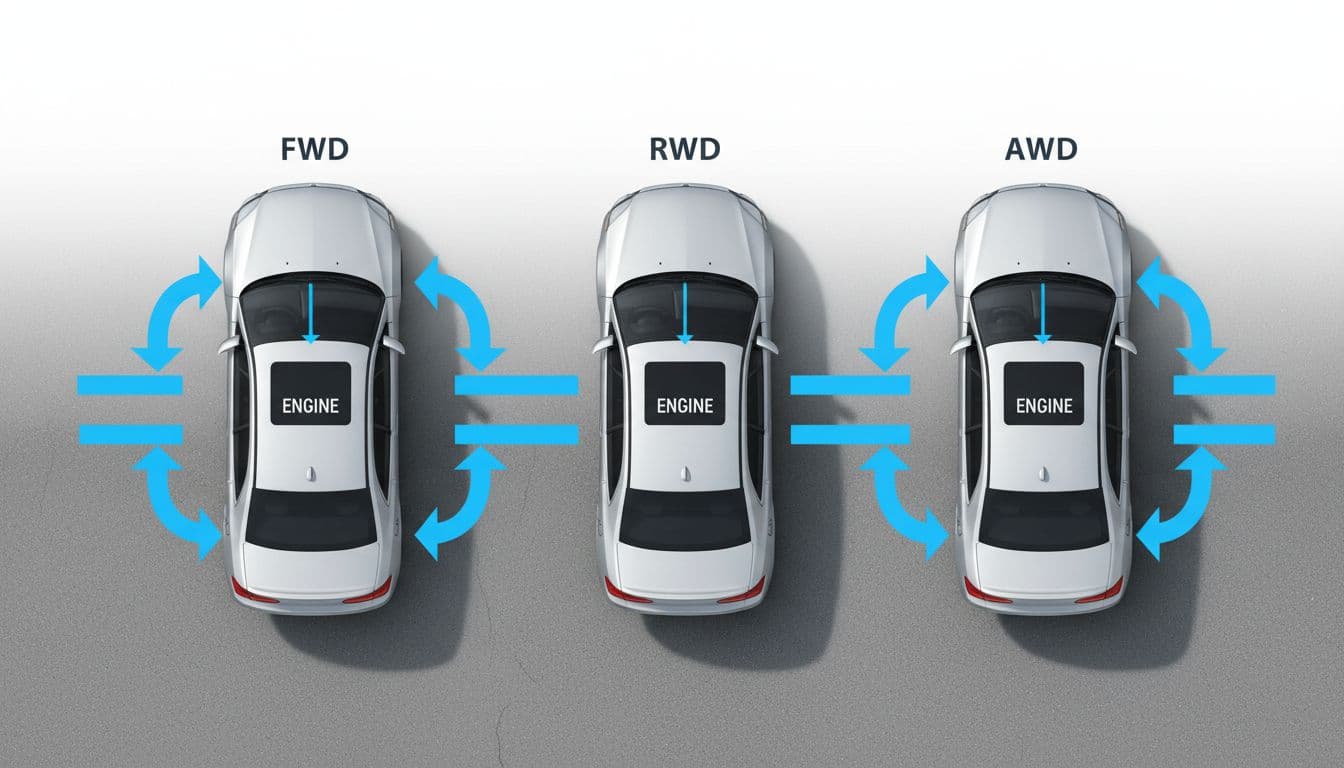
That basic layout changes how a car feels in traffic, in bad weather, and on a curvy road. It also affects how much the vehicle weighs, how many parts it carries, and what you pay over time.
Front-wheel drive pushes daily driving toward lower cost and better mpg
FWD is the default setup for many sedans, hatchbacks, crossovers, and hybrids. It’s popular because it keeps the drivetrain compact, lighter, and cheaper to build.
That usually helps with fuel economy and purchase price. It also helps in rain or light snow, because the engine sits over the front tires and adds weight where the power goes. For commuters, that makes FWD easy to live with.
There is a tradeoff. The front wheels have to steer and deliver power at the same time. So when you drive hard, FWD can feel less balanced and less playful than a rear-drive car.
Rear-wheel drive separates steering from power for a sportier feel
RWD gives the front tires one job, steering, and the rear tires another, putting power down. That split often makes the car feel cleaner and more balanced, especially when accelerating out of a turn.
Because of that, many sports cars, performance sedans, and luxury models use RWD. It can also work well in trucks that need to handle towing and heavy loads.
On dry roads, RWD often feels more natural and more engaging. In slick weather, though, rear-drive vehicles usually need better tires and a lighter foot. Without that, grip can fade faster than it does in FWD.
All-wheel drive adds extra traction when roads get slippery
AWD can send power to all four wheels, which helps when one tire starts to slip. Many modern systems work on demand, so the car drives mostly like a FWD model until the road gets wet, snowy, or uneven.
That matters because many AWD systems no longer use a heavy old-school setup. Some hybrids add rear traction with a separate electric motor. The 2026 Toyota Prius AWD-e is a good example. It uses the normal front hybrid system plus a small rear motor, which gives it all-wheel traction without a mechanical driveshaft. In current 2026 specs, the Prius AWD-e makes 196 horsepower, while the FWD version makes 194.
AWD helps a car get moving with more confidence. Still, it doesn’t turn ice into pavement, and it doesn’t erase physics.
The real pros and cons of each drivetrain on the road
Once you get past the letters, most buyers care about six things: traction, handling, acceleration, mpg, maintenance, and price. The quick comparison below makes the tradeoffs easier to see.
| Drivetrain | Biggest strength | Main drawback | Best fit |
|---|---|---|---|
| FWD | Lower cost and better mpg | Less sporty feel when pushed | Commuters, families, hybrids |
| RWD | Better balance and driver feel | Weaker grip on slick roads | Performance cars, trucks |
| AWD | Strong traction in mixed weather | Higher cost and lower mpg | Snow states, hills, SUVs |
The pattern is simple. FWD usually wins on value, RWD wins on feel, and AWD wins on traction.
Which one feels best in rain, snow, and everyday traffic
In poor weather, AWD is usually the safest bet for getting going with less wheelspin. It shines on snowy streets, wet highways, gravel roads, and steep driveways.
FWD comes next for many drivers. Because the front tires pull the car and carry extra engine weight, it usually handles light winter weather better than RWD. Rear-wheel drive is often the weakest setup on slippery roads unless the vehicle has great tires and balanced weight.
As Consumer Reports explains in its drivetrain guide, AWD improves traction, but it does not shorten stopping distance on ice or snow by itself.
AWD helps you go. Good winter tires help you stop and turn.
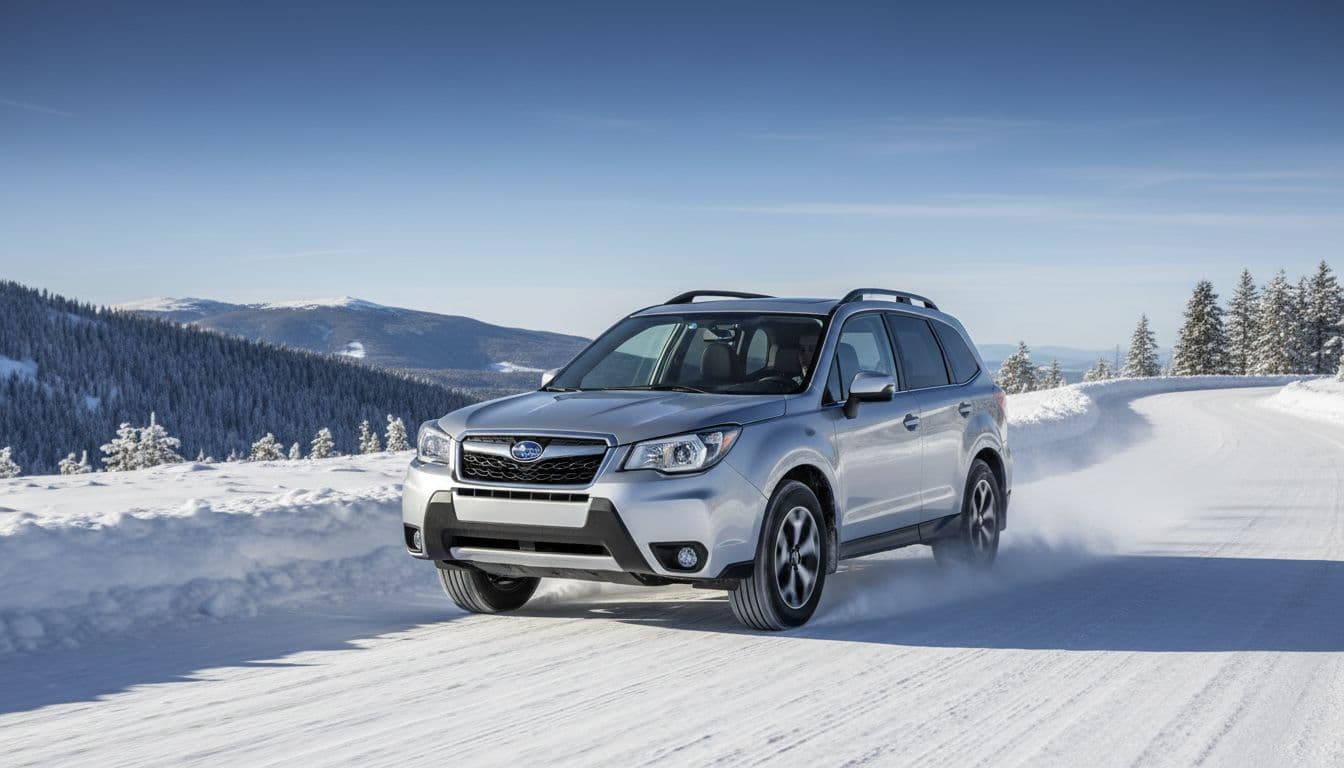
In normal traffic, all three can feel perfectly fine. The difference shows up most when weather turns bad or the road gets rough.
How handling, acceleration, and fun factor change with each setup
RWD usually feels the most balanced. Since the front wheels aren’t trying to pull the car, steering can feel cleaner, and the car may rotate through corners more naturally.
FWD feels predictable, which is a good thing for daily driving. It tends to push wide at the limit, so it doesn’t feel as lively when driven hard. For most people, though, it feels secure and easy.
AWD often launches hard from a stop because all four tires can share the work. That’s why many quick sedans and crossovers use it. The tradeoff is extra weight, and sometimes a little less steering feel than a similar RWD model.
Fuel economy, price, and upkeep, where the money goes
FWD usually costs the least to buy and the least to feed. Less weight and fewer parts often mean better mpg and fewer long-term repair worries.
RWD often sits in the middle. It may cost more than FWD, especially in luxury or performance cars, but it doesn’t always carry the added complexity of AWD.
AWD almost always adds upfront cost. It also adds weight and extra hardware, which can lower mpg and raise service costs later. A helpful general breakdown from Engineer Fix compares how drivetrain design affects cost and efficiency.
A current 2026 Prius shows the tradeoff well. In LE trim, the FWD version is rated at up to 57 city and 56 highway mpg. The AWD-e version drops to 53 city and 54 highway mpg, while costing more to buy.
Which drivetrain fits your life best
There isn’t one universal winner here. The right answer depends on where you live, what you drive through, and how much you care about cost versus driving feel.
Choose FWD if you want an affordable commuter that is easy to live with
For city driving, highway commuting, and tight budgets, FWD makes a lot of sense. It’s common in compact cars, midsize sedans, and many hybrids because it keeps things simple.
If you live in a mild climate, care about fuel bills, and don’t want to pay extra for hardware you may never need, FWD is often the smart pick. It works especially well for daily errands, school runs, and long commutes.
Choose RWD if you care more about driving feel and performance
If you enjoy the way a car responds, RWD is hard to beat. It gives many sports cars and sport sedans their smooth, balanced feel.
That’s also why you see it in many pickups and luxury models. The payoff is better acceleration feel and cleaner steering. The catch is weather. In colder states, you’ll need the right tires and more care when roads get slick.
Choose AWD if you deal with snow, hills, or changing road conditions
AWD makes the most sense when your weather changes often or your roads don’t stay clean and dry. That’s why it’s so common in crossovers, mountain-town cars, and family SUVs.
Newer AWD systems also try to soften the old mpg penalty. Some hybrid setups only power the rear wheels when needed, which helps keep efficiency reasonable. If your driveway is steep, your roads stay wet, or winter is a yearly fight, AWD can buy real peace of mind. For a climate-focused view, Autoblog’s drivetrain comparison ties the choice to the roads you drive.
Popular 2026 examples that show where each drivetrain makes the most sense
Real vehicles make the drivetrain choice easier to picture. You can see the pattern across the current U.S. market.
Common FWD, RWD, and AWD vehicle types shoppers will see today
FWD still dominates practical cars. The Toyota Prius, Hyundai Elantra, and many Honda and Toyota sedans use it because buyers in those segments want value, good mpg, and easy manners in traffic.
RWD shows up where feel and strength matter more. Many BMW and Mercedes-Benz performance-oriented cars use rear drive because it suits sporty handling. It’s also common in trucks like the Ford F-150, where a rear-drive layout works well for hauling and towing.
AWD is now everywhere in SUVs and cold-weather family vehicles. Subaru built much of its identity around it, and many compact and midsize SUVs offer AWD because buyers want better all-weather traction. The 2026 Toyota Prius AWD-e is a good modern twist on that idea. It keeps the Prius mission, efficiency first, but adds a rear electric motor for extra grip in rain or snow.
If you want a quick plain-language comparison from a repair-focused angle, YourMechanic’s drivetrain overview is a useful companion read.
There isn’t a single best answer in the fwd vs rwd vs awd debate. FWD is usually the best value, RWD brings the best balance and driving feel, and AWD gives the most traction when the road turns messy.
The smartest choice matches your climate, your budget, and your daily routine. Buy for the roads you actually drive, not the ones in an ad, and the right drivetrain becomes much easier to spot.

 admin
admin