 admin
adminFor truck shoppers in 2026, this matchup matters because the Ford F-150 vs Chevy Silverado choice can change how much you spend, how well you tow, and how comfortable your truck feels every day. Both are top full-size pickups, and both sell in huge numbers, but they don’t win the same way once you look past the badge.
If you need a work truck, your best pick may come down to low-end pull, payload, and fuel use under load. If comfort, trim value, or highway miles matter more, the chevy silverado vs ford f 150 debate starts to look different, especially when option prices climb fast and engine choices change the story.
This comparison focuses on real buying factors, like towing, ride quality, fuel costs, and trim budget, so you can choose the truck that fits your job, your commute, and your money.
Start with the basics, price, trims, and what each truck gives you for the money
If you’re starting with budget first, the ford f 150 vs chevy silverado fight is tighter than it looks. Chevy grabs attention with the lower entry price, while Ford makes its case by giving base buyers a truck that often feels less stripped down. That matters, because the sticker on the window is only the opening number.
The real cost usually shows up after you choose the cab, bed, drivetrain, and trim level that fits your life. A low advertised price can disappear fast once you build the truck you actually want to drive every day.
How base model pricing really compares
On paper, the Silverado starts lower. The 2026 Silverado 1500 Work Truck begins at $36,900, while the 2026 F-150 XL starts at $40,085 with destination included. So yes, Chevy wins the cheapest-entry contest.
Still, that gap needs context. Base trucks are often quoted in their least expensive form, and that’s not how most people shop. As soon as you move from a basic two-wheel-drive work setup to a more common crew-cab or 4WD build, the spread can shrink fast.
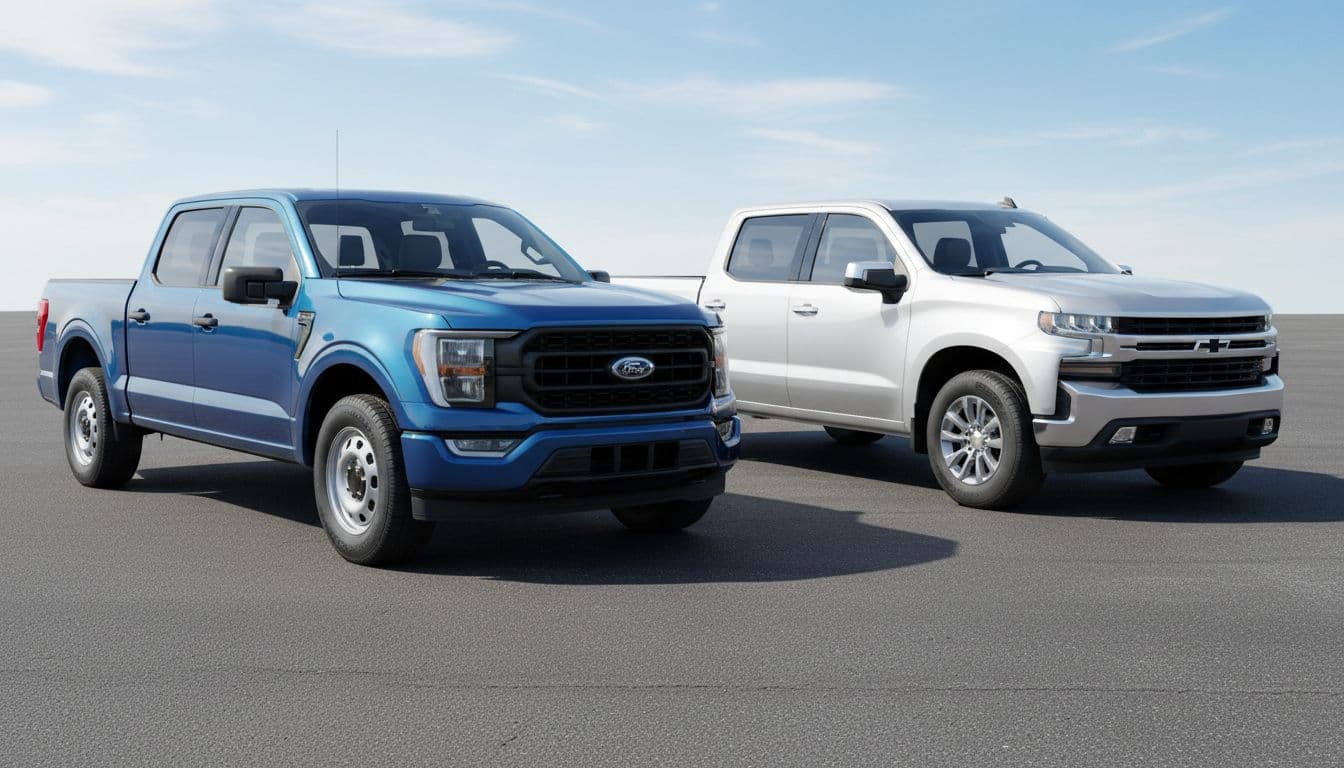
A quick side-by-side view helps show where each truck starts:
| Truck | Base trim | Starting price | What that price really means |
|---|---|---|---|
| Ford F-150 | XL | $40,085 | Strong work-truck entry point, but price rises with cab, bed, and 4WD |
| Chevy Silverado 1500 | Work Truck | $36,900 | Lower advertised entry price, though popular options raise cost quickly |
The takeaway is simple: Chevy is cheaper to get in the door, but not always cheaper once equipped the way most buyers want.
That matters because configuration drives value in this class. Before you compare monthly payments, look at these cost movers:
- Cab style changes the price more than many shoppers expect. A regular cab work truck is one thing, a family-friendly crew cab is another.
- Bed length can affect both price and usability. A longer bed helps for work, but it may force a different wheelbase or trim combo.
- Four-wheel drive adds a noticeable bump. If you live in snow country or tow on slick ramps, you may need it.
- Engine choice can reshape the whole deal. A stronger engine, hybrid setup, or V8 can turn a bargain trim into a much pricier truck.
Ford also offers a wide spread of body styles, with Regular Cab, Super Cab, and SuperCrew layouts plus multiple bed lengths. Chevy gives you practical choices too, but its sweet spot is often the Double Cab or Crew Cab setup most people actually buy. In other words, the low starting price is real, but it may describe a truck that only fits a narrower slice of buyers.
For a broader side-by-side look at trim positioning, this 2026 Silverado and F-150 comparison is useful because it shows how quickly the matchup shifts once you move past the entry trims.
The cheapest truck on paper isn’t always the cheapest truck in your driveway.
Which truck feels like the better value at lower and mid trims
At the low end, Ford often feels like the smarter buy. The F-150 XL and STX do a good job of covering the basics without feeling bare bones, and that makes a difference if your truck has to do both job-site duty and family duty. The STX, in particular, gives budget-minded buyers a more modern feel with features like a large 12-inch touchscreen and better curb appeal.
Chevy’s Work Truck is honest about what it is. It’s built to work, and that’s fine. But if you want your truck to feel a little less fleet-spec and a little more personal, you may find yourself climbing to the Custom or LT faster than planned.
That is where the chevy silverado vs ford f 150 value story gets interesting. At lower trims, Ford appears stronger because more buyers will like what they get right away. You don’t need as many add-ons to avoid that “base model” feeling. For many shoppers, that’s the best kind of value, less money spent fixing a cheap trim.
Once you move into the middle of the lineup, Chevy starts to hit back. The Silverado LT and RST can feel more polished, and trims like High Country push harder into near-luxury territory. Interior presentation, feature packaging, and trim progression can make the Silverado seem more upscale as you climb.
Here’s the simple split:
- Best value for base-minded buyers: Ford F-150
- More upscale feel as trims rise: Chevy Silverado
- Better deal overall: Depends on how far up the ladder you plan to go
Ford’s XLT is still a strong all-around pick, especially for people who want comfort without jumping into premium-truck pricing. Yet Chevy’s LT has a way of looking and feeling a touch richer once you’re already spending mid-trim money. That’s why two trucks with similar monthly payments can leave very different impressions after a test drive.
If you want to verify current trim walk-ups and feature jumps, Car and Driver’s Silverado overview is a helpful reference for Chevy’s lineup progression. On the Ford side, Cars.com’s 2026 F-150 pricing breakdown gives a clear picture of where trims begin and how the ladder is spaced.
For most shoppers, the sweet spot comes down to this. If you want a truck that feels well-equipped earlier, Ford has the edge. If you’re already planning to spend into the middle trims, Chevy starts to make a stronger style-and-comfort argument.
Engine choices, towing, and payload, where the biggest differences show up
This is where the ford f 150 vs chevy silverado decision starts to separate casual shoppers from buyers with real truck needs. Price gets attention first, but engines, towing limits, and payload ratings decide how the truck feels when it’s loaded, hooked up, and put to work.
On paper, both trucks look strong. In real life, the better choice depends on how you use it. Daily commuting, light trailers, long highway miles, and jobsite hauling all reward different setups.
Ford F-150 powertrains give shoppers more ways to match the truck to the job
Ford gives you a wider menu, and that matters. The 2.7L EcoBoost V6 is a smart fit for buyers who want strong everyday punch without stepping into a pricier setup. With 325 horsepower and 400 lb-ft of torque, it doesn’t feel like a compromise for commuting, weekend projects, or lighter towing.
Then the range opens up. The 3.5L EcoBoost V6 brings much stronger top-end output, and in the right configuration it pushes towing to the top of this matchup, up to 13,500 pounds. Ford also offers the PowerBoost hybrid, which is a big deal if you want quick torque, solid efficiency, and a truck that feels more flexible than the usual gas-only choices.
That variety helps three kinds of buyers most:
- People who tow often and want a setup that can grow with bigger trailers
- Drivers who want stronger acceleration and more passing power
- Shoppers who want a hybrid half-ton, something Silverado buyers can’t match
So in the chevy silverado vs ford f 150 debate, Ford has the broader powertrain bench. If you want more ways to fine-tune the truck to your work and driving style, the F-150 makes that easier. For another side-by-side view, this 2026 Silverado vs F-150 comparison gives a helpful overview of how the two lineups stack up.
Chevy Silverado brings strong standard torque and a diesel option Ford buyers may miss
Chevy answers in a different way. The Silverado’s standard 2.7L TurboMax doesn’t win with cylinder count, but it does win a lot of buyers over in daily driving. Its 430 lb-ft of torque shows up early, so the truck feels eager leaving stoplights, pulling onto highways, or dragging a small trailer without strain.
That makes the TurboMax easy to recommend if your truck life looks pretty normal. Think utility trailers, small campers, home-improvement runs, and weekday commuting. It has the kind of low-end shove you notice every day, not just on a spec sheet.
Chevy also keeps something on the table that many Ford shoppers may miss, the available 3.0L Duramax diesel. For long-distance drivers, frequent towers, or anyone who racks up highway miles, that diesel can be a strong fit because it pairs big torque with better range and strong fuel economy. According to Car and Driver’s Silverado overview, the diesel remains one of the truck’s most appealing choices for buyers who spend serious time on the road.
If your truck spends more time cruising than sprinting, the Silverado diesel still fills a niche few half-tons cover well.
Towing and payload numbers matter, but your setup matters more
Max tow ratings are real, but they are also best-case numbers. Engine, axle ratio, cab style, bed length, drivetrain, and tow package all change the result. A crew cab 4×4 with a shorter bed may tow far less than the headline figure in the ad.
That is why it’s risky to buy from a brochure number alone. Ford leads at the top end, with the right 3.5L EcoBoost setup reaching 13,500 pounds. Chevy is close, topping out around 13,300 pounds, and in some base or lower-cost configurations, the Silverado can show slightly better towing than the F-150’s smaller-engine setups.
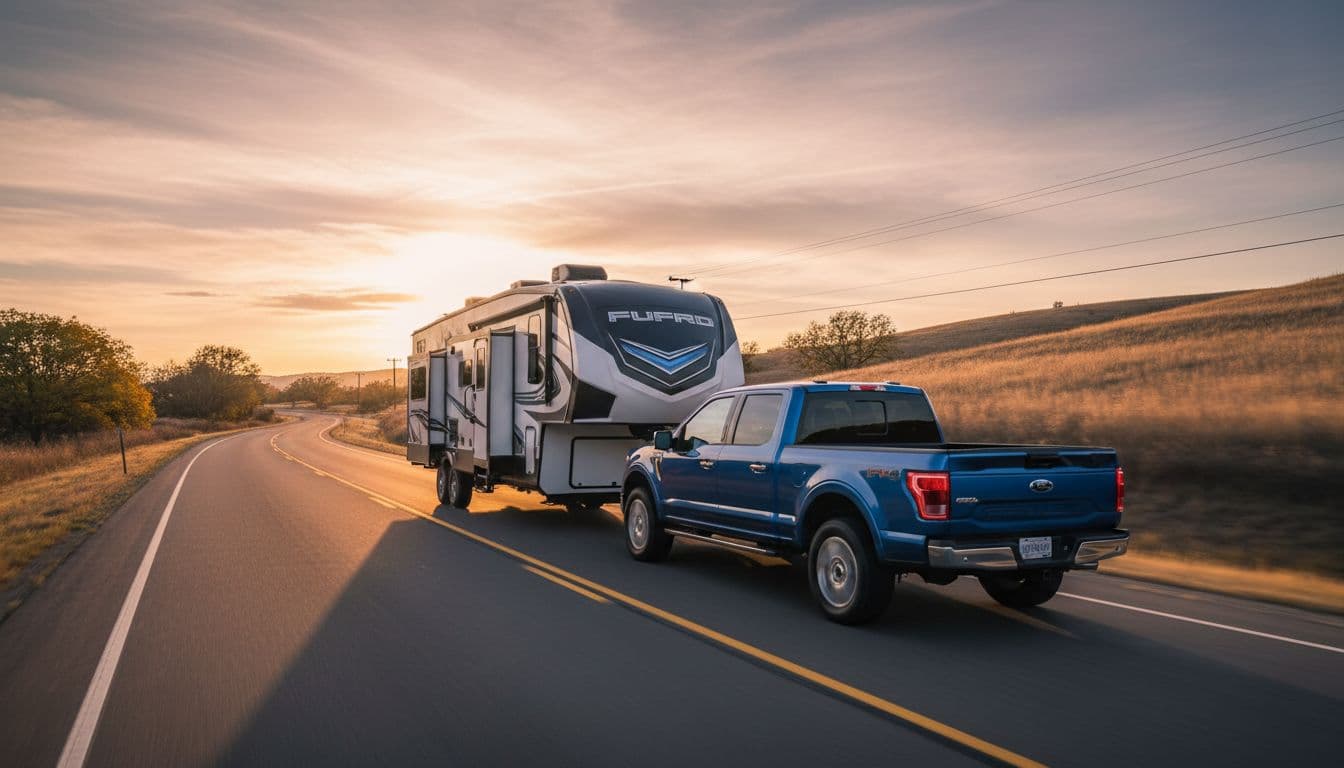
A smarter way to compare trucks is to match the rating to your actual use:
- Check your trailer’s loaded weight, not its dry weight.
- Add passengers, tools, and cargo to the truck’s payload math.
- Compare the exact cab, bed, and drivetrain you plan to buy.
Payload works the same way. Ford’s ceiling is higher, reaching roughly 3,300 pounds in the right build, while Silverado tops out around 2,280 pounds. Still, many real-world trims land well below those peaks, so the door-sticker number matters more than the marketing headline. If you want a broader capability comparison, MotorTrend’s towing and payload guide is a useful reference point.
Bed size and cargo room can be the tie breaker for work buyers
Not every truck buyer tows heavy, but almost every work buyer uses the bed. That’s where Silverado makes a practical case. In its largest configuration, Chevy offers more max cargo volume, about 89.1 cubic feet, which can matter if you load bulky gear, loose materials, ladders, or jobsite supplies that simply take up space.
That extra room is especially useful when the load is awkward rather than heavy. A bigger bed can save you from stacking cargo too high or making a second trip. For contractors, landscapers, and anyone hauling large but lighter materials, that can be the deciding factor.
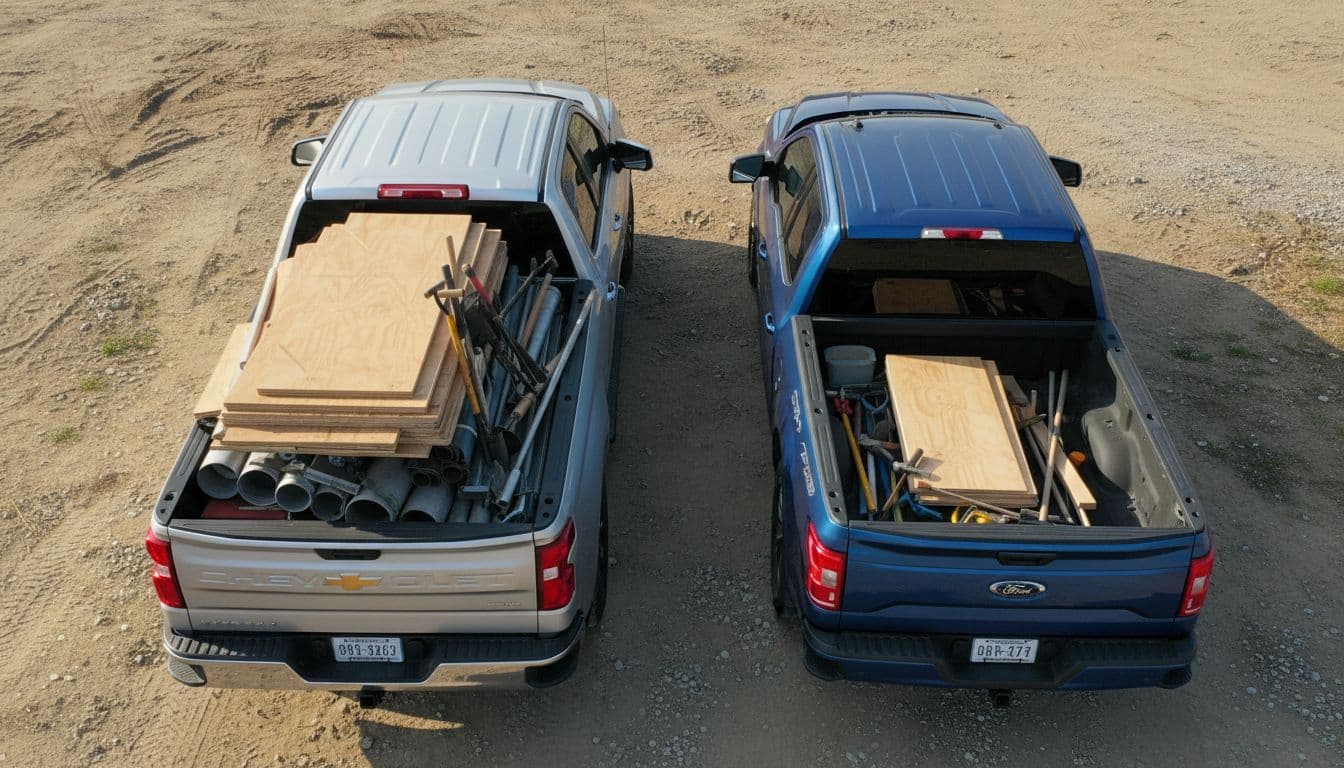
Ford pushes back with a stronger payload ceiling. So if your truck carries dense loads like equipment, pallets, or heavy supplies, the F-150 may be the better tool even if the Silverado bed can swallow more volume. In simple terms, Chevy gives you more room, while Ford can give you more weight capacity. That difference sounds small until you’re picking between hauling mulch and hauling machinery.
Daily driving, fuel economy, and ride comfort, which truck is easier to live with?
For many buyers, this is the part that matters most. A truck can post big tow numbers, but if it drinks fuel on your commute or rides like a buckboard, you’ll feel it every day. In the ford f 150 vs chevy silverado matchup, the easier truck to live with depends on where you drive, how many miles you rack up, and how you spec it.
The Ford F-150 has the edge on base gas mileage
If you’re buying a gas truck and plan to use it like a real daily driver, Ford starts strong. The base 2.7L EcoBoost F-150 is rated at 20 city, 26 highway, and 22 combined mpg, while the Silverado’s 2.7L TurboMax comes in at 18 city, 21 highway, and 19 combined mpg. On paper, that gap looks small. Over months of commuting, school runs, and weekend errands, it adds up.
That matters most for three groups:
- People with a long weekday commute
- Owners who split time between work duty and family duty
- Buyers who want a full-size truck without a full-size fuel bill
In plain English, the F-150 asks for fewer gas station stops in normal mixed driving. It also gives budget-minded buyers more breathing room when fuel prices jump. If your truck spends more time empty than towing, Ford’s better base efficiency is hard to ignore.
A recent real-world fuel economy test also points to the F-150 as a strong everyday choice, which lines up with its EPA advantage.
The Silverado may be the better fit for drivers who want diesel efficiency
Chevy flips the script with the available 3.0L Duramax diesel. It’s rated at 23 city, 28 highway, and 25 combined mpg, which makes it the mileage pick for drivers who live on the highway. If you cover serious ground each week, that extra range can make the Silverado feel like the smarter long-haul tool.
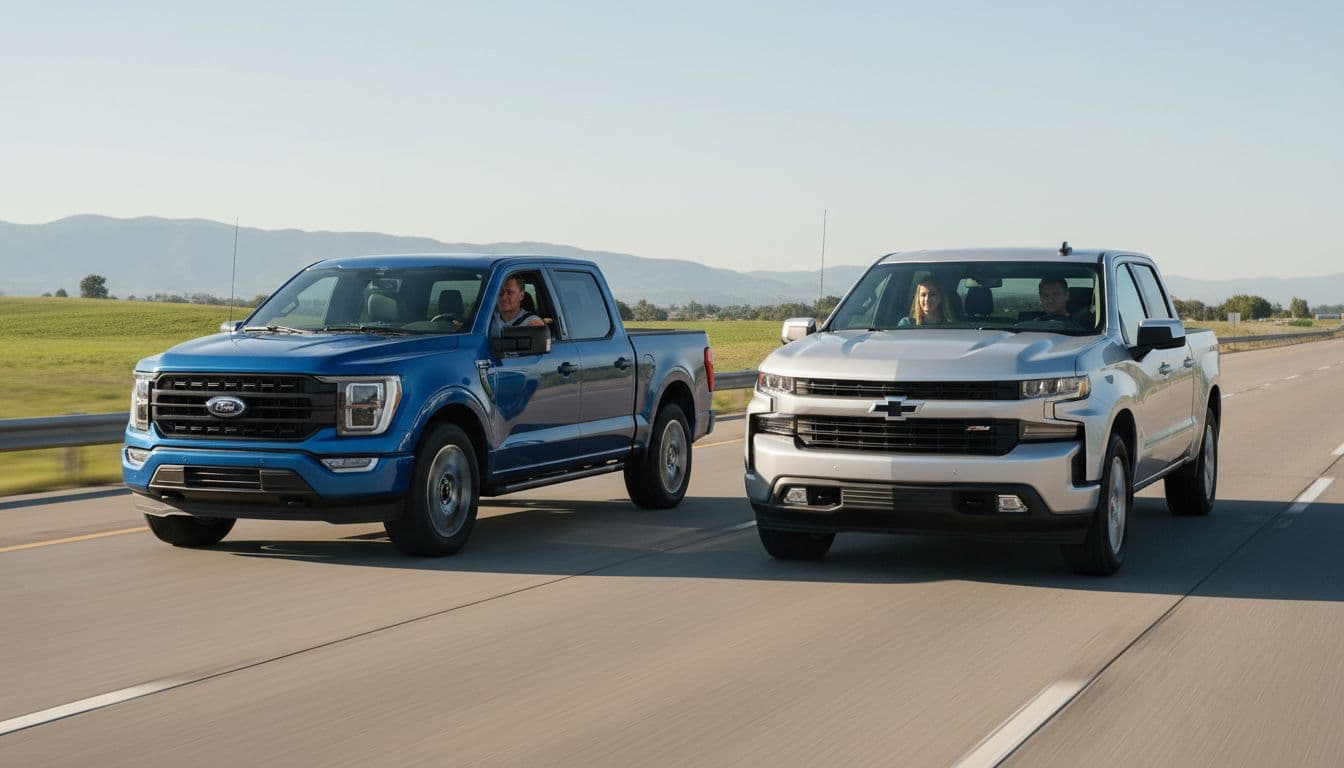
This is where the chevy silverado vs ford f 150 choice gets very personal. A diesel Silverado makes sense if you:
- Drive a lot of highway miles each week
- Want fewer fill-ups on road trips
- Tow often and like strong low-end torque with better range
Ford no longer gives shoppers a diesel answer here, so Chevy owns this lane. If your truck is part commuter, part interstate cruiser, and part tow rig, the Duramax has a real advantage. For a quick spec check, EPA Silverado fuel economy listings are worth a look.
If you drive far more highway miles than city miles, Silverado diesel efficiency can outweigh Ford’s base gas advantage.
Ride quality and everyday drivability depend on how you use your truck
Both trucks can be comfortable. That’s the honest answer. Still, many buyers blame the truck when the real difference comes from the setup they chose.
Trim level changes a lot. So do wheel size, tire type, suspension tuning, and whether the bed is empty or loaded. A work-spec truck on aggressive tires can feel busy and stiff, while a mid-trim truck with more street-friendly rubber can feel calm and settled on the same road.
Ford often feels a bit more balanced in everyday driving, especially in common commuter-friendly trims. Chevy, on the other hand, can feel roomy and relaxed, with a cabin that gives tall drivers a little more space. According to Car and Driver’s comparison tool, both trucks are competitive, but they don’t feel identical once you start mixing trim and powertrain choices.
Keep these real-world factors in mind before you judge either truck after one short test drive:
- Bigger wheels usually hurt ride comfort more than buyers expect.
- Off-road tires can add noise and shake on the highway.
- A loaded bed can smooth out rear-end bounce in both trucks.
- Higher trims often feel quieter because they add better insulation and comfort features.
So, which truck is easier to live with? For most gas-truck commuters, the F-150 has the cleaner case. For heavy-mile drivers chasing range, the Silverado diesel may fit better. And for ride comfort, your exact build matters almost as much as the badge on the grille.
Cabin comfort, screens, and work friendly features inside the truck
Specs matter, but this part shapes your day-to-day life. In the ford f 150 vs chevy silverado matchup, cabin comfort, screen layout, and smart bed access can matter just as much as towing numbers, especially if your truck doubles as an office, family hauler, and weekend hardware-store runner.
Which interior feels better at work and on family trips
Both trucks do this job well, and neither feels cramped in a crew-cab setup. The Silverado gives you a wide, airy feel up front, while the F-150 often feels a bit more polished and better thought out for mixed work and family use.
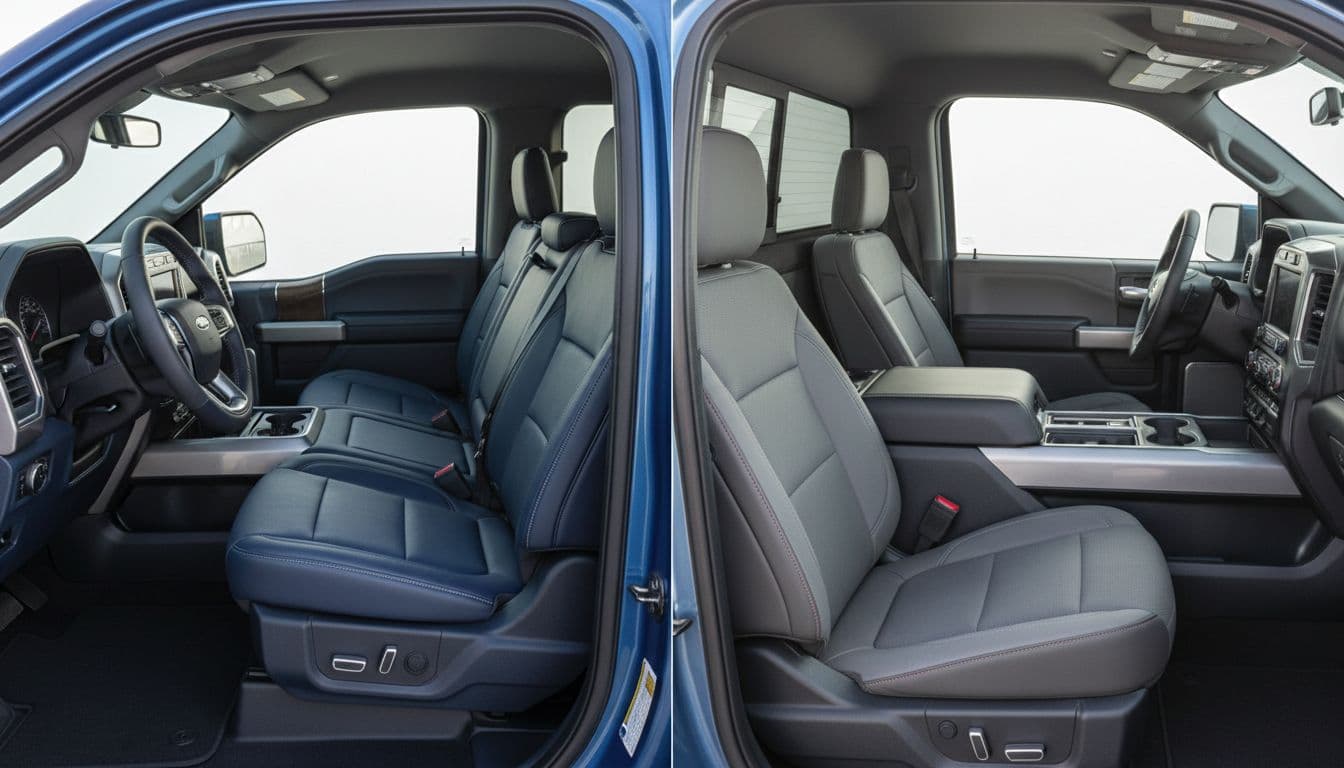
On space, the gap is small. Chevy has a touch more front legroom and headroom on paper, while Ford is right there in rear legroom. In real life, most buyers will notice the layout more than the numbers. The Silverado feels broad and open; the F-150 feels slightly more tailored around the driver.
Seat comfort depends a lot on trim. Base Silverado models can feel more work-first, especially with simpler materials. Ford’s lower trims tend to feel less stripped down, and higher F-150 trims add smart touches like a flatter work surface and more useful console storage. If you carry a laptop, folders, chargers, and a lunch bag, those little spaces matter.
For family duty, both offer roomy rear seating in crew-cab form. Still, Ford has a slight edge in cabin usability because its storage solutions feel more intentional. For a wider side-by-side look, Driving’s truck comparison gives helpful context on how these two stack up beyond raw specs.
If you want the cabin that feels more work-smart, the F-150 has the edge. If you want a wide, relaxed front-seat feel, the Silverado makes a strong case.
Tech features that actually make a difference every day
This is where the chevy silverado vs ford f 150 choice starts to split by priorities. Chevy comes out swinging with the larger available screen setup, while Ford makes a very strong case on standard safety value and easy daily use.
The Silverado’s 13.4-inch touchscreen and 12.3-inch digital cluster look more dramatic, and they can be genuinely useful. A larger screen makes it easier to keep maps, audio, and towing info in view without constant menu hopping. Chevy also offers a strong camera setup, with multiple views that help when parking, backing to a trailer, or squeezing through a tight job site.
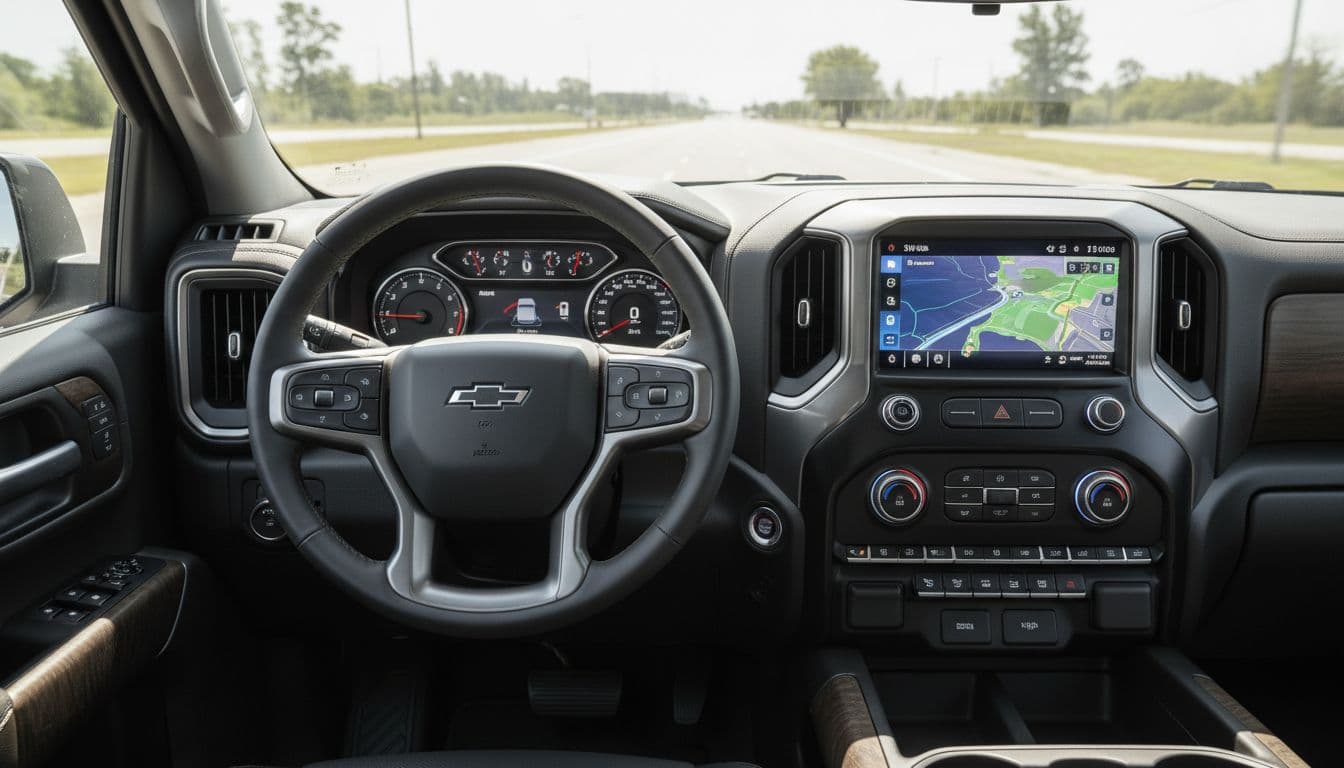
Ford answers with a simpler strength: a lot of the safety story makes sense even before you reach expensive trims. Features tied to Ford Co-Pilot360, plus trailer-aware blind-spot help on the right setups, give the F-150 a solid value argument. That’s important if you want driver aids you’ll actually use, not just flashy tech you’ll show off once.
Both trucks support wireless phone connectivity, and both can serve well as rolling offices. The difference is feel. Chevy feels more screen-heavy and feature-forward. Ford feels a little easier to live with if you care about a strong mix of safety, trailer help, and sensible controls. For more detail on Chevy’s display and camera tech, Truck Report Geeks’ 2026 comparison is a useful reference.
A simple way to think about it is this:
- Pick Chevy if you want the bigger screen experience and stronger camera wow factor.
- Pick Ford if you want a more balanced tech-and-safety value story.
Tailgates, bed access, and smart storage solutions
This part is more practical than it sounds. Tailgate design changes how easy it is to grab tools, load bags of mulch, or reach gear when a trailer is attached.
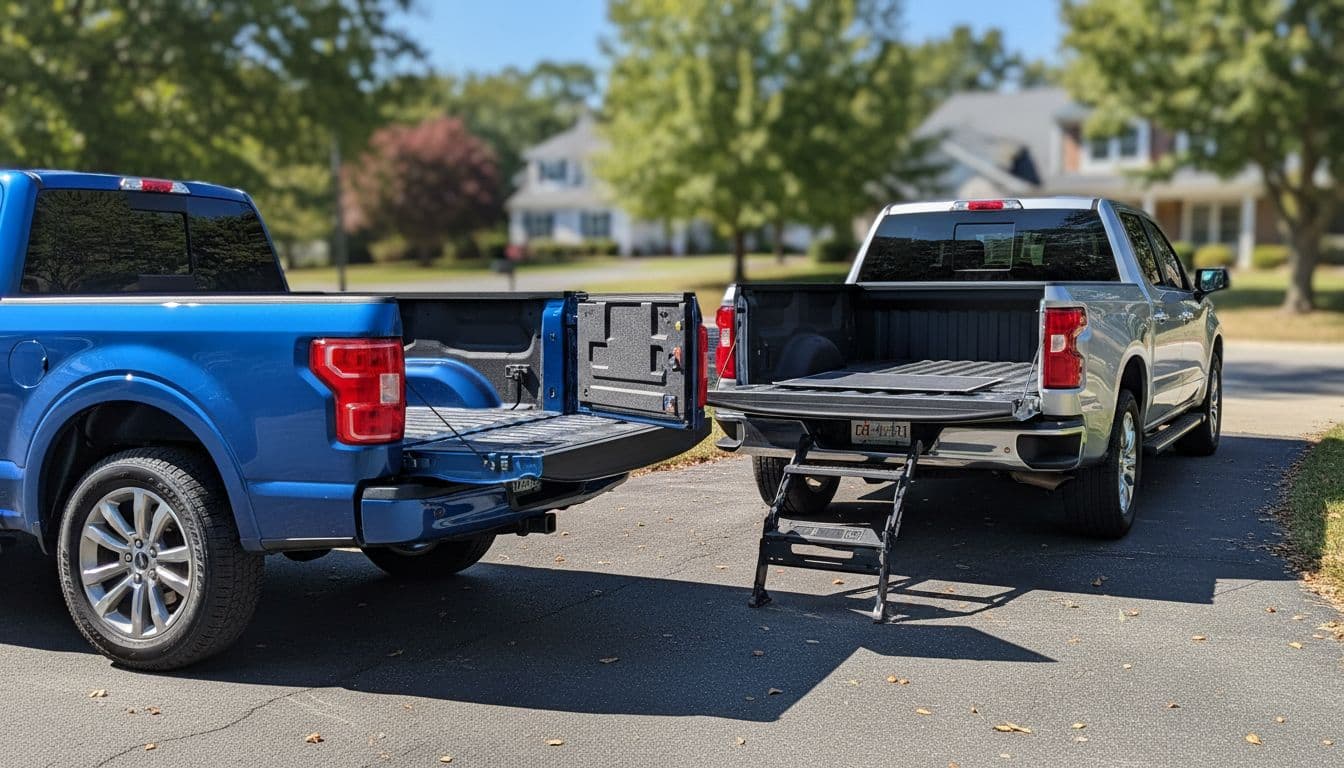
Ford’s Pro Access Tailgate solves a very specific headache. When you have a trailer hitched up, a normal tailgate can turn into a locked door. Ford’s side-swing access door helps you get closer to the bed without dropping the full tailgate, which is especially handy when you’re reaching for straps, a toolbox, or a cooler packed behind the axle. MotorTrend’s look at Pro Access does a good job showing why that matters in the real world.
Chevy’s Multi-Flex tailgate solves a different problem. It gives you more ways to use the back of the truck itself, as a step, a load stop, or a work surface. That makes it great for everyday loading. Picture groceries that need a stop so they don’t roll out, or a stack of boards that need a little extra support. It feels less like a trick and more like a Swiss Army knife for the bed. Chevy also highlights how the setup works in daily use on its Multi-Flex tailgate overview.
So which one is better? It depends on your routine.
- If you tow often and need bed access with the trailer connected, Ford’s Pro Access is the smarter solution.
- If you load, step, sort, and work off the tailgate all the time, Chevy’s Multi-Flex is more versatile.
That makes this one easy to frame. Ford fixes a towing-related annoyance. Chevy adds more ways to use the truck when it’s parked.
So, should you buy the Ford F-150 or the Chevy Silverado?
If you strip away trim names and brand loyalty, the ford f 150 vs chevy silverado choice gets pretty simple. Ford is the safer pick for buyers who want the broadest mix of capability, efficiency, and powertrain flexibility. Chevy makes more sense if you care most about low-end shove, a bigger bed, or long-range diesel cruising.
Think of it this way: the F-150 is the better all-purpose tool, while the Silverado is more of a specialist in a few key areas. Your best truck depends on which strengths you’ll actually use.
Choose the F-150 if you want stronger all-around capability and better base efficiency
Ford has the wider skill set. The 2026 F-150 can tow up to 14,000 pounds in the right PowerBoost hybrid setup, which puts it ahead of the Silverado’s 13,300-pound max. Payload is another clear win, with the F-150 reaching 3,325 pounds in the right configuration, while the Silverado tops out at 2,260 pounds.
That gap matters if your truck has to wear a lot of hats. Maybe you tow on weekends, haul supplies during the week, and still want something that doesn’t feel wasteful on the commute. In that case, Ford gives you more breathing room.
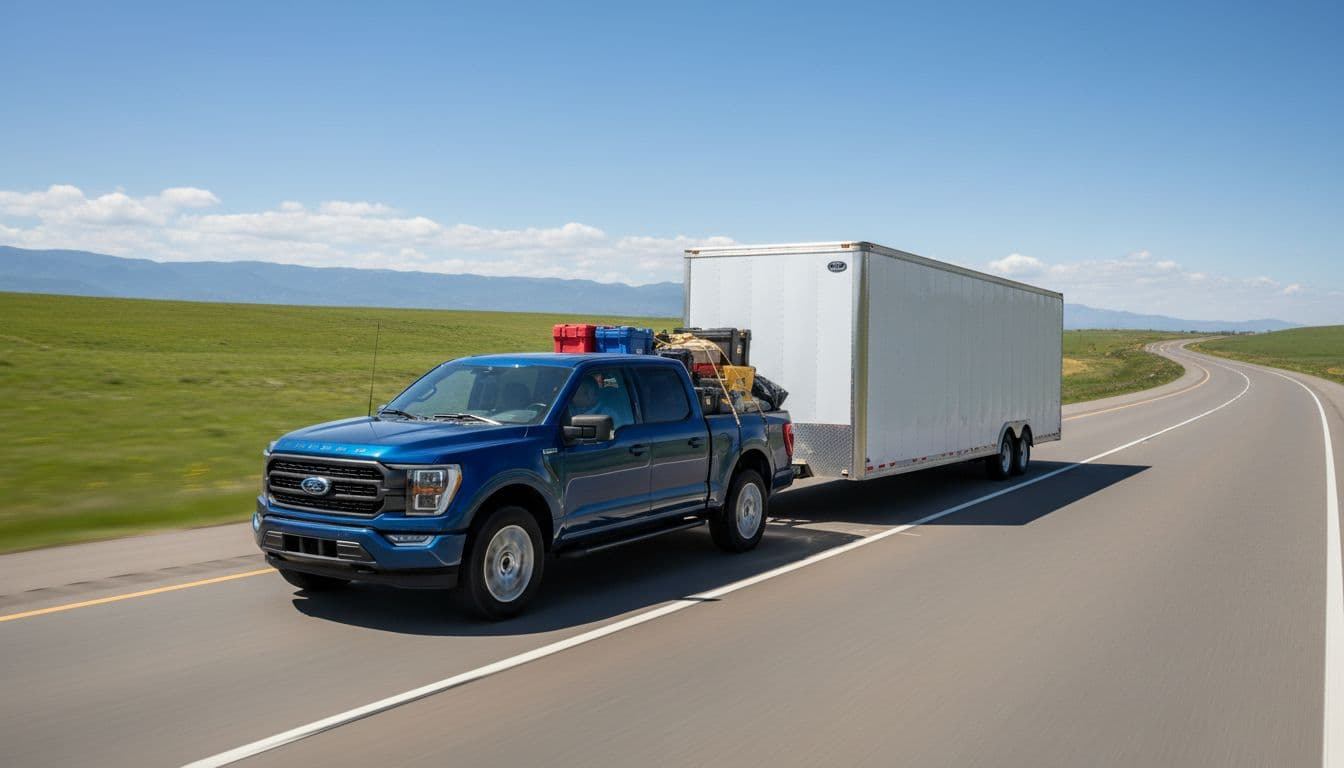
Ford also gives you more ways to tailor the truck to your life. The lineup spans a 2.7L EcoBoost V6, 3.5L EcoBoost V6, 5.0L V8, and the PowerBoost hybrid. That hybrid is a big deal because Chevy still doesn’t offer a direct answer for buyers who want both strong towing and better fuel use in one package.
Base efficiency also leans Ford. The F-150’s 2.7L EcoBoost has a clear mpg edge over Chevy’s base TurboMax, so if you drive empty more often than loaded, the savings can add up. For buyers who want one truck to do almost everything well, the F-150 is the easier recommendation. A broader side-by-side from Driving’s 2026 truck comparison supports that same theme.
If you want the truck with fewer weak spots, the F-150 is the safer bet.
Choose the Silverado if you want strong standard torque, more bed volume, or a diesel option
Chevy wins buyers over in a different way. The standard 2.7L TurboMax makes 430 lb-ft of torque, so the Silverado feels strong right off idle. You notice that in daily driving, especially when merging, climbing grades, or pulling a smaller trailer. It may not lead every spec chart, but it has that easy, muscular feel many truck owners like.
The Silverado also offers more max bed volume, around 89.1 cubic feet in its biggest bed setup. That’s a real advantage if you haul bulky cargo more than heavy cargo. Plywood, ladders, bins, pipes, and jobsite gear take up space fast, and Chevy gives you a little more room to work with.
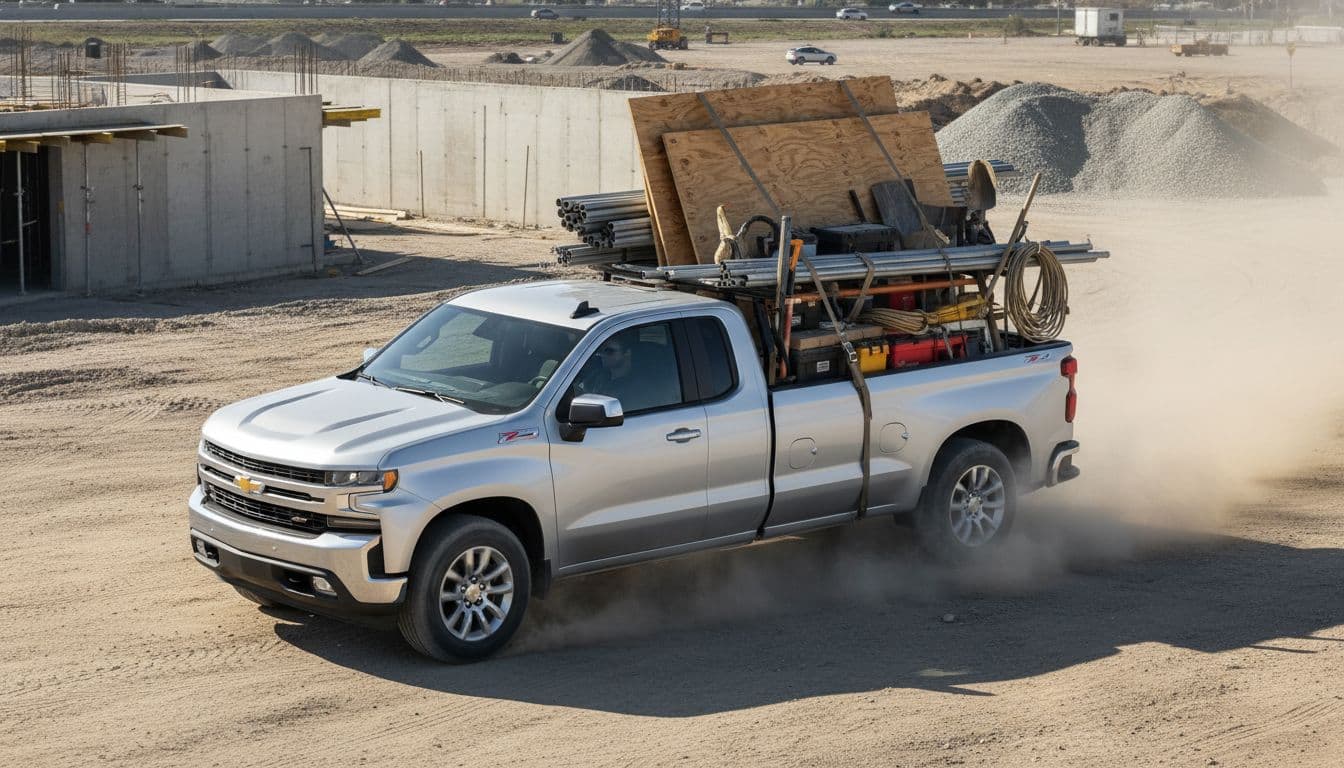
Then there’s the diesel. If you rack up highway miles, the available 3.0L Duramax is still one of Chevy’s best arguments in the chevy silverado vs ford f 150 debate. It delivers strong torque, excellent range, and up to 29 mpg highway in the right setup. Ford doesn’t offer a diesel F-150, so if long-distance efficiency matters more than hybrid flexibility, Chevy has a lane to itself.
Chevy also makes a stronger style statement in upper trims. Models like High Country feel more upscale and relaxed, which can matter if you’re spending premium-truck money. For more detail on how the Silverado’s strengths line up, Truck Report Geeks’ comparison is a useful reference.
In short, pick the Silverado if your priorities are simple: strong standard pull, more cargo volume, and diesel highway range.
Conclusion
The ford f 150 vs chevy silverado debate doesn’t have one right answer, because these trucks win in different ways. Ford still makes the stronger all-around case for buyers who want more flexibility, better base mpg, and higher max capability, while Chevy stands out for base torque, bed space, and diesel range.
That’s why the smart move is to compare the exact trim, engine, cab, and bed you’d actually buy, not the headline number on a sales page. In the end, the chevy silverado vs ford f 150 choice gets clear once you match the truck to your real workload, commute, and budget.
Before you sign anything, drive both. A short test drive will tell you more than a spec sheet ever will.


 admin
admin