 admin
adminShopping for a small SUV gets tricky when two options look this close on paper. The Hyundai Kona vs Kia Seltos matchup is a perfect example, because both seat five, offer available AWD, and give you a choice between a base 2.0-liter engine or a stronger turbo.
That overlap makes the decision harder, not easier. Still, the split becomes clearer once you look at price, road feel, cabin space, tech, and bad-weather confidence. In simple terms, the Kona leans toward efficiency and stronger standard tech, while the Seltos leans toward cargo room and extra utility.
What stands out right away in the Hyundai Kona vs Kia Seltos
If you want the quick version first, this table sums up the biggest differences.
| Category | Hyundai Kona | Kia Seltos |
|---|---|---|
| Fuel economy | Slight edge in best-case mpg | Usually a bit less efficient |
| Passenger space | More room overall | Slightly tighter cabin |
| Cargo behind rear seat | 25.5 cu ft | 26.6 cu ft |
| Standard screen | 12.3-inch touchscreen | Smaller screen on lower trims |
| Ground clearance | Lower, car-like feel | Higher stance |
| AWD extras | Available AWD | Available AWD, lock mode on some trims |
The short takeaway is simple. The Kona feels more polished for daily commuting, while the Seltos gives you a bit more usefulness when cargo and rough weather matter most.
The biggest differences most shoppers will notice first
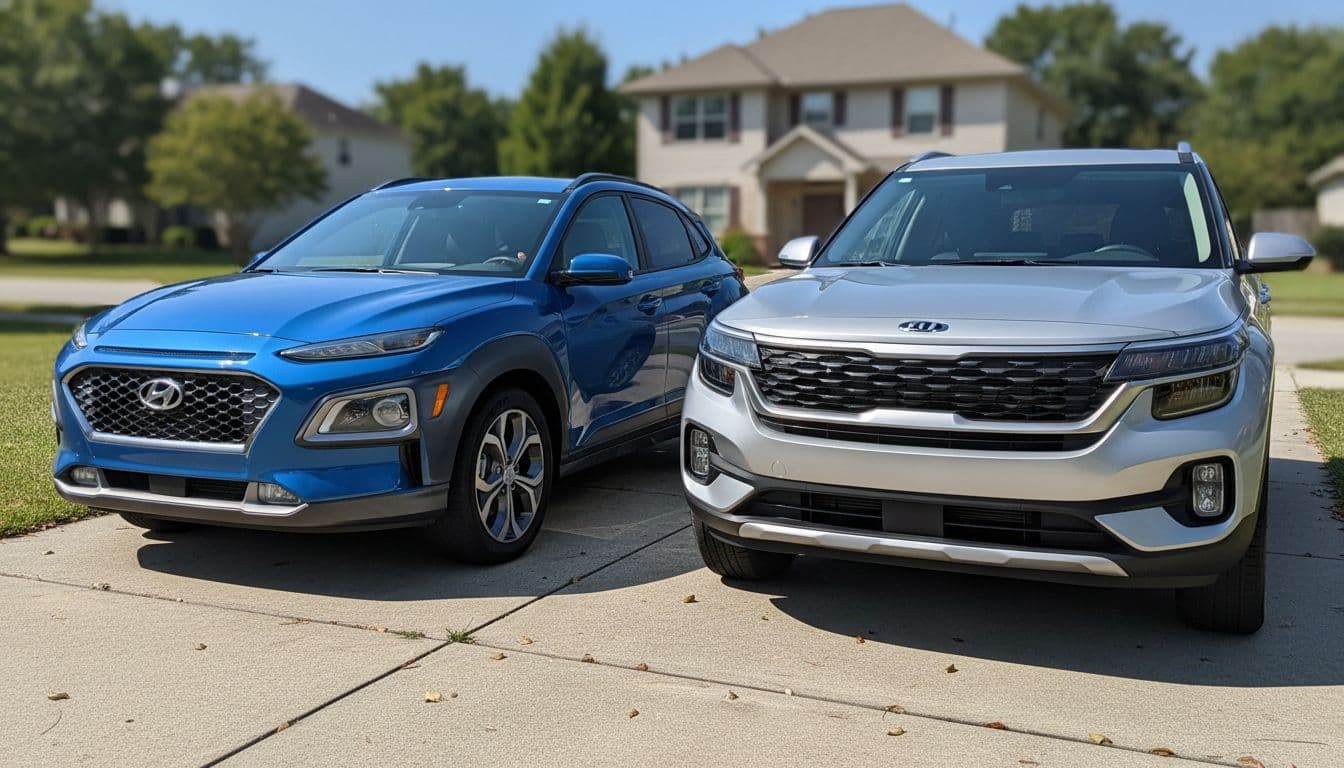
Inside, the Kona looks more modern right away. Its larger standard screen gives the cabin a fresher feel, and that matters every time you climb in. The Seltos feels a little more upright and practical, almost like it was packed with road trips in mind.
Ride comfort also separates them. The Kona tends to feel smoother over daily bumps and patched pavement. On the other hand, the Seltos gives some drivers more confidence in snow or poor roads because it sits a bit higher and offers AWD lock on certain trims.
Price, trims, and value, where your money goes farther
Pricing stays close enough that most buyers won’t decide on sticker alone. Based on recent market data, the Seltos starts around $23,790, while Kona pricing runs a bit higher depending on trim and equipment. Once you add AWD, turbo power, and nicer features, both can climb into the low $30,000 range.
That means value comes down to what you get at the trim you actually want, not the ad price. If you compare real-world equipment and expert scoring, Car and Driver’s comparison is a helpful place to double-check specs and price spreads.
Which SUV gives you more useful features at the base trim
The Kona makes a strong first impression here. Its standard 12.3-inch touchscreen is a big win, because it gives even lower trims a more upscale look and easier daily use.
By contrast, the Seltos often asks you to move up trims for some screen and convenience upgrades. If your budget is tight, the Kona may feel like the better-equipped buy from day one.
When moving up to turbo and AWD trims makes sense
The turbo is worth it if you spend a lot of time on fast highways, carry passengers often, or hate slow merges. In both SUVs, the stronger engine adds welcome punch.
Still, city drivers may not need it. If most trips are commuting, school runs, and errands, the base engine saves money and does the job. AWD is similar. It’s smart for snow-belt states and mountain travel, but many warm-climate buyers can skip it.
Performance and fuel economy, how they feel on the road every day
Both models start with a 147-hp 2.0-liter four-cylinder. Both also offer a 190-hp turbo 1.6-liter, and both turbo versions make 195 lb-ft of torque. So on paper, they’re close. On the road, though, the Kona usually feels calmer and smoother in normal driving.
The Seltos turbo is quicker when pushed, with some tests showing a faster 0 to 60 time. Yet numbers don’t tell the whole story. Around town, the Kona often feels more settled, which can make it easier to live with every day. If you want another broad take on how these sibling SUVs differ, AutoGuide’s comparison adds useful context.

Base engine vs turbo engine, who really needs the upgrade
For commuting and errands, the base engine is enough. It won’t thrill you, but it keeps costs down and feels fine in lighter traffic.
The turbo makes more sense for people who merge often, pass on two-lane roads, or travel with a full cabin. In other words, it’s the better fit if your SUV works hard instead of cruising easy.
Gas mileage and driving range, the Kona wins on mpg, the Seltos stretches a tank farther
The Kona’s best fuel numbers are slightly better, especially in front-wheel-drive form. Some versions reach up to 35 mpg highway, which is a nice edge for long commutes.
The Seltos counters with a larger fuel tank, so it can go longer between fill-ups. That’s useful on road trips. Think of it this way: the Kona sips a little less, while the Seltos carries a larger bottle.
If gas costs matter most, lean Kona. If fewer fuel stops matter more, the Seltos makes a good case.
Interior comfort, cargo room, and tech, the family-use test
This is where the choice gets personal. The Kona offers 101.2 cubic feet of passenger volume, compared with 99 in the Seltos. That doesn’t sound huge, but adults may notice the Kona feels a touch airier.
Cargo swings the other way. Behind the rear seat, the Seltos holds 26.6 cubic feet, versus 25.5 in the Kona. The gap is small, yet it matters when you’re packing groceries, a stroller, or sports bags.

Which one feels roomier for passengers
The Kona has the edge for people space. Front passengers get a modern, open feel, and rear-seat riders have a bit more breathing room for daily use.
That makes the Kona a better pick for couples, commuters, and small families with growing kids. It simply feels less snug inside.
Which one carries more groceries, strollers, and weekend gear
The Seltos wins this one, even if the advantage is modest. That extra cargo room behind the second row helps when real life gets messy.
Meanwhile, both can open up a lot more space with the rear seats folded. So if you often haul larger items, neither is a bad choice.
Screens, cameras, and convenience features that make daily driving easier
The Kona starts strong with that standard 12.3-inch touchscreen. Higher trims can add features like a digital key, surround-view camera, and remote parking assist, which makes it feel more tech-forward.
The Seltos still has plenty to offer. Available dual displays, Bose audio, and a smart power liftgate add real convenience. For another spec-by-spec look at cabin and feature differences, this 2026 comparison is worth a glance.
Safety, AWD confidence, and which SUV is the better pick for you
Both SUVs offer modern driver aids and available AWD, so neither feels stripped down. The gap shows up in focus. The Seltos is the more utility-minded choice, thanks to its higher stance and AWD lock mode on some trims. The Kona feels more commuter-friendly and polished.
Crash ratings and test results can shift as updates roll in, so check the latest IIHS and NHTSA scores before buying. That matters more than badge loyalty.
Choose the Kona if you want better efficiency, a smoother ride, and stronger standard tech
The Kona fits drivers who want a modern cabin, easy daily manners, and better best-case mpg. It’s the stronger match for commuting, couples, and shoppers who care about standard features.
Choose the Seltos if you want more cargo space and extra confidence in bad weather
The Seltos fits buyers who pack a lot, travel often, or deal with snow and rougher roads. Small families and road trippers may like its extra cargo room and AWD-focused features.
No single winner fits everyone. The best choice depends on how you drive Monday through Friday, not how the brochure looks on Saturday.
If you value mpg, ride comfort, passenger room, and standard tech, pick the Kona. If you want cargo space, utility, and more AWD confidence, pick the Seltos. Then test drive the exact trims you’re considering, because this is a close fight and the details decide it.


 admin
admin