 admin
adminShopping for a family SUV can feel like choosing between two strong pitchers on the same team. Both can win, but they throw very different games. In the kia sorento vs hyundai santa fe matchup, that’s exactly the story.
Both are smart 3-row choices for US families in 2026. Still, they don’t hit the same buyer in the same way. The biggest deciding points are price, power, fuel use, cargo space, safety results, and whether you want hybrid or plug-in hybrid options. If you want the short version, the Sorento usually makes more sense for value-minded shoppers, while the Santa Fe feels like the better fit for buyers who want more room and stronger standard performance.
Quick answer, the biggest differences between the Kia Sorento and Hyundai Santa Fe
If you want the fast takeaway, start here. The Sorento usually wins on lower entry cost and more powertrain choice. It gives you a 191-hp base engine, a stronger 281-hp turbo option, plus hybrid and plug-in hybrid versions. That wider range matters if you want to balance budget and fuel savings.
The Santa Fe takes a different path. Every gas model gets a 277-hp turbo engine as standard. It also has a boxier body, more max cargo room, and a roomier feel inside. On top of that, its latest IIHS result gives it a real safety edge.
This quick table sums up the biggest differences.
| Category | Kia Sorento | Hyundai Santa Fe |
|---|---|---|
| Starting price | Around $33,885 | Around $36,650 |
| Standard gas power | 191 hp | 277 hp turbo |
| Max gas power | 281 hp turbo | 277 hp turbo |
| Hybrid choices | Hybrid and plug-in hybrid | Hybrid only |
| Max cargo space | 75.5 cu. ft. | 79.6 cu. ft. |
| Complimentary maintenance | None | 3 years/36,000 miles |
For a broader spec snapshot, Kelley Blue Book’s comparison is a useful side-by-side reference.
Choose the Sorento if you want lower cost and more engine choices
The Sorento is the easier pick if price matters first. Its lower starting point can trim your monthly payment, and that often matters more than a few extra features. The base engine isn’t quick, but it keeps costs down and gives the lineup an efficiency-first feel.
It also offers more paths for different buyers. Gas, hybrid, and plug-in hybrid choices give the Sorento a wider lane than the Santa Fe. If your goal is practical family transport with more budget control, the Sorento feels like the smarter bet.
Choose the Santa Fe if you want more space and stronger standard performance
The Santa Fe is for buyers who don’t want to climb the trim ladder to get real power. Its standard 277-hp turbo gives it stronger passing power and a calmer highway feel right away. That makes daily driving easier, especially with kids, bags, and a full cabin.
You also get a larger cargo area and a slightly friendlier third row. Add Hyundai’s free scheduled maintenance for 3 years or 36,000 miles, and the higher upfront price starts to make more sense.
If power and space are your top two priorities, the Santa Fe is the simpler answer.
Price, trims, and value, what do you get for your money?
Sticker price matters, but real value is more than the number on the window. As of March 2026, the Sorento starts around $33,885, while the Santa Fe starts around $36,650. That’s a meaningful gap for shoppers financing over five or six years.
The Sorento lineup also stretches wider. You can start with a lower-cost trim, or move into turbo, hybrid, or plug-in hybrid territory as your budget allows. That flexibility is a strength because it lets more buyers find a good fit without jumping brands.
The Santa Fe keeps things simpler. Gas trims start higher, but they also skip the weak base-engine experience. Every gas model gets the turbo engine, and Hyundai includes complimentary maintenance. If you want a quick outside view of trim walks and feature groupings, Car and Driver’s comparison tool lays out the basics clearly.
The Kia Sorento is easier on the budget at the start
That lower entry price matters in real life. A few thousand dollars can mean a smaller down payment, lower monthly costs, or room in the budget for AWD and family gear.
For buyers who don’t need fast acceleration, the Sorento can be the better value on lower trims. It gives you three rows without pushing you into a bigger payment.
The Hyundai Santa Fe costs more, but adds power and maintenance coverage
The Santa Fe asks for more money up front, but you do get more standard muscle and a useful ownership perk. Free maintenance for 3 years or 36,000 miles softens the blow, especially in the first years of ownership.
So which one is the better value? That depends on what you care about more, lower cost now, or stronger standard performance with a few extras included.
Performance and fuel economy, do you want more power or better efficiency?
On paper, these SUVs look close in size. On the road, they don’t feel the same. The Sorento starts with a 191-hp 2.5-liter four-cylinder, while the Santa Fe gives every gas model a 277-hp turbo four. The Sorento can top that with a 281-hp turbo on higher trims, and it also offers hybrid and plug-in hybrid versions. Both can tow up to 4,500 pounds when properly equipped.
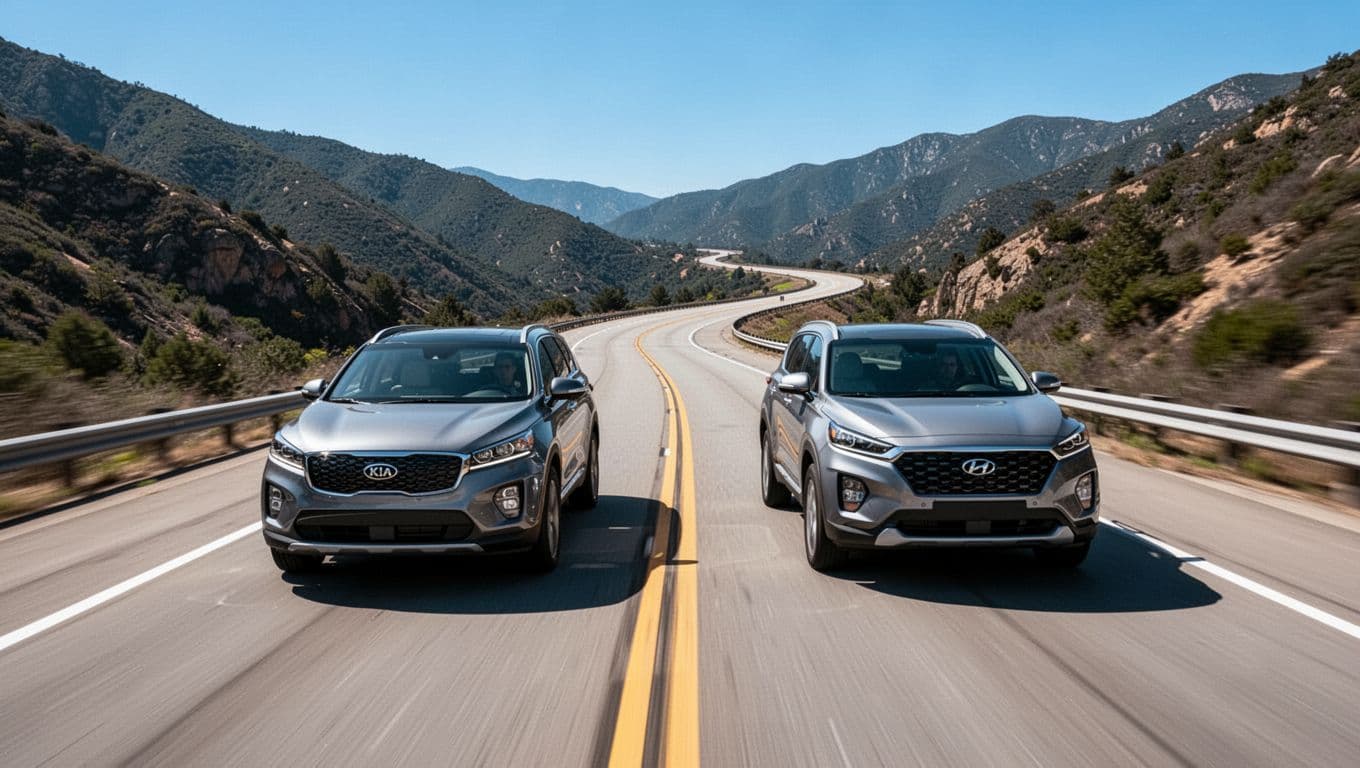
Fuel economy needs a careful read. Latest available base gas figures point to both around 23 mpg combined, so this isn’t a blowout. Still, the Sorento’s wider electrified lineup gives it more room to save fuel over time. For another real-world comparison angle, Driving’s head-to-head review highlights how differently these two approach family SUV duty.
Santa Fe feels stronger right away, Sorento gives you more ways to choose
The Santa Fe is easier to recommend to drivers who want effortless power. You press the pedal, and it responds without drama. Highway merging feels more relaxed, and passing doesn’t need much planning.
The Sorento takes a more build-your-own approach. You can keep costs low with the base engine, step up to the stronger turbo, or go electrified. That’s more flexible, even if the standard setup isn’t as satisfying.
Sorento is the better pick for mpg and possible long-range savings
If you drive a lot, the Sorento still has a stronger fuel-saving story. Not because its base gas model crushes the Santa Fe, but because its hybrid and plug-in hybrid choices open the door to lower fuel bills.
That matters for commuters and long-trip families. If electrification is on your wish list, this Sorento PHEV versus Santa Fe comparison helps show where the Sorento lineup stretches further.
Interior comfort, cargo room, and family use, which one works better every day?
Both SUVs seat up to seven, and both give you a usable third row in a pinch. Still, neither has a truly adult-friendly rear row for long trips. The Santa Fe just does a better job with the space it has.
Its boxy shape pays off where families notice it most, cargo. Max space is about 79.6 cubic feet versus 75.5 cubic feet in the Sorento. That sounds small on paper, but the Santa Fe’s upright tail and squarer opening make bulky stuff easier to fit. The Sorento counters with a slightly smaller footprint, which makes it easier to park and manage in tighter areas.

Santa Fe gives you more room for strollers, bags, and bulky cargo
This is where shape matters as much as numbers. A boxier rear end is like a closet with square corners, you waste less space. Strollers, coolers, sports bags, and grocery hauls fit with less Tetris.
Families that travel often will notice that ease. Loading feels simpler, and the cabin feels more open too.
Sorento may be easier to live with if you want a slightly smaller SUV
Not every buyer wants the biggest cabin possible. Some want three rows without the extra bulk. That’s where the Sorento earns points.
It feels easier to place in parking lots, garages, and crowded city streets. If your daily life includes school pickup lines and tight shopping centers, that smaller feel can matter more than a few extra cubic feet.
Safety, reliability, and the final verdict for most buyers
Safety is one of the clearest separators here. Both SUVs post strong crash-test results overall, but the Santa Fe has the stronger recent IIHS showing. Based on the latest available data, Santa Fe models built after November 2024 earned Top Safety Pick+ status. The Sorento doesn’t match that recent IIHS result.

Reliability is less clear-cut. Direct 2026 long-term dependability data is still limited, and neither SUV has a runaway lead. Both brands are well known for strong warranty coverage, which helps ease some ownership risk. For a shopper-focused look at features, pricing, and ratings in one place, Kelley Blue Book’s latest model comparison is a handy cross-check.
If safety and family space are your top priorities, the Santa Fe has the edge
The Santa Fe’s stronger IIHS result, roomier feel, and standard turbo power make a persuasive case. For many families, that mix will justify the higher price.
It’s not a landslide win, but it is the more complete choice if comfort and peace of mind sit at the top of your list.
If value, efficiency, and lineup flexibility matter most, the Sorento makes more sense
The Sorento wins with price, better lineup variety, and a stronger efficiency story once hybrids enter the picture. It gives budget-focused buyers more ways to tailor the SUV to their needs.
For practical shoppers, that flexibility is hard to ignore.
In the end, neither SUV is a bad choice. The Sorento is the better pick if you want a lower price, more powertrain options, and the best shot at long-term fuel savings. The Santa Fe makes more sense if you want stronger standard power, more cargo room, and a real safety advantage. The best choice isn’t the one with the flashiest spec sheet, it’s the one that fits your daily routine without making life harder.


 admin
admin