 admin
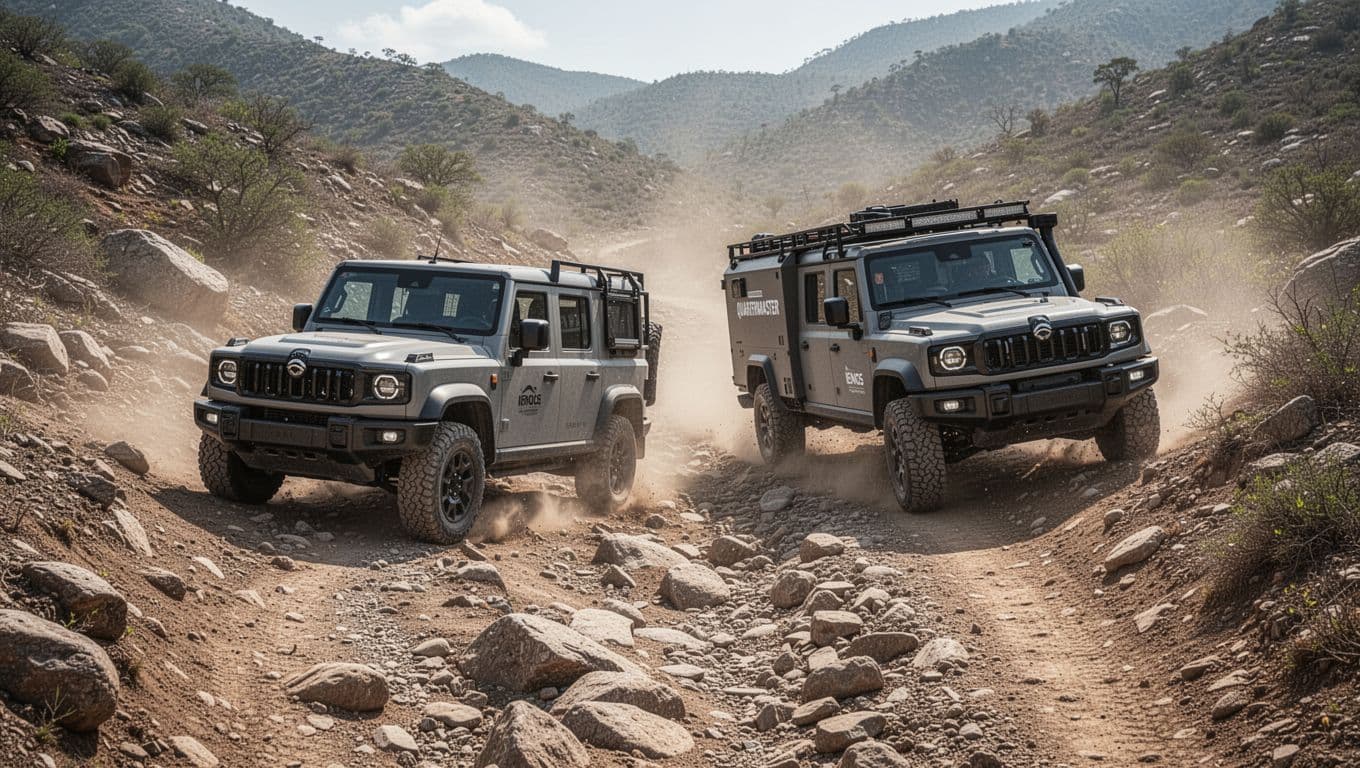
adminThe Ineos Grenadier Station Wagon SUV and the Ineos Quartermaster pickup look like close family because they are. They share the same rugged frame, BMW-sourced six-cylinder engine, 4WD system, and old-school off-road mindset. In simple terms, both are built to go far past the edge of pavement.
That makes the ineos truck vs suv choice less about trail talent and more about daily life. Do you need a secure cargo area, or a bed that can take muddy gear and bulky loads? Do you want one vehicle for family trips and errands, or a machine that earns its keep like a tool? Those are the questions that matter most here.
What the Ineos Grenadier SUV and Quartermaster truck have in common
Before comparing them, start with the shared hardware. Both use a 3.0-liter turbocharged inline-6 from BMW, rated at about 282 hp and 332 lb-ft. Both pair it with an 8-speed automatic, full-time 4WD, a low-range transfer case, and a center locking differential. Both also ride on solid axles, which tells you a lot about their priorities.
That recipe gives them the same basic character. They seat five, weigh about 5,800 pounds, return 15 mpg combined, and carry a 5-year, 60,000-mile warranty. Inside, the layout is simple by modern standards, though both still include a 12.3-inch center screen. For a quick spec check, Car and Driver’s Grenadier specs line up with those core numbers.
Here’s the quick view of what stays the same:
| Spec | Grenadier SUV | Quartermaster truck |
|---|---|---|
| Engine | 3.0L turbo I-6 | 3.0L turbo I-6 |
| Output | 282 hp, 332 lb-ft | 282 hp, 332 lb-ft |
| Transmission | 8-speed automatic | 8-speed automatic |
| Drivetrain | Full-time 4WD, low range, center locker | Full-time 4WD, low range, center locker |
| Seats | 5 | 5 |
| Fuel economy | 15 mpg combined | 15 mpg combined |
| Max towing | 7,716 lbs | 7,716 lbs |
The takeaway is simple: the bones are nearly identical. So the driving feel, off-road mission, and ownership tradeoffs start from the same place.
They are built for hard trails first, pavement second
These vehicles are not trying to be soft, quick, or sporty. They are built for rough tracks, slow crawling, and hard use. Think of them like hiking boots, not running shoes.
Reviews keep landing on the same point. Off-road ability is excellent, but the ride feels firm on regular roads. Acceleration is okay, not fast. Handling is basic, and that heavy curb weight never really hides. The steering got a bit better for 2026, yet neither one feels like a polished luxury SUV.
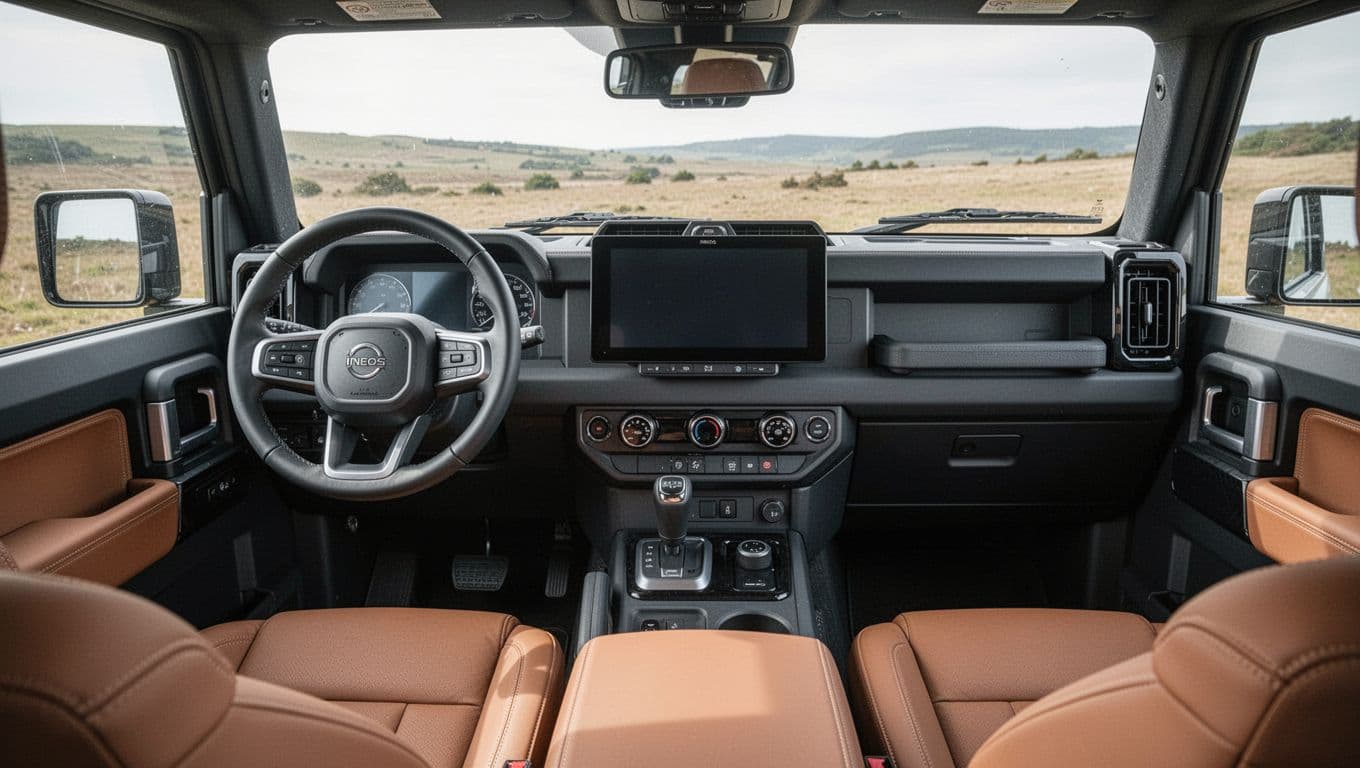
That low-tech approach is part of the appeal. There are fewer flashy features to distract from the job. If you want rugged and honest, that works. If you want smooth and plush, it doesn’t.
The biggest difference comes down to cargo space, bed use, and everyday comfort
This is where the choice gets real. The Grenadier SUV gives you an enclosed rear cargo area with about 40.6 cubic feet behind the back seat. That matters if you carry luggage, camera gear, groceries, a dog crate, or anything else you want locked up, dry, and out of sight.
The Quartermaster solves a different problem. Its open bed works better for dirty tools, oversized camping gear, bikes, fuel cans, wet recovery gear, or jobsite materials. You don’t have to baby it, and you don’t have to worry about mud ending up next to your backpack.
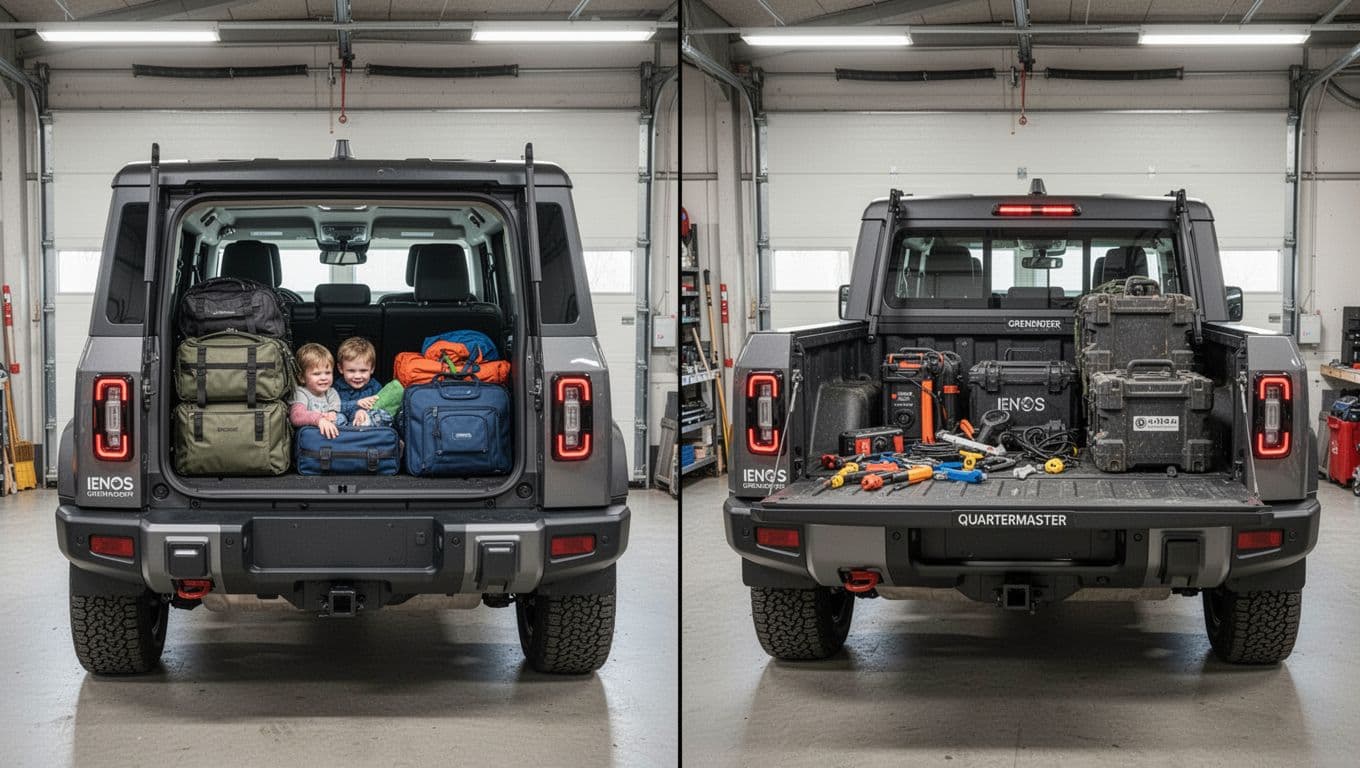
Both models seat five, but the SUV fits family duty more naturally. It’s easier for errands, road trips, airport runs, and everyday storage. On paper, that sounds small. In real life, it changes how often the vehicle feels easy instead of awkward. Those practical details also show up on Edmunds’ Grenadier specs page, including the cargo figure, mpg, and warranty terms.
If your gear needs to stay clean, secure, and dry, the SUV has the clear edge.
Why the SUV is easier to live with for most owners
An enclosed cargo area simply asks less from you. Toss in groceries, a stroller, a duffel bag, or a laptop case, and you’re done. There’s no need for a bed cover or extra planning.
It also keeps the cabin and your cargo separated from weather without feeling exposed. For road trips, that matters. For school-run duty, it matters even more.
Why the truck wins if you haul bulky gear or do real utility work
A pickup bed is hard to replace when your stuff is muddy, sharp, tall, or awkward. Think chainsaws, coolers, firewood, camping bins, motorcycles, or building supplies. The Quartermaster handles that kind of load with less fuss.
Some buyers assume the truck tows more, but current US figures list both at about 7,716 pounds. So the real utility gain is the bed, not a big towing jump. That work-first personality comes through clearly in Road & Track’s Quartermaster review.
How they compare on the road, off road, and at the gas pump
In daily use, both feel heavy and truck-like. Expect 0 to 60 mph in roughly 8 to 9 seconds, plus a top speed around 102 mph. Braking and cornering feel solid enough, but not polished. If you’re cross-shopping a refined luxury SUV, neither Ineos will charm you on pavement.
Still, that misses the point. These vehicles shine when the road gets bad, slow, rocky, or slick. The controls are tuned for traction and patience, not speed. That’s why they feel so confident in low-speed crawling, ruts, and rough ground where many modern SUVs start acting nervous.
Fuel economy won’t help you choose. Both are rated at 15 mpg combined, and both want premium fuel. So there’s no real efficiency win either way.
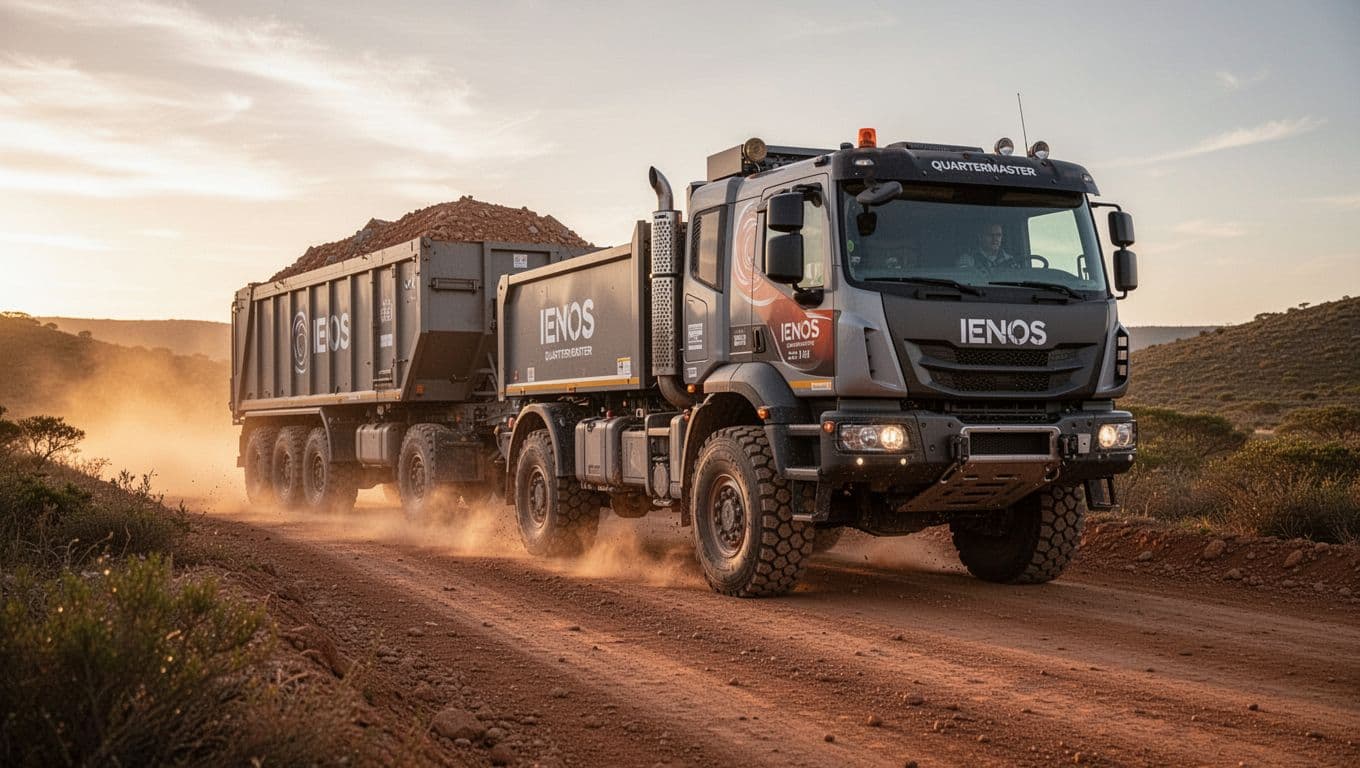
Off road, the choice is close because both are seriously capable
Because they share the same main hardware, trail skill is almost a wash. Both use the same basic formula of solid axles, locking hardware, low range, and stout construction. Ineos has even framed the brand around being best at very low speeds off-road, and that focus shows.
So when it’s time to pick, ask what comes after the trail. Are you bringing home wet gear, a dirt bike, or loose tools? Or do you need a sealed cargo area for bags, food, and pets?
On road, neither hides its truck-like roots
The Grenadier SUV may feel a bit easier to manage day to day because it’s simpler to park, load, and use like normal transportation. The Quartermaster adds more length and a bed, which can make tight lots and city use less friendly.
If towing matters, Autoblog’s Quartermaster towing test gives a useful real-world look at how the pickup handles a trailer. Still, neither model turns into a smooth highway cruiser.
Price, value, and the right buyer for each Ineos model
Price makes this choice sharper. The 2026 Grenadier SUV starts in the low $70,000 range, roughly $71,000 to $72,995 depending on source and destination charges. With trims and options, it can move into the high $70,000s or above. The Quartermaster starts much higher, at about $86,395, and climbs from there.
That means neither one is a bargain in the normal sense. You buy these because you want this exact mix of old-school 4×4 design, strong hardware, and uncommon style. If you’re just chasing max comfort per dollar, there are easier answers elsewhere.
So value comes down to fit. The SUV makes more sense if you need one vehicle to handle people, luggage, weather, and weekend trails. The truck makes more sense if the open bed will get used often enough to justify the price and daily compromise.
Choose the Grenadier SUV if you want one rig for family, travel, and trails
The Grenadier is the better all-around pick for most shoppers. It gives you enclosed cargo, easier everyday use, and the same serious off-road ability. For someone who wants one vehicle to do a little of everything, this is the smarter call.
It’s the model that feels most complete when life includes commuting, errands, road trips, and backcountry travel.
Choose the Quartermaster if your gear is messy, oversized, or work-related
The Quartermaster fits a narrower buyer, but it fits that buyer well. If you regularly haul tools, building materials, overlanding bins, motorcycles, or wet recovery gear, the bed adds real value.
In that case, the extra size and price aren’t just for looks. They serve a purpose.
In an ineos truck vs suv decision, the SUV is the better all-around answer for most people, while the Quartermaster is the smarter pick for hauling and utility. Both deliver the same rugged feel, strong off-road hardware, and simple design philosophy. That’s why the final choice comes down to cargo style, daily comfort, and how often an open bed will truly earn its space. If your life leans toward family travel and secure storage, buy the Grenadier. If your gear is dirty, bulky, or work-driven, the Quartermaster makes more sense.

 admin
admin