 admin
adminFinding the best SUV to buy used sounds simple until you start scrolling listings. One looks cheap but has a rough history. Another looks perfect, yet the price is too close to new.
The right used SUV depends on how you live. Your budget matters, but so do your commute, parking space, family size, weather, and how much cargo you haul each week. A good choice should feel safe, last well, and still make sense after insurance, fuel, and repairs.
This guide keeps the focus on practical picks and real tradeoffs, so you can narrow the field with confidence.
What makes a used SUV worth buying in the first place
A used SUV is only a good deal if it stays affordable after you own it. That means looking past paint color, giant screens, and fancy trim names.
Focus on reliability, safety, and cost before looks
Start with the boring stuff, because it saves the most money. A used SUV with a strong repair record and solid crash scores is usually the better buy than a flashier model with weak dependability.
For a broad snapshot, data-backed lists like iSeeCars’ most reliable used SUVs can help you spot models with a better long-term track record. After that, check the exact model year you want, because one good generation can still have a bad year mixed in.
Safety matters just as much. Look for strong crash-test results, standard driver aids, and good visibility. Blind spots, weak headlights, or poor rear-seat protection can matter more than a panoramic roof.
Then look at the full cost. Tires, brakes, fuel, insurance, and routine service can change the math fast. A cheap SUV with poor mileage or pricey repairs can drain your budget in slow motion.
Buy the cleanest, best-maintained SUV you can afford. Service history usually matters more than extra features.
Choose the right size for your life, not just the biggest SUV
Size should match your routine. Bigger is not always better.
A subcompact SUV, like a Crosstrek-sized model, is easier to park and cheaper to fuel. Compact SUVs, such as the Forester and CR-V, hit the sweet spot for most people because they balance rear-seat room, cargo space, and everyday comfort.
Midsize SUVs add more space and often a nicer highway ride. They make sense if you travel with kids, dogs, or lots of gear. Three-row SUVs work best if you truly need that third row. Otherwise, you’re paying for bulk you may not use.
If you want more data before shopping, Consumer Reports’ reliable SUV rankings are useful for seeing which models tend to avoid trouble.
Best used SUVs to buy for most drivers
These picks cover the broad middle of the market. They are not random favorites. They are practical choices with strong reputations, useful cabins, and pricing that still makes sense used.
Here is a quick side-by-side view.
| Model | Best years to shop | Typical used price | Why it works | Main drawback |
|---|---|---|---|---|
| Subaru Forester | 2020 to 2024 | $20,000 to $28,000 | Standard AWD, roomy, easy to see out | Slow acceleration |
| Subaru Crosstrek | 2021 to 2024 | $18,000 to $26,000 | Great value, easy in traffic, solid reputation | Less cargo space |
| Honda CR-V Hybrid | 2020 to 2023 | $25,000 to $35,000 | Comfortable, efficient, family friendly | Used prices stay high |
| Hyundai Santa Fe Hybrid | 2021 to 2024 | $28,000 to $38,000 | Roomy, good features, strong value | Fewer used examples |
| Toyota Grand Highlander Hybrid | 2024 | Often $40,000+ | Real third row, strong mileage | Expensive and hard to find |
For most shoppers, the compact and midsize options bring the best value.
Subaru Forester, a smart used SUV for safety, space, and all weather driving
The 2020 to 2024 Forester is one of the safest all-around answers for families and commuters. It has standard AWD, great outward visibility, a tall roof, and a cabin that feels open instead of cramped.
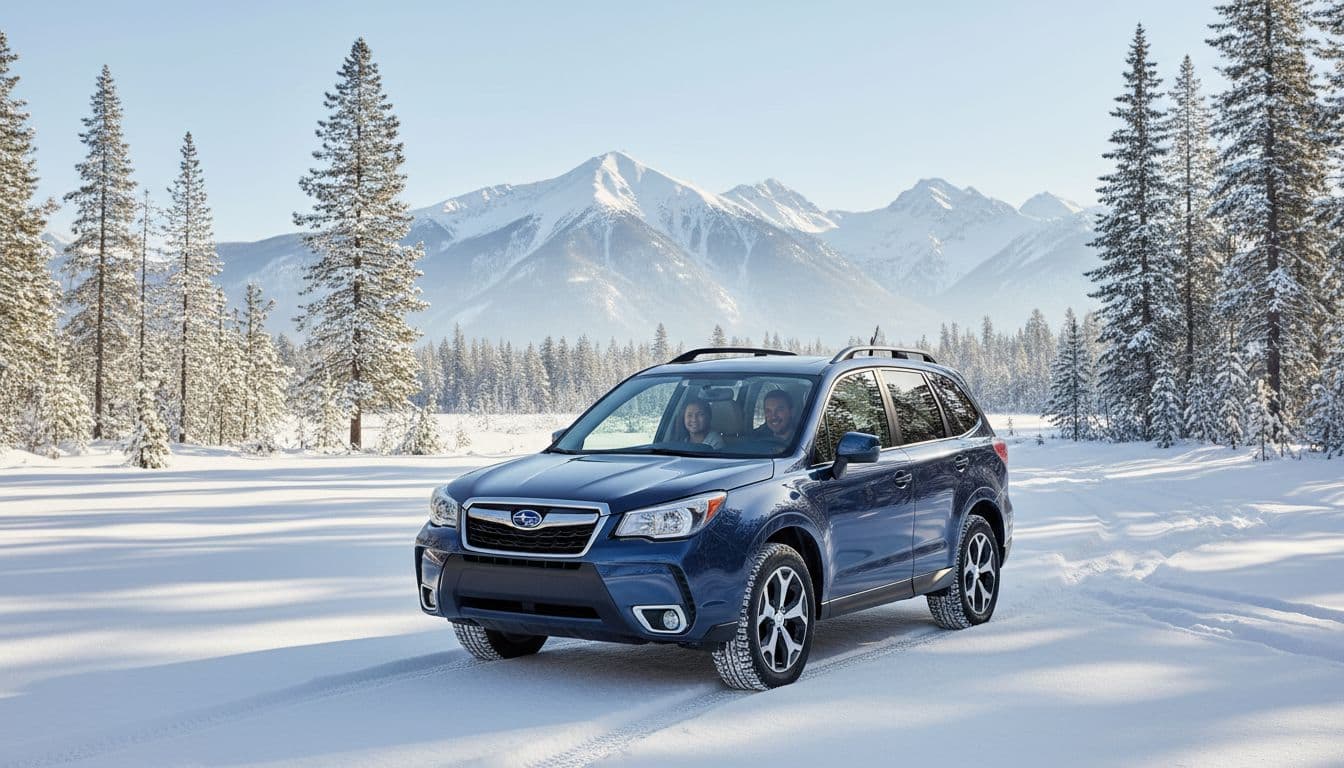
As of April 2026, used prices often land around $20,000 to $28,000, while cleaner 2024 models can push higher. Fuel economy is good for an AWD SUV, usually around the high-20s to low-30s combined, depending on year and trim.
The tradeoff is simple. It is not quick. If strong acceleration matters to you, the Forester can feel flat. Still, if you care more about confidence in rain, snow, and school-run duty, this is one of the best used SUVs to buy.
Subaru Crosstrek, one of the best used SUVs to buy if you want value and easy driving
The Crosstrek is the easier fit for city life. It is smaller than the Forester, so parking and tight streets feel less annoying. At the same time, you still get Subaru’s AWD setup and a solid reliability reputation.
For 2021 to 2024 models, expect many used examples between $18,000 and $26,000. That price spread makes it a strong option for buyers who want something newer without climbing into midsize-SUV money.
Its main weakness is space. Rear cargo room is useful, but it cannot match a CR-V or Forester for family gear. If you usually carry one passenger, a dog, or weekend bags, it works well. If you haul strollers, sports gear, and Costco runs, you may outgrow it fast.
Honda CR-V Hybrid, a great pick for shoppers who want comfort and fuel savings
The 2020 to 2023 Honda CR-V Hybrid is easy to recommend because it does almost everything well. It rides smoothly, has a roomy back seat, and delivers strong fuel economy for an SUV, often around 37 to 40 mpg combined depending on the year.
That makes it a smart choice for long commutes or households that put on serious miles. It also feels more polished on the highway than many compact rivals.
Used prices usually stay firm, often around $25,000 to $35,000, because demand stays strong. That is the catch. You may pay more up front than you would for a Forester or Crosstrek. Still, if efficiency and comfort sit high on your list, the CR-V Hybrid is a strong best used SUV to purchase for daily use.
Hyundai Santa Fe Hybrid, a practical used SUV with room and good features
The 2021 to 2024 Santa Fe Hybrid is a smart alternative for buyers who want more room without stepping into a huge SUV. It has a wide, comfortable cabin, a calm ride, and a feature list that often beats rivals at the same price.
In today’s market, many used examples fall around $28,000 to $38,000, depending on trim and mileage. That can make it a better value than some Japanese rivals, especially when you compare equipment.
It is also a nice road-trip pick. The seats are supportive, and the extra space helps when the whole family comes along. The main downside is supply. You will usually find fewer used Santa Fe Hybrids than CR-Vs or Foresters, so patience helps.
Toyota Grand Highlander, a strong used choice if you need three rows and better mileage
If you need a real third row, the Grand Highlander deserves attention. Adults can fit in the back more easily than in many midsize three-row SUVs, and the hybrid version can return mileage in the mid-30 mpg range.
The problem is price. Low-mileage 2024 used examples are still hard to find in April 2026, and many sit well above $40,000. That puts it out of reach for a lot of used shoppers.
Still, for buyers with a bigger budget, it is one of the few family-sized SUVs that gives you space and fuel savings together. Among best used SUVs by budget, it is closer to a premium used buy than a bargain.
How to pick the right used SUV based on your budget and needs
A shortlist only helps if it matches your budget and daily routine. This is where most shoppers can cut the noise.
Best used SUV for under $20,000
Under $20,000, condition matters more than badge prestige. A 2021 Crosstrek is often a better buy than a larger SUV with a rough history. You may also find higher-mileage 2020 or 2021 Forester models in this range.
Focus on clean service records, reasonable mileage, and tires and brakes that do not need instant replacement. A well-kept smaller SUV will usually beat a neglected larger one.
Best used SUV for under $30,000
This is the sweet spot for many buyers. Newer Foresters and Crosstreks fit well here, and some CR-V Hybrid or Santa Fe Hybrid examples also show up with fair mileage.
The Grand Highlander usually does not. In today’s market, a true low-mileage hybrid example often sits above this budget. If $30,000 is your ceiling, the Forester, Crosstrek, and CR-V Hybrid are the most realistic targets.
Best used SUV for families, commuters, and weekend travelers
Families should start with the Forester if they want compact size and easy child-seat access. If they need three rows and have a larger budget, the Grand Highlander is the better fit.
Commuters will likely prefer the Crosstrek or CR-V Hybrid. The Crosstrek is easier in tight parking lots, while the CR-V Hybrid saves more fuel over time.
Weekend travelers may like the Santa Fe Hybrid most. It has enough room for bags, a quieter highway feel, and a feature set that makes long drives easier.
What to check before you buy any used SUV
A good model can still be a bad purchase if the specific vehicle was neglected. The final step matters as much as the name on the hood.
Read the vehicle history report, then still get a pre-purchase inspection
A clean history report is helpful, but it is not proof that the SUV is problem-free. Some bad repairs, flood issues, and suspension damage do not show up clearly.
That is why an independent mechanic inspection matters. A solid pre-purchase inspection guide explains what a trained shop can catch before you commit. Spending a little now can save you from buying someone else’s headache.
Also, test every feature yourself. Check the backup camera, climate control, seat heaters, liftgate, and all warning lights. Small electronics problems can turn into expensive repairs.
Look for ownership costs that can change the real value
Sticker price is only the start. Ask about tire age, brake wear, battery condition, and upcoming maintenance. On hybrid models, review warranty coverage for hybrid parts and make sure the system feels smooth on the test drive.
Insurance can also change by model and trim, so get a quote before you buy. The same goes for fuel. An SUV that costs more up front can still win if it uses much less gas each month.
If you remember one thing, make it this: the best SUV to buy used is the one that fits your life and has been cared for properly.
No single model wins for everyone. For most people, a Forester, Crosstrek, CR-V Hybrid, or Santa Fe Hybrid is the smart place to start, while the Grand Highlander is better for bigger families with bigger budgets.
Shop by condition first, compare model years carefully, and always get an inspection. That is how you end up with a used SUV that feels like a good decision long after the test drive.

 admin
admin