 autovalix_krexlg
Gas costs still sting in 2026, and many drivers now spend more time on the road than they expected. That makes the search for a used SUV with best gas mileage feel a lot more urgent. You want room for kids, groceries, pets, and weekend gear, but you don’t want every fill-up to feel like a bill collector.
The hard part is choosing the right type of SUV. Should you buy a hybrid and pay more upfront, or pick a smaller gas model with a lower price? The best answer depends on how you drive, what you carry, and how long you plan to keep it.
This guide keeps it practical. Instead of chasing perfect brochure numbers, it compares real-world value, fuel economy, price, and everyday usefulness.
The used SUVs that give you the most miles per gallon
A short list works better than a giant spreadsheet. These are the used SUVs that stand out right now for fuel economy, reputation, and broad used-market appeal, especially in the 2018 to 2023 range.
Here’s the quick view:
| Model | Best for | Typical MPG | Main tradeoff |
|---|---|---|---|
| Kia Niro Hybrid | Solo drivers, commuters | About 50 combined | No AWD, less power |
| Toyota RAV4 Hybrid | Most shoppers | About 32 to 40 combined | Higher used price, some cabin noise |
| Toyota Highlander Hybrid | Larger families | About 35 combined | Bigger price tag |
| Honda CR-V Hybrid | Small families | Around 30+ combined | Costs more than gas CR-V |
| Lexus NX Hybrid | Luxury buyers | Around 31 to 33 | Less cargo room than some rivals |
| Nissan Kicks | Budget buyers | About 33 combined | Small, modest power |
| Honda CR-V | Gas-only balance | High 20s to about 30 | Lower MPG than hybrids |
The standout for raw efficiency is the Kia Niro Hybrid. It feels more like a tall hatchback than a traditional SUV, but that shape helps it sip fuel. If your life is mostly commuting, errands, and city driving, it’s hard to ignore. For trim details and owner-focused notes, Edmunds’ Kia Niro review is a useful place to compare versions.
Then there’s the Toyota RAV4 Hybrid, which hits a sweet spot. It doesn’t lead the class in MPG, yet it balances space, resale value, and trust better than almost anything else. The Highlander Hybrid does the same trick for bigger families, though you will pay more to get it.
Honda gives buyers two good paths. The CR-V Hybrid works well if you want a roomy cabin with better fuel use, while the regular CR-V stays attractive for shoppers who want simpler pricing and very solid everyday mileage.
The Nissan Kicks is the curveball here. It isn’t roomy like a RAV4, and it isn’t quick. Still, if low running costs matter most, it punches above its weight.
In short, the best choice depends on whether you value max MPG, more space, or a lower buy-in price.
Best pick for most shoppers, Toyota RAV4 Hybrid
For most people, the Toyota RAV4 Hybrid is the safe middle lane. It offers strong fuel economy, practical cargo space, available AWD, and a long record of solid reliability. Many used examples return about 40 mpg combined, and that matters if you drive every day.
Used pricing often starts around the mid-$20,000 range, depending on year, trim, mileage, and condition. That’s not cheap, but resale stays strong, which softens the blow later. It also feels like a true family SUV, not a compromise on stilts.
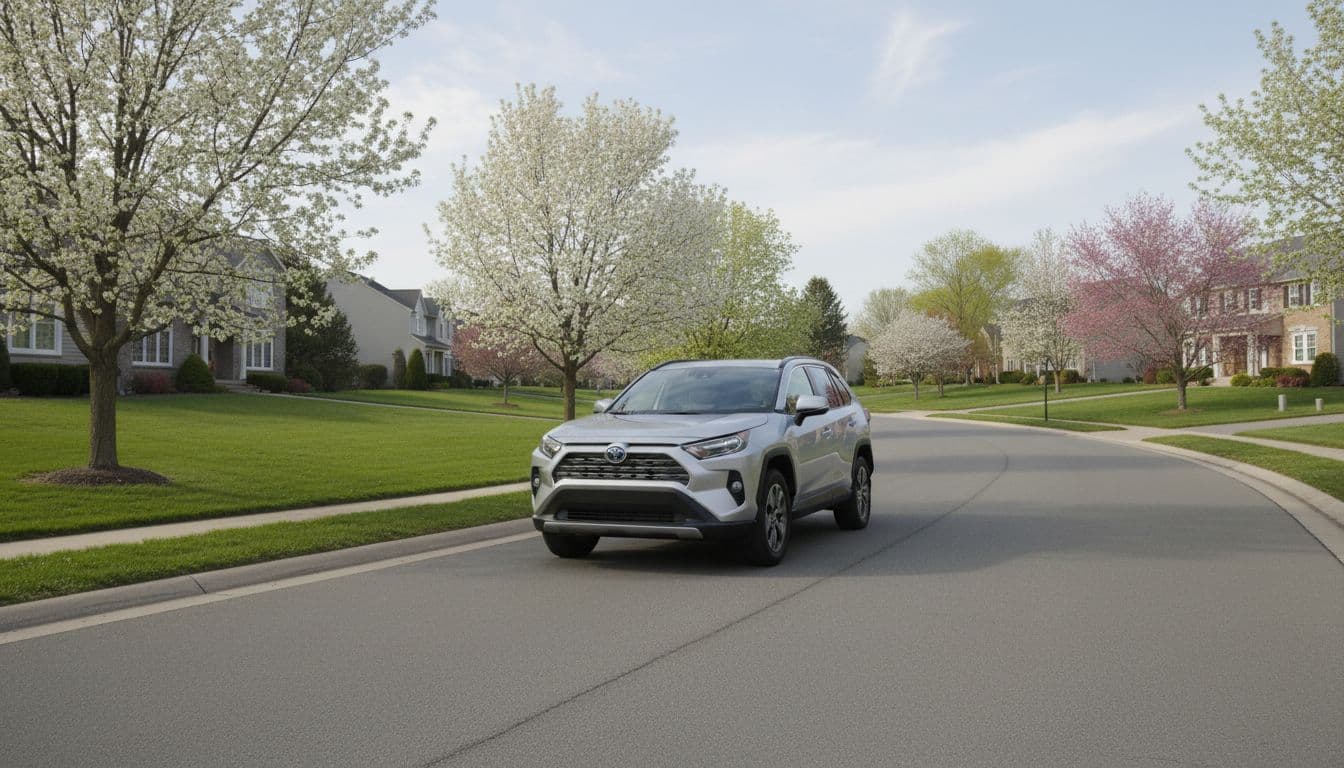
The main downside is price. Some drivers also notice engine noise under hard acceleration. Even so, the whole package is easy to live with. For a broader look at why this model lands so well for everyday owners, see Toyota RAV4 Hybrid ownership basics.
Best budget-friendly gas option, Nissan Kicks
Not everyone wants a hybrid payment. If you need lower upfront cost and still want strong fuel economy, the Nissan Kicks makes a lot of sense. Many used examples return about 33 mpg combined, which is excellent for a non-hybrid SUV.
That lower price is the point. You can often get a newer Kicks with fewer miles than an older hybrid for the same money. As a city car with extra ride height, it works well.
The tradeoff is obvious once you drive it. It’s smaller, slower, and less refined than compact SUVs like the CR-V or RAV4. Cargo room is decent, but back-seat comfort is only okay for adults. Still, for value shoppers, it can be the right kind of simple.
Hybrid vs gas, which type saves you more money over time
Fuel savings matter, but purchase price matters too. Think of it like buying a coffee maker. The fancy one may save money later, but only if you use it enough.
A used hybrid SUV usually wins on fuel use, especially in stop-and-go traffic. That’s where the electric motor does its best work. City drivers, rideshare drivers, and long commuters often feel the savings faster than weekend-only drivers.
A regular gas SUV can still be the smarter deal if the price gap is wide. If a gas CR-V or Kicks costs several thousand less than a similar hybrid, it may take years for fuel savings to catch up.
When a used hybrid SUV is worth the extra cost
Hybrids tend to shine for people with heavy city driving, long daily commutes, or years of ownership ahead. That’s why the RAV4 Hybrid, CR-V Hybrid, Highlander Hybrid, and Lexus NX Hybrid stay in demand. They save fuel where many Americans burn it most, in traffic.
Battery fear also gets overblown. Many Toyota, Honda, and Lexus hybrids have strong records when maintained well. That doesn’t mean every used hybrid is perfect, but it does mean shoppers shouldn’t panic just because a battery is involved.
If you drive a lot of city miles, a hybrid often pays you back one tank at a time.
Resale helps too. Efficient hybrids usually hold value well, which can make the higher buy-in easier to justify.
When a regular gas SUV makes more sense
A gas-only SUV still fits plenty of buyers. If your budget is tight, the easier path is often the right one. You’ll usually find more choices, lower prices, and simpler shopping with gas models.
This matters most for highway drivers. Hybrids still help on the open road, but the savings gap often shrinks. In that case, a Honda CR-V or Nissan Kicks may be the better value.
The Kicks, in particular, works if you want low costs without the hybrid premium. For a useful snapshot of reliability and ownership costs on a recent used model, check this 2021 Nissan Kicks review.
How to shop smart for a fuel-efficient used SUV
The best-used buy often lives in the 2018 to 2023 window. These years usually give you better safety tech, better fuel economy, and fewer age-related repairs than much older SUVs. At the same time, they cost far less than brand-new models.
Start with records. Oil changes, brake service, tire replacements, and recall work matter. A fuel-efficient SUV can turn thirsty if the previous owner skipped basic care.
Also, don’t trust the dashboard average alone. Test drive the SUV long enough to feel how it starts, brakes, and coasts. A smooth hybrid should feel smooth. A well-kept gas SUV should idle cleanly and shift without fuss.
The key inspection points that affect MPG
Small issues can chip away at fuel economy faster than most people think. Worn tires, low tire pressure, poor alignment, dragging brakes, and dirty air filters all make an efficient SUV work harder.
Hybrid shoppers should also check for warning lights, rough transitions between gas and electric power, and any battery-related service notes. A pre-purchase inspection is money well spent.
Poor upkeep can make even a high-MPG SUV drink fuel like a heavier one.
Dealer or private seller, the rule stays the same. Verify the accident history, look for uneven tire wear, and make sure the car tracks straight on the road.
Which model years often offer the best value
For many buyers, 2020 to 2023 models hit the sweet spot. They often include newer driver-assist features, lower miles, and strong efficiency, yet they avoid the steepest new-car pricing.
Older examples can still be smart buys, especially with Toyota and Honda products. But you need to inspect them more closely. Age brings more wear, and older hybrids may be closer to the end of any battery coverage.
If you’re comparing trims or long-term owner feedback before shopping, Consumer Reports’ Kia Niro overview can help you spot differences that don’t show up in basic listings.
How to choose the right used SUV for your life, not just the MPG chart
A great MPG number can distract buyers from what they actually need. Fuel economy matters, but so do cargo space, ride comfort, AWD, and monthly budget. The best used SUV with best gas mileage for one buyer may be wrong for the next.
Think about your week, not your wish list. Do you drive mostly in town? Park in tight spaces? Haul sports gear? Need room for three kids? Those answers narrow the field quickly.
A small commuter-friendly SUV can feel perfect Monday through Friday, then cramped on one road trip. On the other hand, a larger hybrid may be overkill if you mostly drive alone.
Best choices for commuters, families, and value shoppers
Here’s the simple way to match the SUV to the job:
- Commuters: The Kia Niro Hybrid makes the strongest fuel-economy case. It gives up AWD and some punch, but it stretches a gallon like few others.
- Small families: The Toyota RAV4 Hybrid is the best all-around fit. The Honda CR-V Hybrid is also a smart pick if you find a better price.
- Larger families: The Toyota Highlander Hybrid is the one to watch. It costs more, yet the third row and strong MPG make the math work better than many large SUVs.
- Luxury shoppers: The Lexus NX Hybrid adds premium trim and solid efficiency without the fuel bill of a larger luxury SUV.
- Value shoppers: The Nissan Kicks and regular Honda CR-V deserve a close look. They won’t beat the hybrids at the pump, but they often win on upfront cost.
In the end, the right answer isn’t the SUV with the prettiest spec sheet. It’s the one that fits your road, your budget, and your daily routine.
If you want a practical takeaway, keep it simple. Balance MPG, price, reliability, and space before you buy. For many drivers, the Toyota RAV4 Hybrid remains the safest all-around choice because it does almost everything well. Still, budget shoppers and mostly-highway drivers may come out ahead with a gas model like the Nissan Kicks or Honda CR-V. Buy for the life you actually live, and the fuel savings will feel a lot more real.

 autovalix_krexlg