 autovalix_krexlg
If you’re trying to cut gas bills without taking on a pricey car payment, you’re not alone. The best fuel efficient cheap cars do more than post a nice MPG number. They also keep insurance, repairs, and long-term costs in check.
That matters because a cheap car isn’t always the cheapest car to own. A bargain sticker price can lose its shine if the car drinks fuel, drops value fast, or feels cramped every day. This guide focuses on new 2026 models that stay around or under $30,000, with an eye on fuel economy, comfort, and everyday value. Some are hybrids, some are gas-only, and each makes sense for a different kind of driver.
How to choose a cheap car that really saves you money
Start with a simple filter. First, keep the purchase price in a range you can comfortably finance. Then look at combined MPG, expected upkeep, resale value, and the space you really need.
For most shoppers, compact sedans and hatchbacks hit the sweet spot. They cost less to buy, use less fuel, and usually cost less to insure than larger SUVs. If you’re shopping broadly, this list of best new cars under $30,000 is a helpful way to see where today’s value cars sit in the market.
A hybrid often costs more at the dealer, but it can save real money over time. That’s especially true if you drive a lot, sit in traffic, or have a long commute. On the other hand, a gas-only compact can still be the smart pick if your budget is tight and your yearly mileage is low.
Why MPG is only one part of the real cost
Fuel economy matters, but it doesn’t work alone. Insurance, repairs, tire costs, and depreciation all shape what a car really costs month to month.
A low sticker price helps once. Low fuel use helps every week.
That’s why some older buying advice falls short. It treats MPG as the whole story. In real life, a car with slightly worse mileage can still cost less overall if it’s cheaper to buy, easier to insure, and holds value better. Toyota and Honda tend to score well here because their small cars and hybrids have long records of strong resale and dependable ownership.
When a hybrid makes more sense than a gas-only car
Hybrids shine in stop-and-go driving. They also make sense for long commutes, rideshare use, and anyone who racks up serious miles each year. Every fill-up hurts less, and city mileage is where the payoff shows up fastest.
Still, not everyone needs one. If you drive 8,000 miles a year, mostly on open roads, a gas Corolla, Civic, or Jetta may be the better buy because the upfront cost is lower. Think of it like shoes. A marathon runner and a weekend walker don’t need the same pair.
Best fuel efficient cheap cars worth buying in 2026
This shortlist stays focused. These six models stand out because they pair decent purchase prices with strong fuel use, broad appeal, and daily comfort. Current March 2026 search data is clearer for some models than others, so exact EPA figures and MSRPs vary by trim and by what has surfaced publicly so far.
Top hybrid picks for the highest MPG and lowest fuel bills
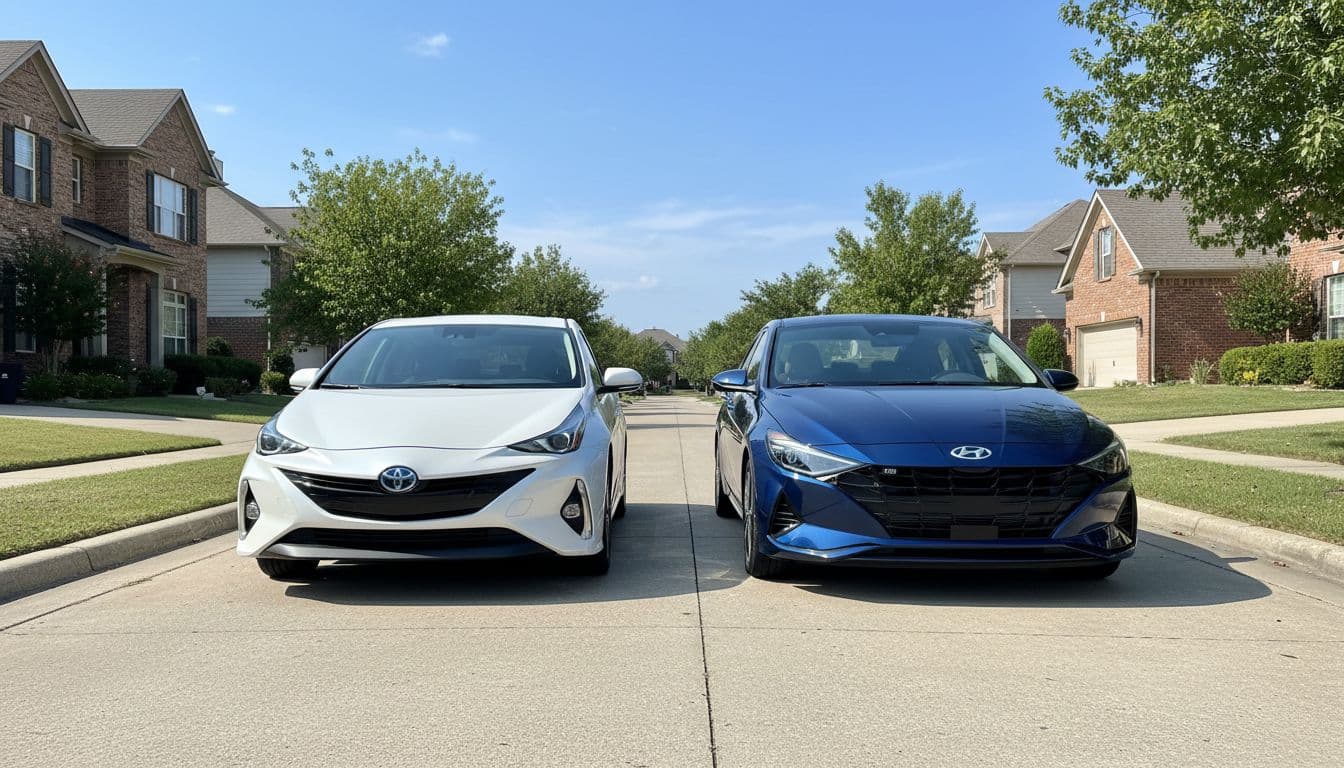
The Toyota Prius remains the efficiency benchmark. Current surfaced 2026 data shows about 52 mpg for the plug-in model, and the Prius still leads this group in fuel-saving reputation. Expect a starting point around the upper-$20,000s. It fits drivers who want the most miles per tank and a useful hatchback shape. The tradeoff is simple: it costs more up front than the cheapest gas sedans.
The Hyundai Elantra Hybrid is the sharp value play. The Blue trim starts at $25,450 and reaches 54 mpg combined, with 51 city and 58 highway in surfaced data. That’s excellent for a sedan this affordable. It’s best for commuters who want hybrid savings without paying Prius money. The downside is power. It gets the job done, but it won’t feel quick.
The Toyota Camry Hybrid is the grown-up option here. It usually starts around $29,000, give or take trim and destination charges. Exact 2026 combined MPG didn’t surface cleanly in current search results, but the Camry Hybrid stays one of the safest bets for shoppers who want midsize room without midsize fuel bills. It fits small families and highway drivers. The catch is price, because it can bump against this budget fast.
For more trim context and how the Elantra stacks up in the market, see CarBuzz’s look at the 2026 Elantra Hybrid.
Best gas cars if you want a lower upfront price
If the goal is the lowest buy-in, gas compacts still matter. They won’t beat hybrids at the pump, but they can still be low-cost winners.
The Toyota Corolla stays near the top of any value list. Think low-$20,000s to start. Current search results didn’t surface a clear 2026 gas EPA figure, but Corolla remains one of the safest picks for shoppers who want simple ownership, good resale, and no surprises. It fits first-time buyers and anyone who just wants dependable transport. The tradeoff is that it can feel plain.
The Honda Civic starts around the mid-$20,000s in current market estimates. Exact 2026 gas-trim EPA data is still trim-dependent in search results, yet the Civic remains efficient enough to make this list. It offers a nicer cabin feel than many cheap cars and tends to drive better than the Corolla. The downside is value pressure, because some trims climb in price quickly.
The Volkswagen Jetta lands around the low-$20,000s and gives shoppers a roomy cabin for the money. It suits highway commuters who want a comfortable small sedan and a low entry price. Its tradeoff is long-term confidence. Current reliability trends still favor Toyota and Honda over VW.
If you want a wider view of low-cost high-MPG options, CARFAX’s roundup of cheap cars with good gas mileage is a useful cross-check.
Which car is best for your budget, commute, and daily life
Specs help, but daily use matters more. The right pick depends on how you drive, how many people you carry, and how much you want to spend up front.
Best choices for city driving, long commutes, and small families
For city driving, the Prius and Elantra Hybrid make the most sense. Hybrids save the most in traffic, where frequent braking helps recharge the battery. Between the two, the Elantra Hybrid is easier on the budget, while the Prius gives you a hatchback and stronger efficiency bragging rights.
For long commutes, the Elantra Hybrid is hard to ignore because of its 54 mpg combined rating and modest starting price. The Prius is just as compelling if you want more cargo flexibility. Meanwhile, the Jetta also deserves a look if your miles are mostly highway and you want to spend less up front.
For small families, the Camry Hybrid is the easy recommendation. It gives you more rear-seat room and a calmer ride than the smaller compacts. If budget comes first, the Civic is a good middle ground because it feels more refined than many entry cars without moving fully into midsize pricing.
Best pick if you want the lowest price, best MPG, or best all-around value
Here’s the fast answer.
Lowest price: Volkswagen Jetta, with the Corolla close behind depending on trim and local deals.
Best MPG: Hyundai Elantra Hybrid if you’re shopping by confirmed 2026 surfaced numbers, with the Prius still right at the top of the real-world conversation.
Best all-around value: Toyota Corolla for gas-only shoppers, Hyundai Elantra Hybrid for buyers open to hybrid savings.
That split matters. Some people want the smallest monthly payment. Others want the lowest fuel bill. Those aren’t always the same thing. For another budget-minded snapshot, How-To Geek’s efficient new cars under $30,000 lines up with the same basic idea: a few smart picks beat a long shopping list.
Smart buying tips before you choose one of these fuel efficient cheap cars
A smart shortlist still needs a smart purchase plan. The trim you choose, the dealer you use, and the financing you accept can change the total cost by thousands.
How to compare trims without overspending
Start with the base trim, then move up only for features you’ll use every day. Good examples include blind-spot monitoring, adaptive cruise control, heated seats in cold climates, and better seat material if you drive a lot.
Don’t pay extra just for wheels, appearance packages, or a bigger screen if they stretch your budget. Also, check whether the next trim adds safety gear or comfort features that improve resale later. Sometimes the cheapest trim is cheap for a reason.
If you’re eyeing an Elantra Hybrid, Hyundai’s Elantra lineup page can help you compare trims and features before you visit a dealer.
A quick checklist to use before signing the papers
Use this short filter before you agree to anything:
- Out-the-door price: Ask for the full number, not just MSRP.
- Financing rate: A low APR can matter more than a small discount.
- Insurance quote: Get one before buying, especially for younger drivers.
- Local inventory: The best deal on paper means little if that trim isn’t available.
- Fuel cost math: Estimate your yearly gas spend using your real miles driven.
If you drive 15,000 to 20,000 miles a year, hybrid math gets stronger fast. If you drive much less, a gas Corolla or Civic may keep more cash in your pocket.
Final take
The best choice comes down to what you want most. If your top goal is highest MPG, look at the Prius or Elantra Hybrid. If you want the lowest upfront cost, start with the Jetta or Corolla. If you want the best balance of price, comfort, and fuel savings, the Elantra Hybrid and Corolla are the easiest finalists.
Before you buy, compare two or three models based on your real commute, not just the window sticker. The smartest cheap car is the one that fits your daily life and keeps saving you money long after the first payment.

 autovalix_krexlg