 autovalix_krexlg
What turns a long drive into part of the fun instead of a test of patience? Usually, it comes down to the car. The best cars for road trips feel easy after hour three, not just mile three. They keep fuel costs in check, carry bags without a fight, stay quiet at speed, and make phone charging, navigation, and safety tech feel simple.
Still, there isn’t one perfect answer for everyone. A family of five needs something very different from a couple heading out for a weekend. Your best choice also depends on distance, budget, and whether you want gas, hybrid, or electric power. This guide keeps it practical, so you can match the right car to the way you actually travel.
What really makes a car road trip ready
A road-trip car should do more than look good in the driveway. It needs to stay comfortable, efficient, and calm over many hours. That’s why the best car for road trips usually has a few traits in common: supportive seats, useful cargo space, a smooth ride, strong safety tech, and low running costs.
Reliability matters just as much. So does easy refueling or charging. A great stereo is nice, but it won’t fix a cramped back seat or a harsh ride. Start with the basics, then worry about extras.
Comfort and space matter more after the first two hours
On a short test drive, almost any new car feels fine. Long trips expose the truth.
Seat support is the first thing most drivers notice. If the cushion is flat or the lower back support is weak, your body will tell you fast. After that, rear legroom becomes a big deal, especially if adults or teens ride in the back. A quiet cabin helps too, because constant tire and wind noise can wear you down.
Small details also add up. Good climate control keeps everyone happy. Wide door openings make it easier to climb in at rest stops. Cupholders, storage bins, and room for snacks save a lot of clutter. Cargo space matters in the same way. Luggage, coolers, strollers, and sports gear pile up quickly.
Low running costs can save your trip budget
Road-trip value isn’t only about sticker price. It’s also about what the car costs mile after mile.
That makes hybrids especially attractive. A car getting close to 50 mpg can save serious money over a long summer drive. The 2026 Honda Civic and Civic Hybrid review is a good example of how a smaller, efficient car can still feel polished and road-trip friendly. If you travel often, those fuel savings keep adding up.
EVs can cost even less per mile, but only if charging fits your route. Range matters, of course, yet charging speed and charger access matter just as much. In other words, the best cars for road trip use don’t all look the same. The right answer depends on your travel map.
Best cars for road trips in 2026, top picks by type
Recent 2026 reviews keep circling back to the same winners: roomy family haulers, efficient hybrids, and EVs with range you can trust. Instead of a huge roundup, here are the standout picks that cover most buyers.
Here’s the quick view before the details:
| Vehicle | Best for | Why it stands out |
|---|---|---|
| Chrysler Pacifica | Families | Huge space, Stow ‘n Go seats, easy everyday use |
| Toyota Grand Highlander Hybrid | All-around balance | Adult-friendly third row, comfort, strong mpg |
| Honda Civic Hybrid | Value | Excellent fuel economy, easy driving, solid comfort |
| Tesla Model 3 Long Range | EV sedan buyers | Road-trip-friendly charging and range |
| Hyundai Ioniq 9 | EV families | Three-row space, quiet ride, fast charging |
The common thread is simple: each one solves a different travel problem well.
Best family pick, Chrysler Pacifica
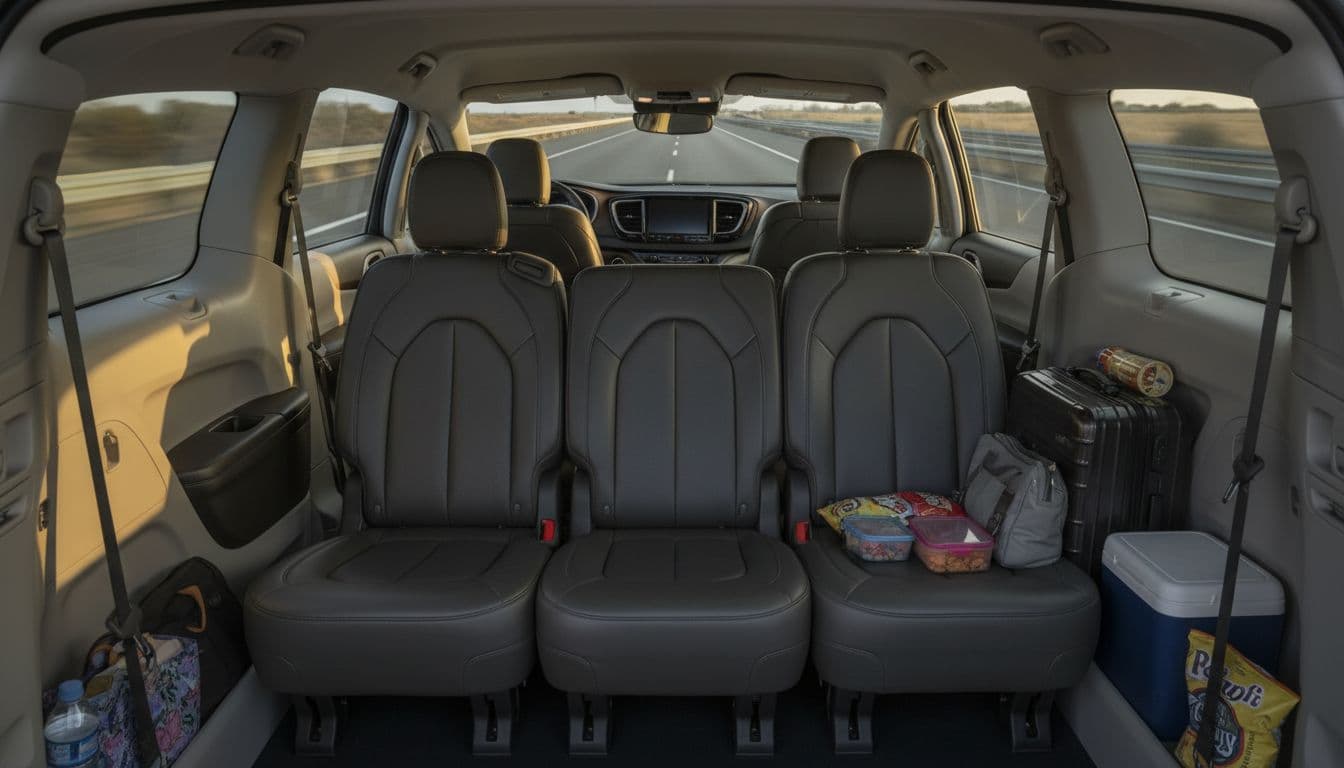
If you’re hauling kids, bags, and maybe a cooler the size of a dorm fridge, the Pacifica is hard to beat. It has the kind of room that makes long trips feel less crowded from the start. Even better, the Pacifica’s Stow ‘n Go seating gives it real flexibility. Fold seats into the floor, and suddenly bulky gear isn’t a problem.
Its smooth ride also helps on long highway stretches. So do the easy step-in height, smart storage, and wide sliding doors. Those aren’t flashy features, but they matter a lot at gas stops, hotel lots, and school pickup lines.
Real-world travel tests back that up. This cross-country Pacifica trip review shows why minivans still make so much sense for long drives.
Best all around SUV, Toyota Grand Highlander Hybrid
Some buyers want minivan space without buying a minivan. That’s where the Toyota Grand Highlander Hybrid lands so well. It offers a roomy third row that adults can actually use, plus useful cargo space behind it. That alone makes it more road-trip friendly than many three-row SUVs.
Then there’s the fuel economy. Real-time review data for 2026 points to about 35 mpg overall for the hybrid, which is excellent for something this large. Add Toyota’s strong reputation for dependability, and you get a smart middle ground for families who want space without high fuel bills.
The Grand Highlander Hybrid review from Car and Driver also reflects why this SUV is such an easy recommendation. It feels like a balanced answer, not a compromise.
Best road trip value, Honda Civic Hybrid
Big cars get a lot of attention in road-trip talk, but a compact hybrid can be the better pick for many drivers. The Honda Civic Hybrid proves that. It gets about 49 mpg combined in 2026 form, and that kind of efficiency can stretch a travel budget in a big way.
It also avoids the stripped-down feel that some economy cars still have. Front seats are comfortable, the ride stays composed, and Honda’s safety tech is easy to live with. For solo drivers, couples, and light packers, that’s often enough. You don’t need three rows if you’re mostly carrying two people and a couple of bags.
If you prefer a little extra cargo freedom, the hatchback version makes even more sense. It’s a smart example of how the best car for road trip miles isn’t always the biggest one in the parking lot.
Best EV options for long drives, Tesla Model 3 Long Range and Hyundai Ioniq 9
For EV buyers, use case matters more than brand hype.
The Tesla Model 3 Long Range is the easier sedan choice. It’s efficient, quick, and simple to place on long highway routes because charging support is strong. On top of that, real-world range matters more than brochure claims, and this Model 3 highway range guide helps show what owners can expect on actual trips.
The Hyundai Ioniq 9 is the better pick for families who want electric space and comfort. It seats up to seven, uses a 110.3-kWh battery, and offers up to 335 miles of EPA range, depending on trim. Fast-charging to 80 percent can take about 24 minutes on a powerful charger, which makes a real difference on travel days. A recent Ioniq 9 road-trip range test adds more confidence for buyers who want a three-row EV without giving up long-distance use.
Luxury shoppers can also look at the Cadillac Escalade IQ, but for most people, the Model 3 Long Range and Ioniq 9 make more practical sense.
Match the right road trip car to the way you travel
This is where a lot of shoppers go wrong. They buy for image, then spend six hours wishing they had bought for comfort. The best cars for road trips are the ones that fit your routine, your passengers, and your gear.
For families, road trip space beats sporty styling
When you travel with kids, space wins. Easy entry matters. Rear-seat comfort matters. Storage matters even more than you think.
That’s why minivans and roomy three-row SUVs keep rising to the top. The Pacifica is the easiest answer for large families, especially if you bring lots of bags. Meanwhile, the Grand Highlander Hybrid works well if you want SUV styling with strong fuel economy. Either way, a usable third row beats a sleek roofline every time on a long drive.
For couples or solo drivers, efficiency and comfort are the sweet spot
If you’re usually traveling with one other person, a compact hybrid sedan, hatchback, or small SUV often feels just right. You get easier parking, lower fuel costs, and less wasted space. That’s a better fit for city stops, tight hotel lots, and weekend travel.
The Civic Hybrid stands out because it mixes comfort with savings. For EV shoppers, the Model 3 Long Range fills a similar role. It keeps the footprint reasonable while still being a serious road-trip machine.
Smart buying tips before you pick your next road trip car
Before you sign anything, test the car the way you’ll really use it. Load luggage if the dealer allows it. Sit in the back seat, not just the front. Check if the floor is flat enough for real foot room. Pay attention to how easy it is to get in and out.
Also think about where you actually drive. If most of your trips are interstate runs, highway comfort matters more than sporty handling. If you head to national parks or cabins, cargo shape and rough-road manners matter more.
Test the features you will actually use on the highway
Adaptive cruise control can reduce fatigue, but only if it works smoothly. Lane-keeping help should feel natural, not bossy. Wireless charging sounds nice, yet it needs to hold your phone in place. Infotainment should be easy enough to use with one quick glance.
During a real test drive, listen for wind noise at speed. Check visibility over your shoulder. Try the seats after 30 minutes, not five. EV shoppers should also map the charging access along their usual routes before choosing between the best cars for road trip duty.
Choose the car that fits your miles
There isn’t one best car for road trips for every driver, but there are clear standouts. The Chrysler Pacifica is the easy family winner, the Toyota Grand Highlander Hybrid nails the all-around balance, and the Honda Civic Hybrid delivers strong value with very low fuel costs. If you want electric power, the Tesla Model 3 Long Range suits sedan buyers, while the Hyundai Ioniq 9 gives families the space they need. In the end, the smartest choice is the one that keeps your trip comfortable, affordable, and easy from the first hour to the last.

 autovalix_krexlg