 autovalix_krexlg
More drivers are comparing a hybrid vs electric car because gas prices, charging access, and vehicle prices all matter at the same time. If you’re weighing an electric vehicle vs hybrid, or just sorting through electric vs hybrid cars, the core difference is simple. Hybrids use gas plus a battery, while EVs run only on electricity.
That basic split shapes almost every real-world choice. When people compare hybrid cars vs electric cars, electric vs hybrid vehicles, or an electric car vs hybrid, they’re usually trying to balance monthly costs, driving range, road-trip ease, and day-to-day convenience. In other words, this isn’t about naming one winner for everyone. It’s about finding the right fit for your commute, budget, home setup, and travel habits.
In 2026, a hybrid vs electric vehicle choice still leans different ways for different people. A hybrid car vs electric car often wins on ease and lower upfront cost, while hybrid vs electric cars usually swing toward EVs for fuel savings, lower maintenance, and lower emissions. So whether you’re comparing an electric car vs hybrid car, electric cars vs hybrid, electric cars vs hybrid cars, or reviewing hybrid vs electric cars pros and cons, this guide will help you see which option makes more sense for how you actually drive.
Hybrid vs electric, the simple difference every driver should know
When you compare hybrid vs electric, the biggest split is simple: a hybrid still uses gas, while an EV does not. That one fact shapes how you fuel up, how far you can go, and what daily ownership feels like.
In plain terms, the electric vehicle vs hybrid choice comes down to power source and routine. With electric vs hybrid cars, one asks you to keep buying gas, but skips charging. The other drops the gas tank, but asks you to plug in. Once you understand that, the rest of the hybrid vs electric cars pros and cons start to make a lot more sense.
How a hybrid car works on the road
A hybrid car uses two power sources that work as a team: a gas engine and a small battery with an electric motor. Think of it like a relay race. At some moments the battery helps, at others the engine takes over, and sometimes both work together.
In many hybrid cars vs electric cars comparisons, this is why hybrids feel familiar. You still fill up at a gas station. However, the car gets better mileage because the electric side helps reduce how often the gas engine has to work hard.
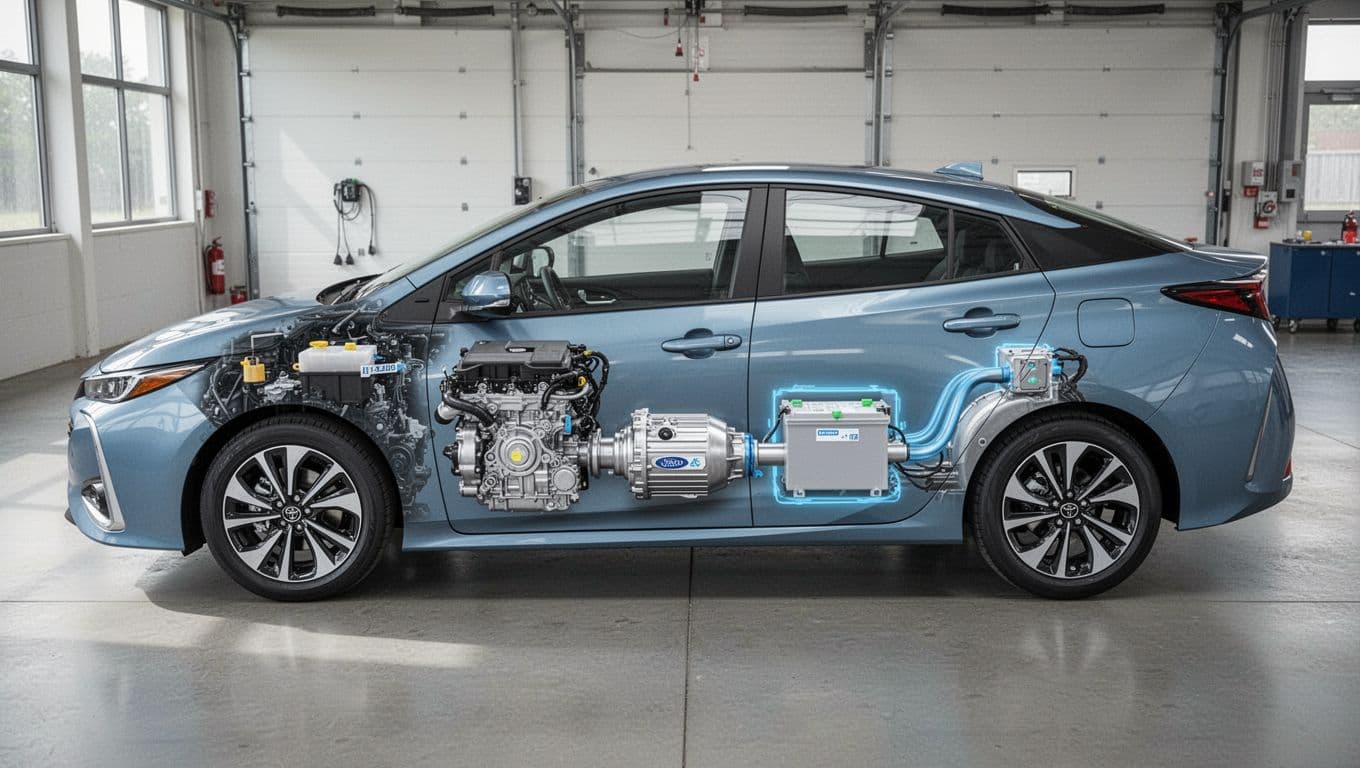
Most hybrids do not need to be plugged in. Instead, the battery charges in two common ways:
- Through braking: When you slow down, the car captures some of that energy and sends it back to the battery.
- Through the gas engine: The engine can also help recharge the battery while you drive.
That setup is a big reason many drivers like a hybrid vs electric car for easy ownership. You get a boost in fuel economy without changing your routine at home. No charger in the garage, no hunting for public stations, no need to plan around charging stops.
On the road, a hybrid often uses the electric motor at low speeds or during gentle driving. Then, when you speed up or need more power, the gas engine steps in. Some models blend both so smoothly that you barely notice the switch. For a simple explainer, Car and Driver’s hybrid guide shows the same basic idea in plain language.
A regular hybrid is often the middle ground: better mpg than a gas car, but no charging habit to learn.
So if you’re weighing an electric car vs hybrid, a hybrid fits drivers who want gas savings with almost no lifestyle change. That’s why many people start there when comparing electric vs hybrid vehicles, especially if they drive long distances or don’t have easy home charging.
How an electric vehicle works day to day
An electric vehicle runs on a much larger battery pack and one or more electric motors. There is no gas engine and no gas tank. In an electric car vs hybrid car matchup, that’s the clearest line in the sand.
Because of that, EVs need charging. You plug them in at home, at work, or at a public charger. For many people, that becomes their new version of refueling. Instead of stopping at a gas station, they wake up with a charged car.
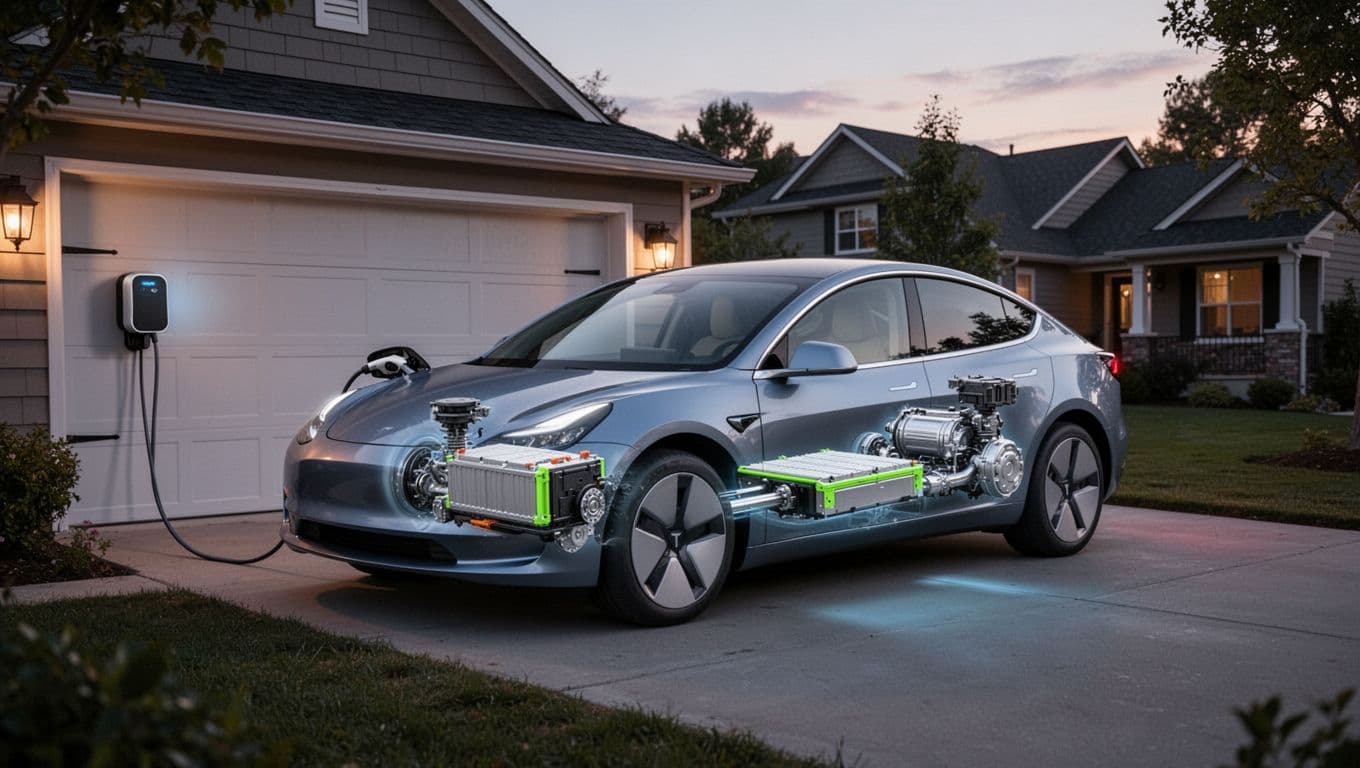
Day to day, the driving feel is one reason electric cars vs hybrid comparisons often favor EVs for comfort. An EV is usually:
- Smooth and quiet: There is no engine noise at stops or low speeds.
- Quick off the line: Electric motors deliver power right away, so acceleration feels strong.
- Clean at the tailpipe: EVs produce zero tailpipe emissions because they don’t burn gasoline.
That does not mean every EV fits every driver. In the wider hybrid vs electric vehicle debate, charging access matters a lot. If you can charge at home, an EV often feels easy. If you can’t, ownership can be less convenient. That practical gap is why electric vs hybrid decisions often come down to where you live as much as how you drive.
The basic hardware is simple. A large battery stores energy, and the motor turns that energy into motion. There are fewer moving parts than in many gas-powered vehicles, which is one reason EVs can have lower maintenance needs. The trade-off is obvious, though: you must plug in regularly. For a beginner-friendly overview, MYEV’s EV guide breaks down the core parts clearly.
If you’re comparing electric vs hybrid cars, here’s the everyday takeaway. A hybrid behaves more like the car you already know. An EV feels more like switching from a gas stove to induction cooking. It works differently, but once your setup fits, it can feel cleaner, quieter, and easier. That’s the heart of the hybrid car vs electric car decision, and it explains why the best choice depends on your routine, not just the sticker on the window.
For many shoppers sorting through hybrid vs electric cars, electric cars vs hybrid cars, or even a simple electric car vs hybrid choice, the easiest rule is this: if you want less gas use with no charging routine, go hybrid. If you want no gas at all and can charge with confidence, an EV makes more sense.
Upfront price, fuel savings, and total cost over time
When people compare hybrid vs electric, the sticker price gets most of the attention first. That makes sense, because your monthly payment often shapes the whole decision. Still, the smarter comparison is what you pay now versus what you keep paying later.
A hybrid vs electric car choice often comes down to this trade-off: hybrids usually cost less to buy, while EVs often cost less to run. So if you’re weighing electric vs hybrid cars, don’t stop at the window sticker. Look at fuel, service, incentives, and how many miles you drive each year.
Why hybrids usually cost less to buy
For many shoppers, a hybrid car vs electric car comparison starts with a simple fact: hybrids often have a lower entry price. That’s one reason they feel easier to budget for, especially if you want better efficiency without taking on a bigger loan.
As a basic example, a Toyota Prius typically starts well below a Tesla Model 3 in the US. That doesn’t mean every hybrid beats every EV on price, because trims, options, and deals move around. Still, the broad pattern usually holds. In many hybrid cars vs electric cars matchups, the hybrid is the cheaper way in.
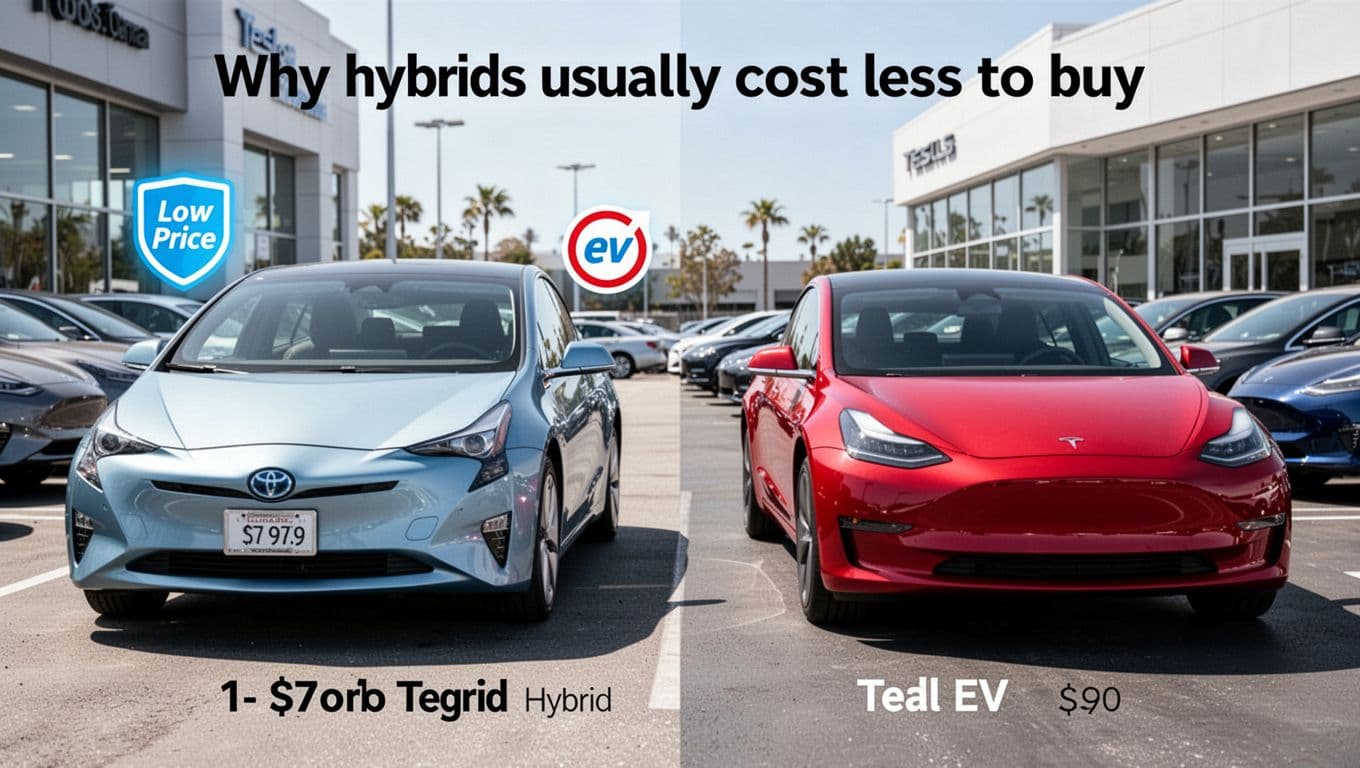
Why is that? In plain terms, EVs usually carry a larger battery pack, and that’s still one of the biggest cost drivers. A regular hybrid uses a much smaller battery, so the purchase price tends to stay lower. As a result, an electric vehicle vs hybrid decision often favors hybrids for buyers who care most about upfront affordability.
That lower buy-in can matter more than people admit. If you’re trying to keep payments down, avoid a larger down payment, or buy without stretching, a hybrid vs electric vehicle often looks better on day one with the hybrid.
Where EVs often save money after you buy
After purchase, the numbers can start to shift. In many electric car vs hybrid car comparisons, EVs make up ground through lower energy and service costs. That’s the part buyers sometimes miss.
Electricity usually costs less per mile than gas, especially if you charge at home. If you drive a lot each year, that gap can grow fast. Recent reporting on hybrid and EV savings points to the same pattern: EVs often save owners money over time, even when the purchase price starts higher.
Maintenance can also be lighter. An EV has fewer moving parts, no oil changes, no spark plugs, and no exhaust system. You still have tires, brakes, and cabin filters, of course, but the service list is usually shorter. That’s why electric vs hybrid vehicles often look better once ownership costs stack up over a few years.
This quick comparison shows the usual pattern:
| Cost area | Hybrid | EV |
|---|---|---|
| Upfront price | Usually lower | Usually higher |
| Fuel or energy cost | Higher over time | Often lower over time |
| Routine maintenance | More service items | Fewer service items |
| Best fit for savings | Lower-mileage drivers | High-mileage drivers with home charging |
The key point is simple. Savings are strongest when you charge at home and drive a lot. In that setup, an electric car vs hybrid can flip from “more expensive” to “better long-term value.”
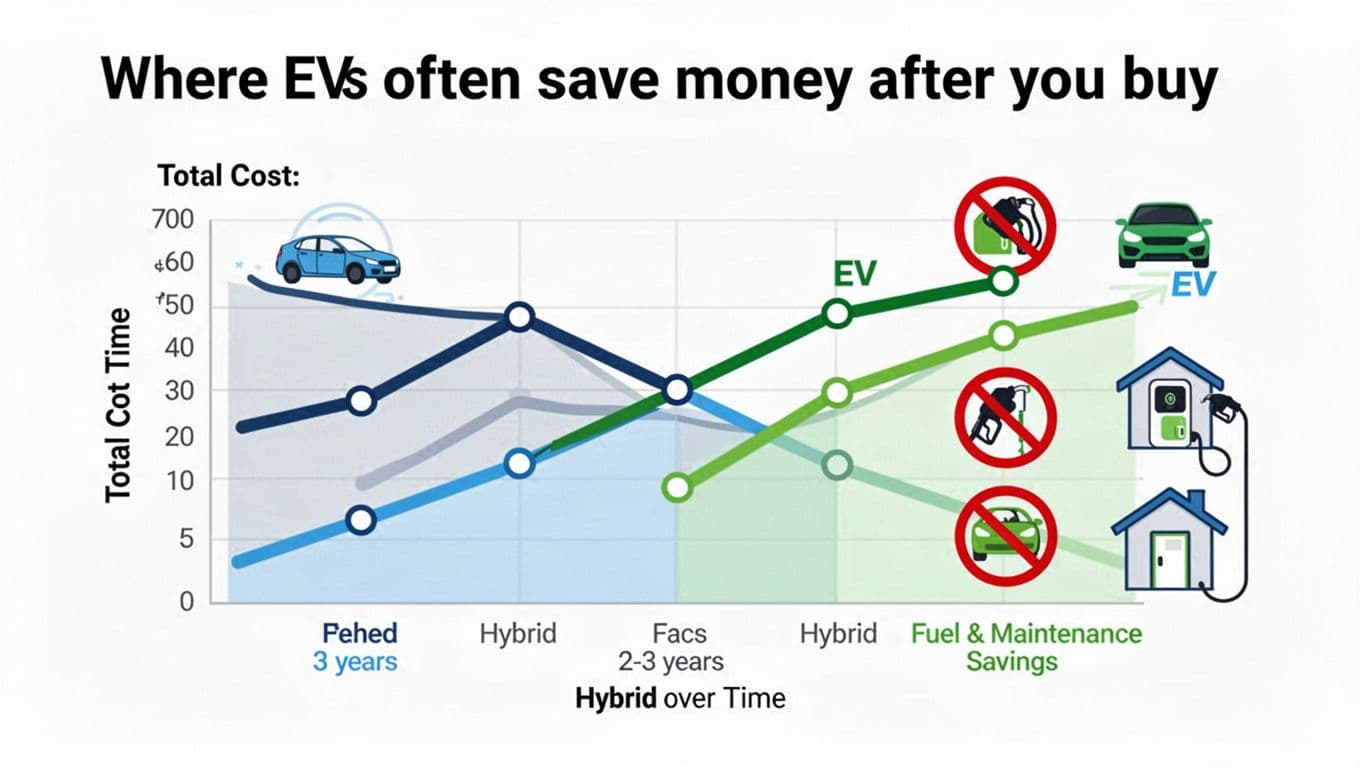
If you rack up miles and can plug in at home, an EV often gets cheaper the longer you keep it.
On the other hand, if you drive less, rely on pricey public charging, or trade cars quickly, the math can stay closer. That’s why electric vs hybrid decisions work best when you match the numbers to your real routine, not an average driver’s.
How tax credits and local incentives can change the math
Incentives can swing the result more than people expect. A hybrid vs electric cars pros and cons list isn’t complete unless you check what deals apply where you live. Federal rules shift, states change programs, utilities add rebates, and local perks come and go.
For 2026, that still matters a lot. Some buyers may find an EV rebate, a charger installation credit, lower registration perks, utility discounts for off-peak charging, or local programs tied to income or ZIP code. Others may find very little. That’s why an electric vs hybrid vehicles comparison can look one way in one state and very different in another.
Before you decide, check a few places:
- Federal programs: Rules and eligibility can change, so review current guidance before you buy.
- State incentives: Some states offer rebates, tax breaks, or HOV-lane perks.
- Utility offers: Your power company may discount home charger installs or off-peak charging.
- Local programs: City and county rebates sometimes stack with other offers.
For a quick starting point, CARFAX’s 2026 tax credit guide is useful for broad incentive checks. If financing is part of your plan, Clean Energy Credit Union’s 2026 incentive overview also shows how policy changes can affect the deal.
In short, electric cars vs hybrid, electric cars vs hybrid cars, and hybrid vs electric cars all look different once incentives enter the picture. A rebate can narrow the upfront gap fast. Without one, the hybrid may still win on purchase price. That is why the best hybrid vs electric car decision is rarely just about MSRP.
Range, charging, and road trip convenience
For many shoppers, hybrid vs electric comes down to one daily question: how easy is it to keep moving? Range matters, but routine matters just as much. A car can look great on paper and still feel wrong if it doesn’t fit how you drive, where you live, or how often you travel.
Why hybrids feel easier for long drives
A hybrid car vs electric car often wins on pure convenience once the trip gets longer. You fill up in minutes, get back on the road, and don’t have to build your route around chargers. For commuters, busy families, and drivers in rural areas, that simplicity feels like a safety net.
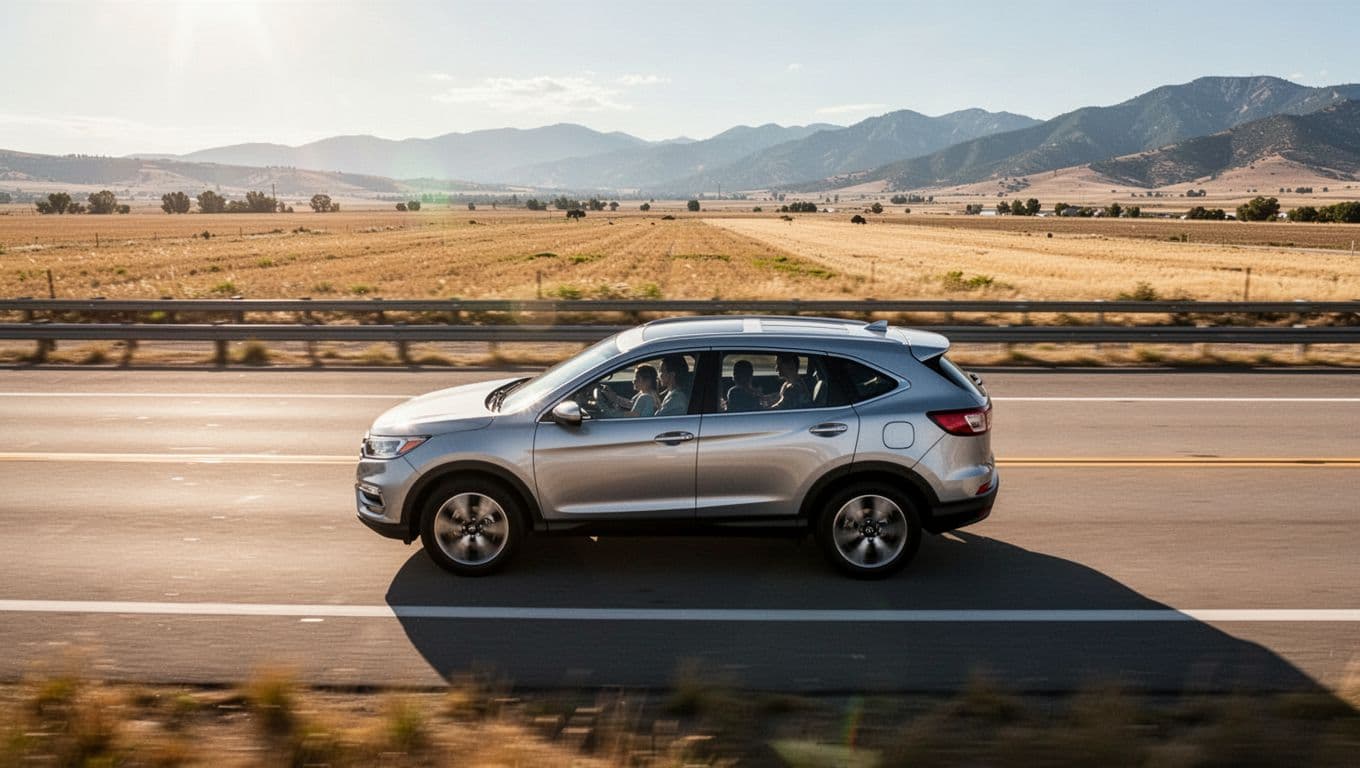
That’s why many hybrid cars vs electric cars comparisons tilt toward hybrids for highway travel. If your week includes long commutes, school pickups, or weekend drives to places with thin charging coverage, a hybrid vs electric vehicle usually asks less from you. In other words, gas stations are everywhere, and that cuts down on range anxiety fast.
When an EV fits your routine better than a hybrid
An electric vehicle vs hybrid can be the better fit if your driving stays predictable. If you commute a set distance, park at home, and can install a charger, an EV starts to feel very easy. You plug in at night and wake up with a full battery, which is a lot nicer than detouring for gas.
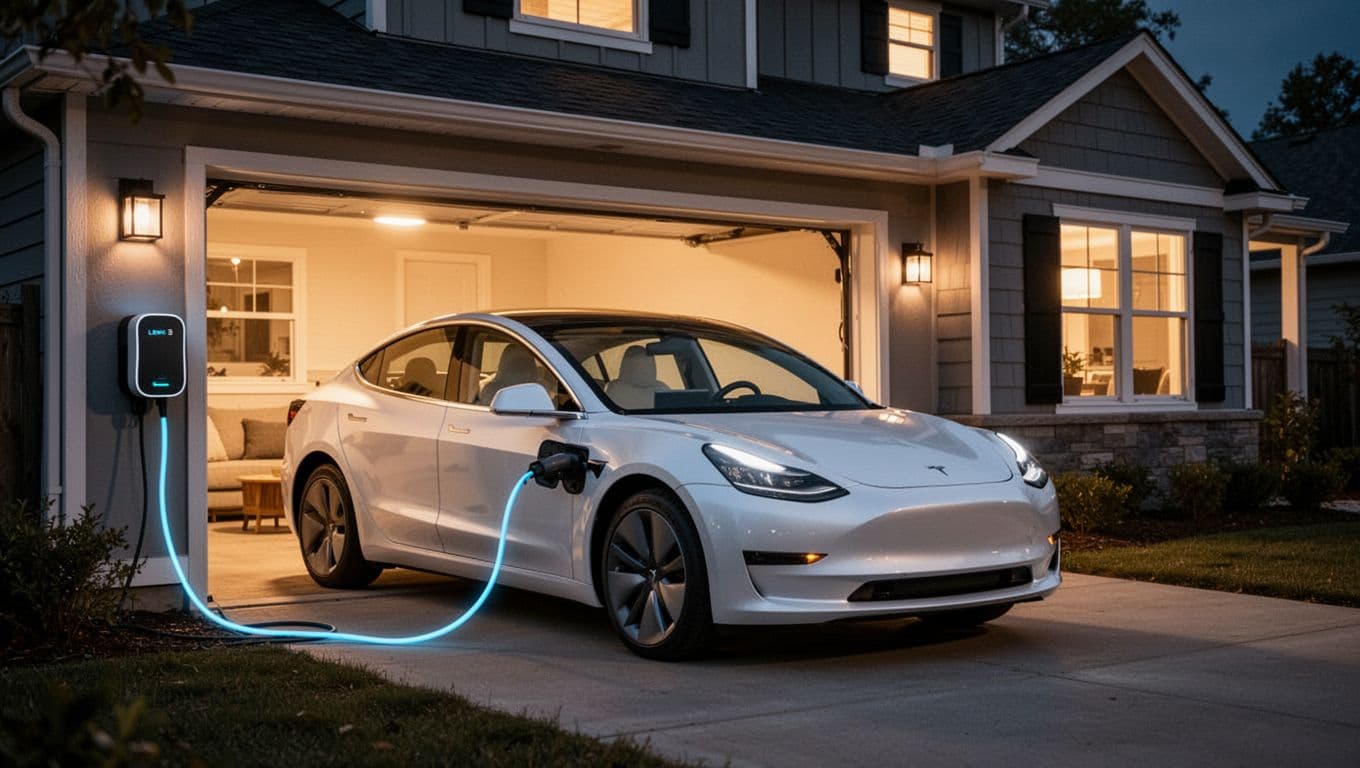
Many newer EVs now offer strong range, often around 280 to 340 miles in real use, so the old fear around every trip doesn’t fit every model anymore. Still, with electric vs hybrid cars, charging takes more planning than a gas stop. That’s the trade-off in an electric car vs hybrid car decision: less gas spending, but more thought on longer travel.
What charging times really look like in real life
Charging speed depends on where you plug in. At home, Level 2 charging usually takes hours, so most owners charge overnight. That works well for daily life because the car sits while you sleep.
On the road, DC fast charging changes the picture. Many EVs can reach about 80 percent in roughly 20 to 60 minutes, though speed varies by model, battery level, and weather. Guides from Blink Charging and Recurrent’s charging research show how wide that spread can be.
In an electric vs hybrid choice, hybrids save time at the pump, while EVs save effort at home.
So when comparing electric vs hybrid vehicles, the best pick depends on your pattern. If you want the easiest road-trip rhythm, a hybrid vs electric car still has the edge. If most driving starts and ends at home, electric cars vs hybrid cars can flip in the EV’s favor.
Maintenance, reliability, and environmental impact
When you compare hybrid vs electric, the price tag is only part of the story. What happens after you buy matters just as much, because service costs, long-term trust, and environmental impact can change how good the deal really feels.
This part of the hybrid vs electric cars pros and cons debate is where the choice gets more personal. Some drivers want the fewest repair visits possible. Others care more about proven dependability or lowering emissions over time. Here is how the trade-offs look in real life.
Which is cheaper and simpler to maintain
For day-to-day upkeep, an electric car vs hybrid car usually favors the EV. An EV skips oil changes, spark plugs, timing-related engine work, and exhaust repairs. It also uses regenerative braking, so brake pads often last longer because the motor helps slow the car.
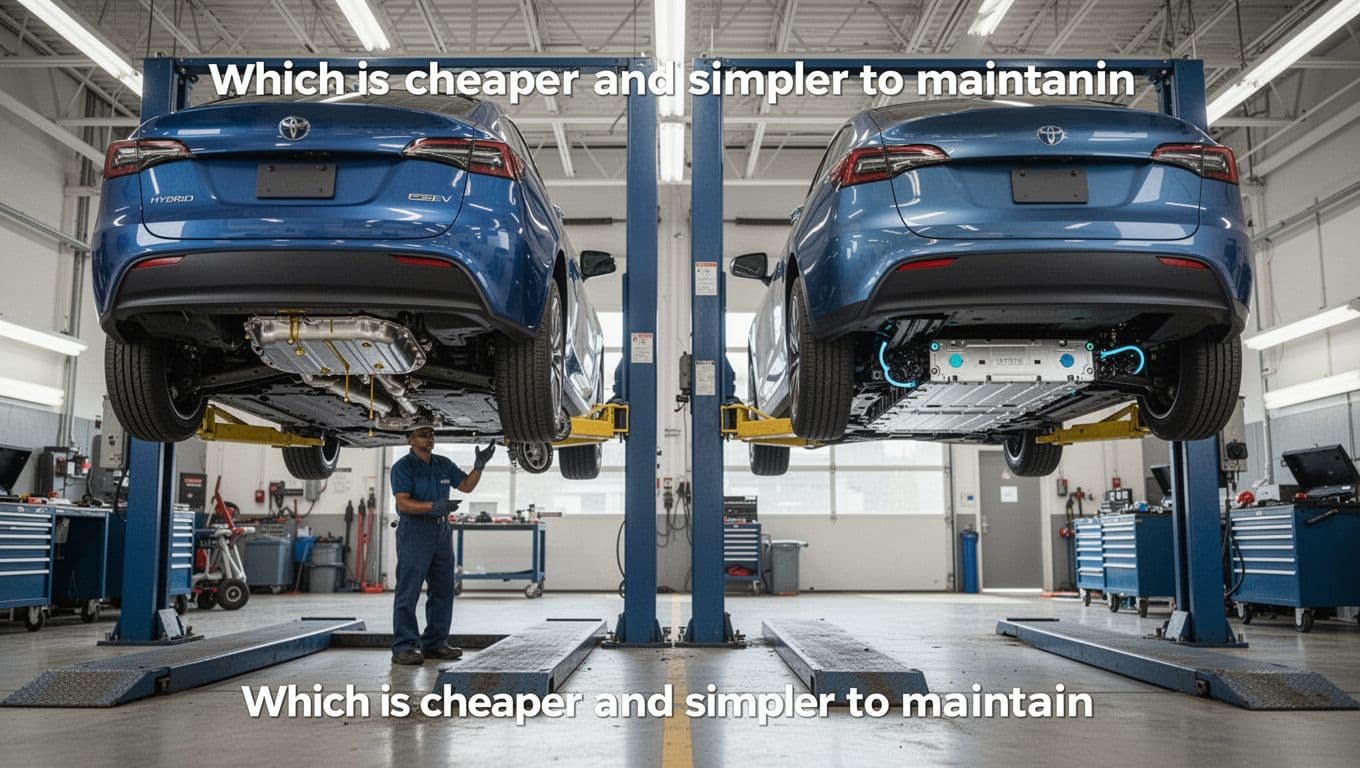
A hybrid still has some of those same brake-saving benefits, but it also carries a gas engine. That means routine engine service doesn’t go away. You still need oil changes, filters, coolant checks, and other scheduled items tied to combustion parts. In a hybrid car vs electric car comparison, that extra hardware is the big reason hybrids usually cost more to maintain than EVs.
The difference is simple:
- EVs: Fewer moving parts, no oil changes, less brake wear, but tire wear can be higher on some heavier models.
- Hybrids: Better fuel economy than a gas-only car, plus lower brake wear than many standard cars, but still need engine-related service.
According to the Department of Energy’s maintenance comparison, battery-electric vehicles generally have lower scheduled maintenance costs than conventional vehicles. That supports what many owners already notice: an EV often feels more like maintaining an appliance, while a hybrid still feels like maintaining a car with two systems working together.
Still, don’t count hybrids out. In the wider electric vehicle vs hybrid debate, hybrids benefit from mature, well-known technology and strong fuel economy. Shops know how to work on them, parts are common, and many owners like that familiar service routine.
How reliability compares for hybrids and EVs
Reliability is where the electric vs hybrid cars conversation gets less black-and-white. Hybrids, especially long-running models, have built a strong reputation for dependability. That matters because proven systems tend to age better than brand-new ideas.
Consumer Reports has found that hybrids remain among the most reliable vehicle types, especially compared with many newer EVs and plug-in hybrids, as shown in its report on hybrid reliability trends. In plain English, a well-established hybrid often wins because it has had years to work out the bugs.
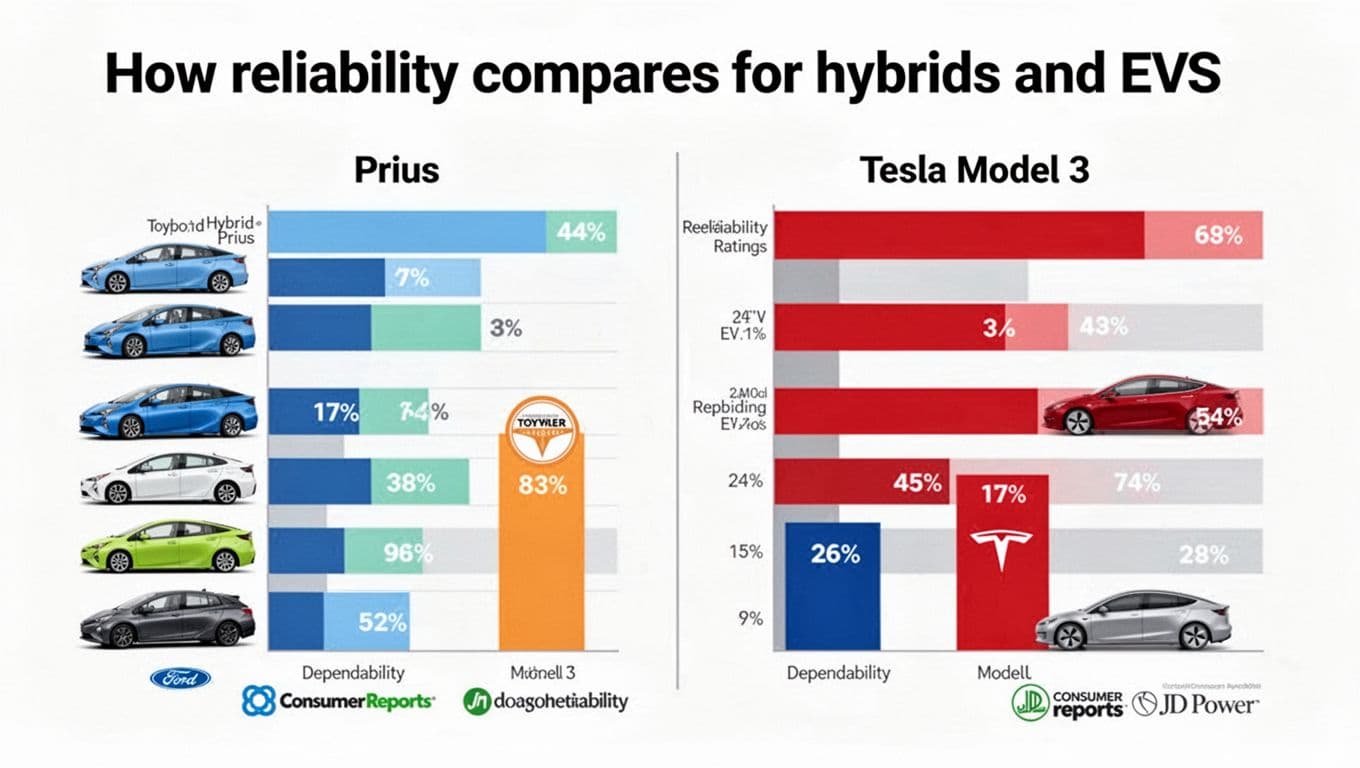
EVs can also be very reliable, though, because their mechanical layout is simpler. Fewer moving parts usually means fewer things to break. In an electric vs hybrid vehicles matchup, that simplicity is a real advantage. The catch is that software glitches, charging hardware issues, and expensive out-of-warranty battery or electronics repairs can tilt the ownership experience.
A fair way to think about hybrid cars vs electric cars is this:
| Area | Hybrid | EV |
|---|---|---|
| Mechanical complexity | More complex | Simpler |
| Proven track record | Often stronger | Improving fast |
| Common service familiarity | Very high | Growing |
| Early ownership repairs | Often low | Often low, but model-dependent |
The takeaway for electric vs hybrid shoppers is practical, not dramatic. If you want the safer bet based on long-running models and broad repair familiarity, hybrids still have an edge. If you want fewer mechanical parts and you’re buying an EV with a solid track record, an EV can be just as sensible. In other words, the best hybrid vs electric vehicle choice depends more on the specific model than the badge on the trunk.
Which option is better for the environment
On emissions, the clearest fact is easy to remember: EVs have zero tailpipe emissions. In an electric car vs hybrid comparison, that gives EVs the cleaner result where you actually drive, especially in cities and heavy traffic.
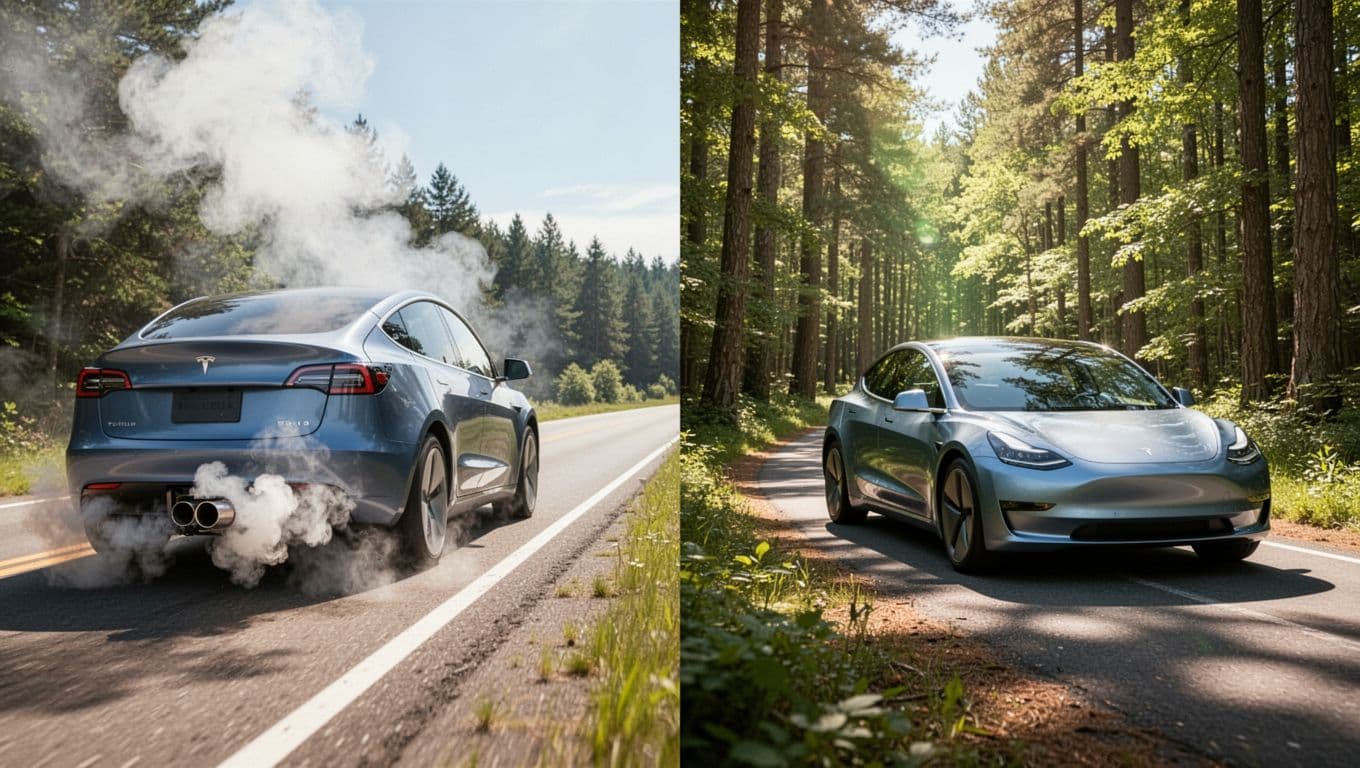
Hybrids still help. They burn less fuel than standard gas cars, so they cut emissions and reduce fuel use. That’s why an electric cars vs hybrid decision is not a contest between “green” and “bad.” A hybrid is still a meaningful step down in fuel consumption for many drivers.
The bigger environmental question is lifetime emissions. Battery production has a heavier footprint up front, and mining for lithium, nickel, cobalt, and other materials brings real environmental concerns. That part of the hybrid vs electric car debate is valid. However, once an EV is on the road, it usually makes up for that earlier impact over time, especially in places with a cleaner power grid.
Research summarized by Reuters on lifetime EV emissions and newer US-focused work in PLOS Climate points in the same direction: EVs usually produce lower lifetime emissions than gas cars, and often lower emissions than hybrids too.
If your local grid is cleaner, an EV’s environmental edge grows. If your grid relies more on fossil fuels, the gap shrinks, but it usually doesn’t disappear.
So where does that leave electric cars vs hybrid cars? For most drivers, EVs are the better environmental choice over the full life of the vehicle. Meanwhile, hybrids are the middle path. They still burn gas, but they use less of it than a traditional car. If you’re weighing a hybrid vs electric cars decision, the cleaner option is usually the EV, while the easier lower-emissions step for many households is still the hybrid.
Who should buy a hybrid, and who should buy an electric car?
If you’re stuck on hybrid vs electric, the best answer usually has less to do with hype and more to do with your routine. The right pick depends on where you park, how far you drive, what you can spend up front, and how much change you want in your day-to-day life.
Put simply, a hybrid is often the easier fit, while an EV can be the cheaper fit to run. In the wider electric vehicle vs hybrid decision, one rewards flexibility and the other rewards the right setup.
A hybrid makes more sense if you want flexibility
For many drivers, a hybrid vs electric car choice gets easy once charging enters the picture. If you can’t charge at home, a hybrid usually makes more sense. You still cut fuel use, but you don’t need to build your week around plugs, apps, or station availability.
That matters even more if you drive long distances often. In an electric car vs hybrid car comparison, hybrids are still simpler for highway miles, rural routes, and last-minute trips. You stop for gas, fill up fast, and keep moving. That’s hard to beat when your schedule changes a lot.
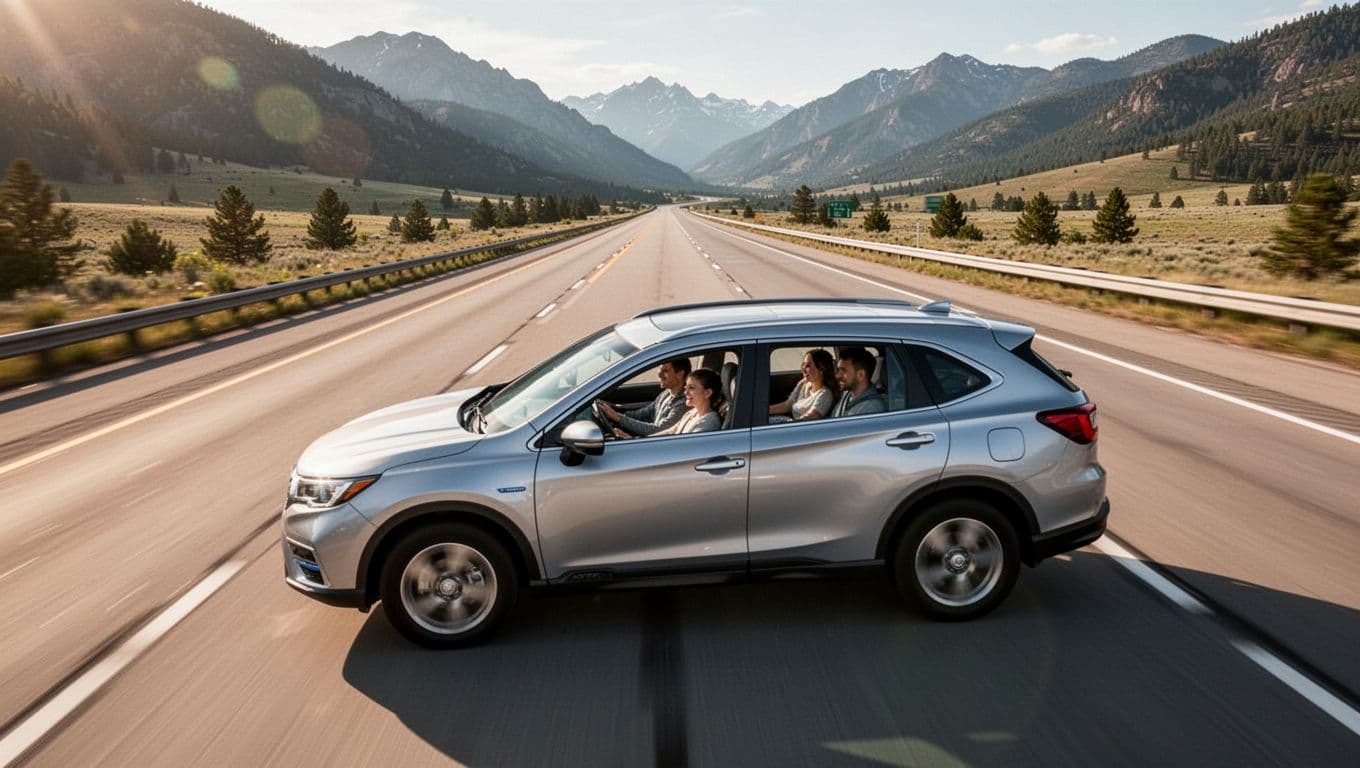
A hybrid also fits buyers who want a lower entry price. In 2026, that matters more because the federal EV tax credit is gone, while many hybrids still come in at friendlier prices. Recent market coverage from USA TODAY on hybrid and EV savings points to the same trend: hybrids are often the more budget-friendly step for shoppers who want better efficiency without a bigger payment.
This is also the safer bridge for people leaving gas-only cars for the first time. In many electric vs hybrid cars and hybrid cars vs electric cars matchups, the hybrid wins because it asks less from you. No new fueling habit, no charger install, no real learning curve. It’s like switching to a bike with pedal assist instead of jumping straight to a totally new machine.
A hybrid is often the better call if you:
- Can’t charge at home: Apartment parking, street parking, or shared lots can make EV ownership harder.
- Take frequent long trips: Gas stations are still easier to rely on than charging stops in many areas.
- Want a lower upfront cost: Hybrids often cost less to buy than comparable EVs.
- Prefer an easier transition: A hybrid feels familiar from day one.
So in the broader electric vs hybrid vehicles debate, hybrids fit the biggest middle ground. They won’t give you the full EV experience, but they remove fewer conveniences from your current routine.
An EV makes more sense if you want the lowest running costs
An EV usually wins the hybrid vs electric vehicle comparison when your daily driving is predictable and your charging situation is solid. If you have home charging, drive a set commute, and keep your car for several years, the math often starts leaning toward electric.
That’s because an electric car vs hybrid often costs less per mile to run. Home electricity is usually cheaper than gas, and EVs also skip oil changes and many engine-related service items. So if you drive a lot and can plug in overnight, the savings have room to add up. Guidance from Bankrate’s EV vs hybrid breakdown supports that same basic rule of thumb.
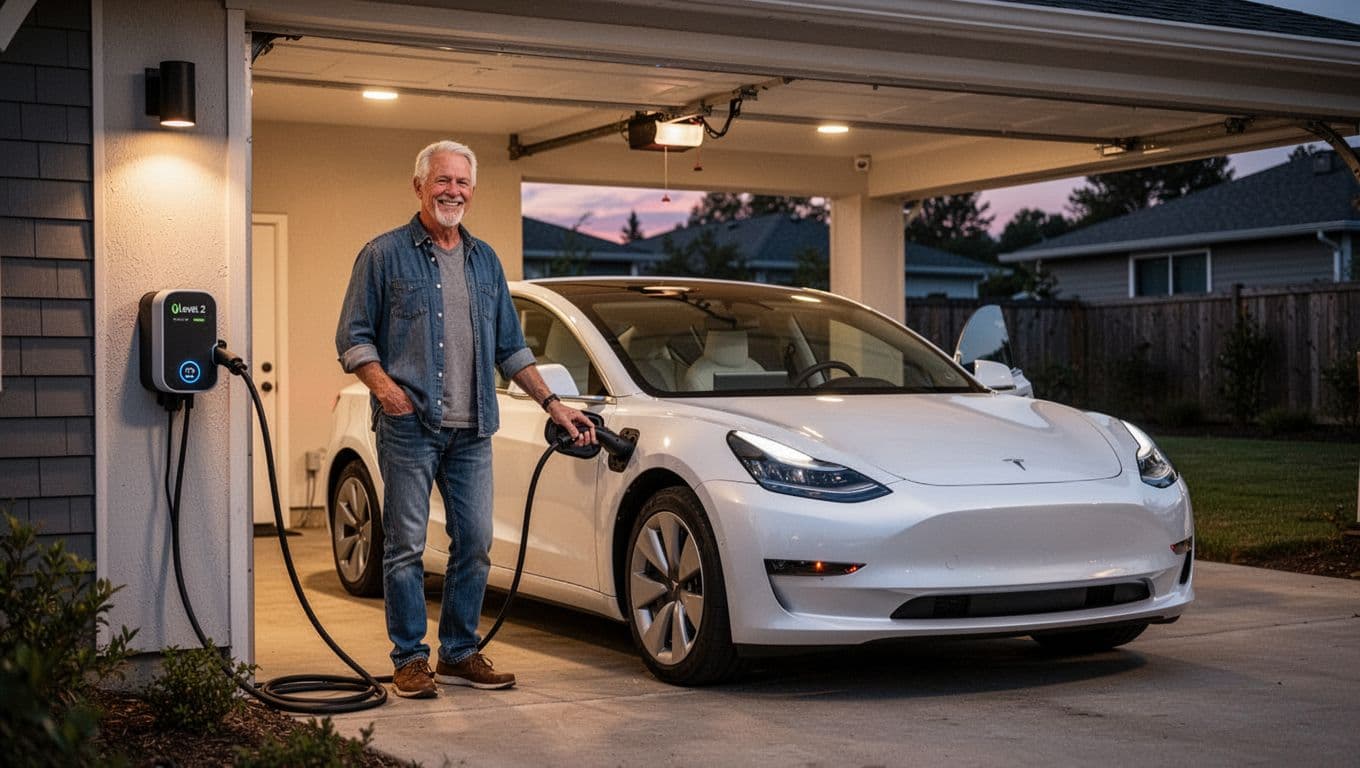
An EV also fits drivers who care most about a quieter, smoother ride. In many electric vs hybrid and electric vs hybrid vehicles comparisons, this is where EVs feel a class above. They pull away quietly, respond fast, and make daily commuting feel calm instead of busy.
Then there’s the emissions side. If your goal is to stop burning gas altogether, an EV is the clear winner in the hybrid car vs electric car and electric cars vs hybrid conversation. It has zero tailpipe emissions, and that matters most in stop-and-go traffic and dense urban driving. Kelley Blue Book’s guide to choosing a fully electric car or hybrid is a good reminder that this choice comes down to your priorities, not a universal winner.
An EV is usually the stronger fit if you:
- Can charge at home: This is the biggest factor in easy EV ownership.
- Drive predictable daily miles: Commuting, errands, and school runs suit EVs well.
- Want lower maintenance: Fewer moving parts usually mean fewer routine service items.
- Care most about emissions and quiet performance: EVs feel cleaner and more refined in daily use.
If you can charge where you live, an EV often feels easier every morning and cheaper every month.
That is why many electric cars vs hybrid cars comparisons flip in favor of EVs once the home setup is right. Without that setup, the case weakens fast.
A quick checklist to help you decide
If the full hybrid vs electric debate still feels close, use this quick filter. It turns a big choice into a few simple calls.
| Your situation | Better fit |
|---|---|
| Tight budget, lower upfront price matters most | Hybrid |
| You can charge at home every night | EV |
| Long drives or road trips happen often | Hybrid |
| Daily miles are steady and easy to predict | EV |
| You rely on street parking or shared parking | Hybrid |
| You want the lowest fuel and routine maintenance costs | EV |
| State or local incentives strongly favor one option | Depends on your area |
A simple way to think about hybrid vs electric cars pros and cons is this:
- Start with charging access. If home charging is weak or impossible, lean hybrid.
- Check your budget next. If upfront price matters more than long-term savings, a hybrid often wins.
- Look at your commute. Short, repeatable trips favor an EV.
- Be honest about travel habits. Frequent long drives still favor hybrid convenience.
- Review local incentives and fees. Some states or utilities can swing the math.
In short, the best hybrid vs electric cars choice is the one that fits your life with the least friction. A hybrid works best when you want flexibility and fewer changes. An EV works best when your routine is steady and your charging setup is strong.
Conclusion
The best hybrid vs electric choice comes down to your routine, your budget, and how you fuel up each week. When people compare an electric vehicle vs hybrid, electric vs hybrid cars, hybrid cars vs electric cars, or other electric vs hybrid vehicles, the real answer is rarely one-size-fits-all. A hybrid vs electric car decision is really about trade-offs, and the same goes for an electric car vs hybrid, electric vs hybrid, or hybrid vs electric vehicle comparison.
If you want lower upfront cost, easy long-distance travel, and no charging habit, choose a hybrid car vs electric car winner that fits that lifestyle, a hybrid. If you can charge at home, want lower running costs, and care more about fewer emissions, an electric car vs hybrid car matchup usually favors the EV.
So whether you’re weighing hybrid vs electric cars, electric cars vs hybrid, electric cars vs hybrid cars, or the full hybrid vs electric cars pros and cons, the bottom line is simple: pick the one that makes daily life easier, because the best car is the one that fits how you actually live.

 autovalix_krexlg